
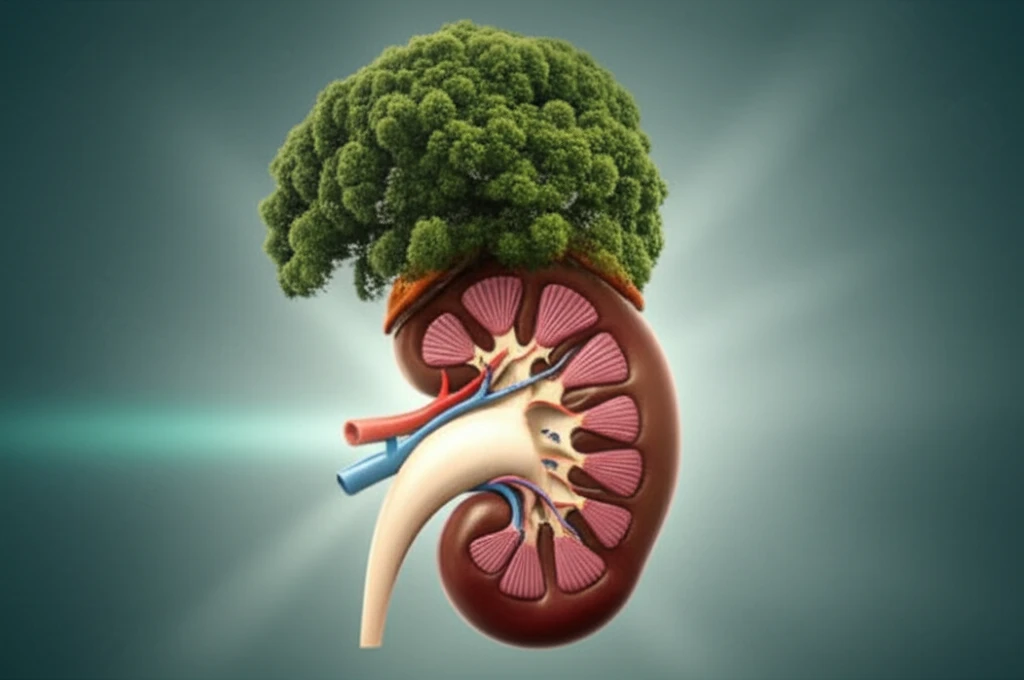
Surreal image of a kidney with a tree growing out of it, symbolizing angiomyolipoma and targeted treatment.

Angiomyolipoma Breakthrough: Can Targeted Embolization Save Your Kidneys?

"Discover how selective arterial embolization (SAE) offers new hope for patients with symptomatic giant renal angiomyolipomas, reducing complications and improving long-term outcomes."


Angiomyolipoma, a complex benign tumor in the kidney composed of fat, blood vessels, and smooth muscle, presents unique challenges, especially when it grows large. Understanding the latest treatments and their outcomes is crucial for those diagnosed and their families.

Traditional approaches to managing large, symptomatic angiomyolipomas often involve nephrectomy (kidney removal) or nephron-sparing surgery. However, selective arterial embolization (SAE) has emerged as a valuable alternative. SAE is a minimally invasive procedure aimed at blocking blood flow to the tumor, thus reducing its size and alleviating symptoms.

This article delves into a study evaluating the efficacy, complications, and long-term outcomes of SAE in patients with giant renal angiomyolipomas (tumors larger than 10 cm). By examining the results, we aim to provide clarity on whether SAE can effectively stop bleeding, preserve kidney function, and improve the quality of life for those affected.

SAE: A Targeted Approach to Giant Angiomyolipoma Treatment

Surreal image of a kidney with a tree growing out of it, symbolizing angiomyolipoma and targeted treatment.

The study, conducted between 1990 and 2010, retrospectively reviewed the records of nine patients with giant angiomyolipomas who underwent SAE. These patients, four men and five women, included those with tuberous sclerosis complex (TSC), a genetic disorder often associated with multiple angiomyolipomas. All patients experienced severe hematuria (bleeding in the urine), making it necessary to control the bleed.

The SAE procedure involves selectively blocking the arteries feeding the angiomyolipoma. Here’s a simplified overview:

  • Angiography: First, a renal angiography is performed to identify the specific blood vessels supplying the tumor.
  • Catheterization: Next, a catheter is guided through the arteries to reach the targeted vessels.
  • Embolization: Finally, embolic agents (such as micro-coils, alcohol, or gelfoam) are injected to block blood flow to the tumor.
Following the procedure, patients were monitored for complications and the long-term effects of embolization. Short-term effects were evaluated three months post-embolization, while longer-term follow-ups tracked symptoms, tumor size, and kidney function over several years. Researchers looked for indicators of success or failure, such as recurrent bleeding or the need for additional interventions.

The Verdict: Is SAE a Game-Changer for Giant Angiomyolipomas?

The study revealed a mixed bag of results. While SAE effectively stopped active bleeding in two-thirds of cases, early complications occurred in over half the patients, including post-embolic syndrome, recurrent hematuria, and, in one instance, acute renal failure. Some patients required additional procedures, such as repeat embolization or nephrectomy.

Over a mean follow-up of two years, approximately 55% of patients managed to preserve their kidneys, with radiological examinations showing a reduction in tumor size by about one-third. Importantly, these patients maintained stable serum creatinine levels, indicating preserved kidney function. SAE can stabilize kidney function, decrease size of tumors and avoid total nephrectomy in 50% of the cases. Although, additional invasive treatment may be necessary in 1/3 of the cases.

In conclusion, selective arterial embolization offers a valuable tool in managing giant renal angiomyolipomas, particularly in controlling severe bleeding. While complications are possible, the procedure can lead to kidney preservation and tumor reduction in a significant number of patients. However, close monitoring and awareness of the potential need for further interventions are crucial for long-term success. Patients considering SAE should discuss these factors thoroughly with their healthcare team to determine the most appropriate treatment strategy.

About this Article -

This article was crafted using a human-AI hybrid and collaborative approach. AI assisted our team with initial drafting, research insights, identifying key questions, and image generation. Our human editors guided topic selection, defined the angle, structured the content, ensured factual accuracy and relevance, refined the tone, and conducted thorough editing to deliver helpful, high-quality information.See our About page for more information.

This article is based on research published under:

DOI-LINK: 10.1159/000327475, Alternate LINK

Title: Efficacy, Complications And Long-Term Outcomes Of Selective Arterial Embolization Of Symptomatic Giant Renal Angiomyolipoma

Subject: Urology

Journal: Current Urology

Publisher: Ovid Technologies (Wolters Kluwer Health)

Authors: Ahmed El-Assmy, Mohamed E. Abou-El-Ghar, Ahmed Mosbah, Huda El-Refaie, Tarek El-Diasty

Published: 2011-01-01

Everything You Need To Know

1

What exactly is an **Angiomyolipoma**?

An **Angiomyolipoma** is a complex, benign (non-cancerous) tumor found in the kidney. It's made up of a mix of fat, blood vessels, and smooth muscle. These tumors can vary in size, but when they become large, they're called giant renal **Angiomyolipomas**. Managing these giant tumors is essential because they can cause significant problems, such as bleeding and pain. The article discusses treatment options for these tumors.

2

What is Selective Arterial Embolization (**SAE**) and how does it work?

Selective Arterial Embolization (SAE) is a minimally invasive procedure used to treat giant renal **Angiomyolipomas**. The main goal of **SAE** is to block the blood supply to the tumor, causing it to shrink and alleviate symptoms like bleeding. The procedure involves guiding a catheter to the arteries that feed the tumor and injecting embolic agents, such as micro-coils, alcohol, or gelfoam, to stop the blood flow. It is a targeted approach that aims to preserve kidney function while controlling the tumor.

3

What were the main findings of the study regarding **SAE**?

The study examined the effectiveness, complications, and long-term outcomes of **SAE** in patients with giant renal **Angiomyolipomas**. The research analyzed data from nine patients who underwent **SAE** between 1990 and 2010. The study aimed to assess whether **SAE** could stop bleeding, preserve kidney function, and improve the quality of life for those affected by these large kidney tumors. The findings showed that while **SAE** could stop bleeding in some cases, it also came with potential complications, such as post-embolic syndrome, recurrent hematuria, and, in one case, acute renal failure. Some patients required additional procedures to manage their condition.

4

What are the implications of the study's findings?

The implications of the study's findings suggest that while **SAE** can be effective in controlling bleeding from giant renal **Angiomyolipomas**, it is not without risks. The study revealed a mixed bag of results. Although **SAE** effectively stopped bleeding in some cases, there were also early complications in over half of the patients. These complications can impact kidney function and overall health. Therefore, the decision to use **SAE** requires careful consideration of the potential benefits and risks, as well as the patient's specific condition. Alternative treatments such as nephrectomy are an option as well.

5

What happens if someone has complications after **SAE**?

When a patient experiences complications after **SAE**, several courses of action might be taken. Some patients may require repeat embolization to further block the blood supply to the **Angiomyolipoma**. Others might need additional interventions, like a nephrectomy (kidney removal), if the tumor continues to cause problems or if **SAE** is unsuccessful. The specific approach depends on the nature of the complications and the patient's overall health. Regular monitoring is crucial to assess tumor size, kidney function, and the recurrence of symptoms. The study highlighted the need for careful patient selection and management to optimize outcomes.

Newsletter Subscribe

Subscribe to get the latest articles and insights directly in your inbox.