
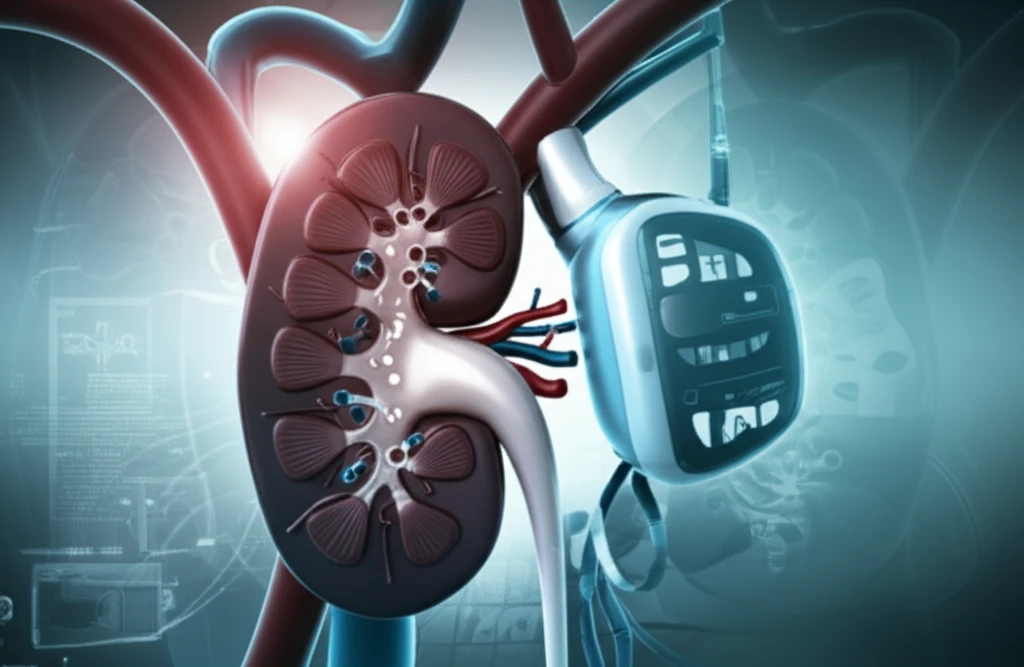
AngioJet Thrombectomy: Weighing the Risks of Kidney Injury

"A new study sheds light on the increased risk of acute kidney injury (AKI) associated with the AngioJet procedure compared to catheter-directed thrombolysis for deep vein thrombosis."
Deep vein thrombosis (DVT), particularly when it affects the iliofemoral veins in the pelvis and legs, is a serious condition that can lead to long-term complications like post-thrombotic syndrome. This syndrome causes chronic pain, swelling, and skin changes, significantly impacting quality of life. To prevent these complications, prompt and effective treatment is essential.
Two common approaches for treating acute iliofemoral DVT are catheter-directed thrombolysis (CDT) and percutaneous pharmacomechanical thrombectomy (PMT). CDT involves delivering clot-dissolving drugs directly to the thrombus through a catheter. PMT, on the other hand, uses mechanical devices to break up and remove the clot, often in conjunction with medication. One such device is the AngioJet system, which utilizes a high-pressure saline jet to fragment and aspirate the thrombus.
While AngioJet offers the advantage of rapid clot removal, recent research suggests it may come with a higher risk of acute kidney injury (AKI) compared to CDT. This article will explore the findings of a new study investigating this potential risk and discuss the implications for patients with iliofemoral DVT.
AngioJet vs. CDT: Understanding the Kidney Injury Risk
A study published in the Journal of Vascular Surgery: Venous and Lymphatic Disorders compared the outcomes of patients undergoing AngioJet PMT and CDT for acute iliofemoral DVT. The researchers reviewed the medical records of 198 patients treated at a single center between January 2014 and September 2017. Of these, 79 patients received AngioJet PMT, while 119 underwent CDT.
- AngioJet PMT: Patients undergoing AngioJet PMT had a 2.82 times higher odds of developing AKI compared to those receiving CDT.
- Recent Major Surgery: A history of major surgery within three months of the endovascular intervention was associated with an 8.51 times increased risk of AKI.
- Significant Hematocrit Drop: A decrease in hematocrit (the percentage of red blood cells in the blood) of more than 14% was linked to a 2.73 times higher risk of AKI.
Making Informed Decisions About DVT Treatment
The study highlights the importance of carefully weighing the risks and benefits of different treatment options for acute iliofemoral DVT. While AngioJet PMT can be effective for rapid clot removal, the increased risk of AKI, particularly in patients with recent major surgery or those prone to significant hematocrit drops, should be taken into consideration. Patients should discuss these risks with their vascular surgeon to determine the most appropriate treatment strategy for their individual circumstances. Maintaining adequate hydration, using renal protective measures, and closely monitoring kidney function after the procedure are crucial steps to minimize the risk of AKI.