
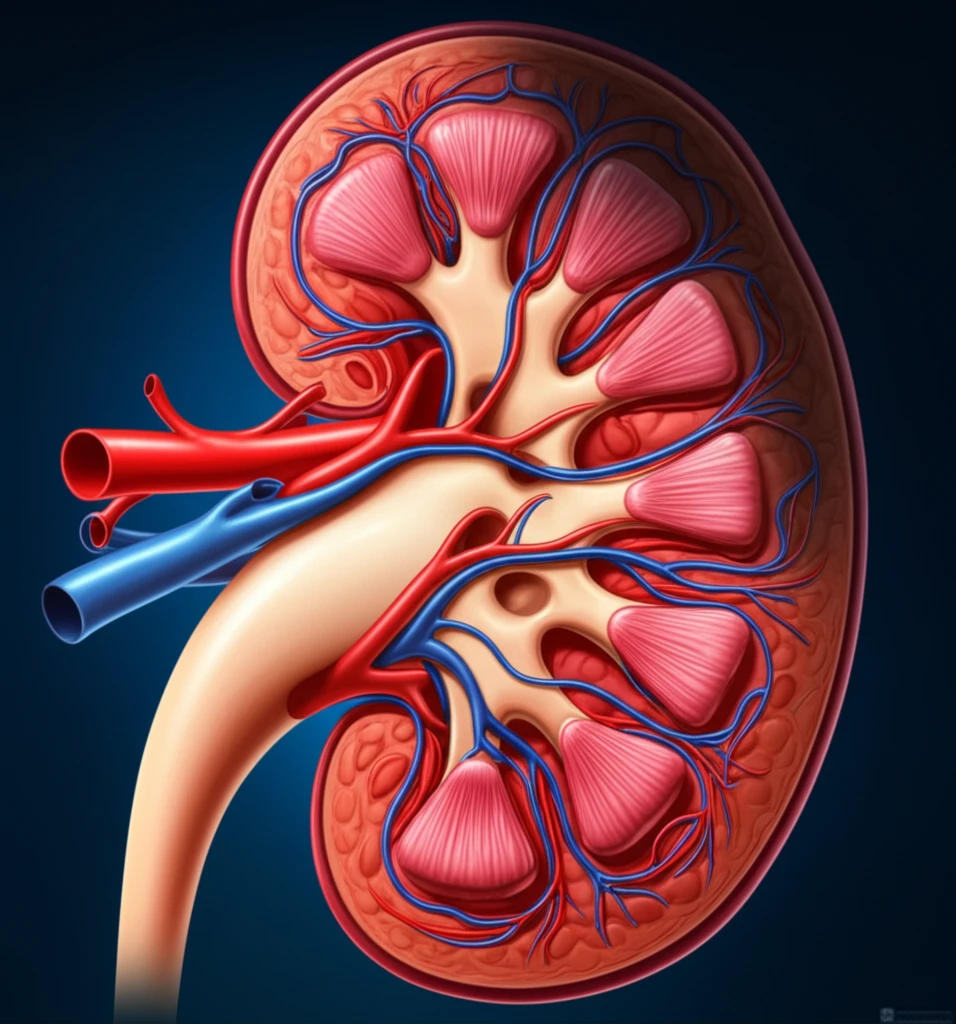
Blood vessels and kidney structures symbolizing the impact of thrombectomy treatments on kidney health.

AngioJet Thrombectomy: Is It Riskier for Your Kidneys Than Other Blood Clot Treatments?

"A new study suggests the AngioJet procedure may increase the risk of acute kidney injury compared to catheter-directed thrombolysis for deep vein thrombosis. Here's what you need to know to protect your kidney health."


Deep vein thrombosis (DVT), particularly in the iliofemoral region, is a serious condition that can lead to long-term complications like post-thrombotic syndrome. To prevent these issues, doctors often recommend treatments like percutaneous mechanical thrombectomy (PMT) or catheter-directed thrombolysis (CDT) to remove the blood clot and restore proper blood flow.

AngioJet is a PMT device known for its efficiency in quickly removing thrombi. However, a recent study has raised concerns about its potential impact on kidney health. The study indicates that patients undergoing PMT with AngioJet may face a higher risk of acute kidney injury (AKI) compared to those treated with CDT.

This article delves into the findings of this study, offering insights into the potential risks associated with AngioJet, comparing it with CDT, and providing actionable information to help you understand and protect your kidney health during DVT treatment.

What the Study Revealed About AngioJet and Kidney Health

Blood vessels and kidney structures symbolizing the impact of thrombectomy treatments on kidney health.

The study, published in the Journal of Vascular Surgery: Venous and Lymphatic Disorders, reviewed the medical records of 198 patients with acute iliofemoral DVT. These patients were treated with either AngioJet PMT (79 patients) or CDT (119 patients). Researchers compared baseline characteristics and monitored postoperative serum creatinine levels to determine the occurrence of AKI.

The results indicated a significantly higher incidence of acute hemolysis (destruction of red blood cells) in the AngioJet group. Further analysis revealed that:

  • Increased AKI Risk: The AngioJet PMT group showed a higher risk of postoperative AKI compared to the CDT group.
  • Hemolysis: AngioJet was associated with more acute hemolysis and hematuria (blood in urine).
  • HCT Drop: A hematocrit (HCT) drop of more than 14% was identified as a significant indicator of upcoming AKI.
  • Surgical History: Patients with a history of major surgery within three months of the endovascular intervention faced a higher risk of AKI.
These findings suggest that while AngioJet is effective for thrombus removal, it may pose a greater risk to kidney health compared to CDT, especially in patients with recent surgical history or significant drops in hematocrit levels.

Protecting Your Kidney Health During DVT Treatment

If you or a loved one is facing treatment for deep vein thrombosis, it’s crucial to have an informed discussion with your healthcare provider about the potential risks and benefits of each treatment option. Given the findings of this study, consider asking the following questions: What is the risk of kidney injury with each treatment option? Are there alternative treatments that may be safer for my kidneys? What steps will be taken to protect my kidneys during and after the procedure? By staying informed and proactive, you can work with your healthcare team to make the best decisions for your overall health.

About this Article -

This article was crafted using a human-AI hybrid and collaborative approach. AI assisted our team with initial drafting, research insights, identifying key questions, and image generation. Our human editors guided topic selection, defined the angle, structured the content, ensured factual accuracy and relevance, refined the tone, and conducted thorough editing to deliver helpful, high-quality information.See our About page for more information.

Everything You Need To Know

1

What is AngioJet and why is it used for deep vein thrombosis?

AngioJet thrombectomy is a percutaneous mechanical thrombectomy (PMT) procedure used to quickly remove blood clots, particularly in cases of deep vein thrombosis (DVT). It utilizes a device to efficiently eliminate thrombi and restore proper blood flow. However, its use has been associated with potential risks to kidney health, specifically an increased risk of acute kidney injury (AKI), particularly when compared to catheter-directed thrombolysis (CDT). This risk is thought to be due to acute hemolysis (destruction of red blood cells) which can lead to kidney damage.

2

What is catheter-directed thrombolysis (CDT), and how does it compare to AngioJet?

Catheter-directed thrombolysis (CDT) is a treatment for deep vein thrombosis (DVT) that involves using a catheter to deliver medication directly to the blood clot, dissolving it over time. It's an alternative to percutaneous mechanical thrombectomy (PMT) procedures like AngioJet. Studies suggest that CDT may pose a lower risk of acute kidney injury (AKI) compared to AngioJet. This is because CDT does not cause as much acute hemolysis (destruction of red blood cells) that may cause damage to the kidney.

3

What is acute kidney injury (AKI), and why is it a concern with certain DVT treatments?

Acute kidney injury (AKI) is a sudden decline in kidney function. In the context of deep vein thrombosis (DVT) treatment, AKI is a potential complication associated with procedures like AngioJet thrombectomy. The study indicates that AngioJet may increase the risk of AKI due to acute hemolysis, which is the destruction of red blood cells. Hemolysis releases substances that can be toxic to the kidneys, leading to AKI. Monitoring serum creatinine levels post-procedure is important to detect and manage AKI.

4

What does hemolysis mean, and why is it relevant to AngioJet thrombectomy?

Hemolysis refers to the destruction of red blood cells. In the context of AngioJet thrombectomy, acute hemolysis is a significant concern because the rapid destruction of red blood cells can release harmful substances into the bloodstream. These substances can overwhelm the kidneys, potentially leading to acute kidney injury (AKI). The study mentioned identifies hemolysis as a key factor linking AngioJet to increased AKI risk, making it important to monitor patients for signs of hemolysis, such as a drop in hematocrit (HCT) levels or blood in the urine (hematuria).

5

Why is a drop in hematocrit (HCT) important to monitor after procedures like AngioJet?

A significant drop in hematocrit (HCT) levels, specifically more than 14%, is an important indicator of potential complications, including acute kidney injury (AKI), following a procedure like AngioJet thrombectomy. Hematocrit measures the proportion of red blood cells in the blood, and a sharp decline can signal acute hemolysis (destruction of red blood cells). Because hemolysis can lead to AKI, monitoring HCT levels post-procedure can help healthcare providers identify patients at higher risk and take proactive measures to protect their kidney health.

Newsletter Subscribe

Subscribe to get the latest articles and insights directly in your inbox.