
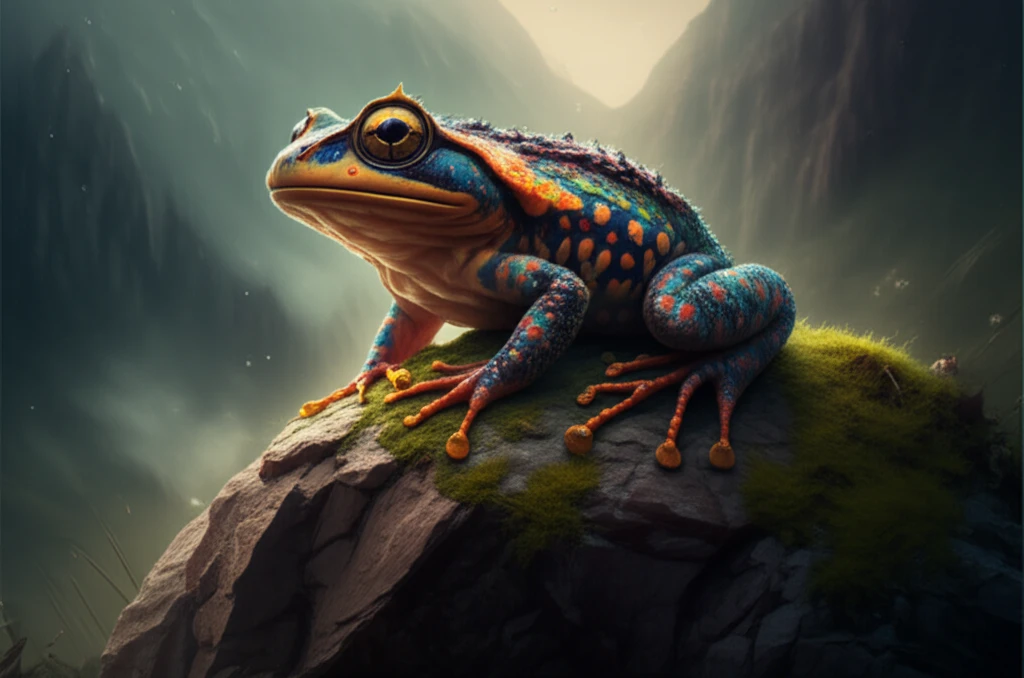
Andean Water Frog Evolution: Unveiling Secrets of the Telmatobius atahualpai

"Dive into the world of the Telmatobius atahualpai, a unique frog species, and explore its evolutionary journey, physical traits, and what its existence tells us about adapting to extreme environments."
The genus Telmatobius, commonly known as Andean water frogs, is a diverse group of amphibians with around 60 species scattered across the high-altitude regions from Ecuador to Argentina and Chile. These frogs have adapted to life in the challenging environments of the Andes Mountains, inhabiting lakes, streams, and wetlands at elevations ranging from 1,000 to over 5,200 meters.
Among these remarkable creatures is Telmatobius atahualpai, a species native to the Cordillera Central in northern Peru. The species was initially described based on limited specimens, making it difficult to fully understand its characteristics and evolutionary relationships. This article delves into a comprehensive analysis of Telmatobius atahualpai, shedding light on its morphology, skeletal structure, and phylogenetic connections.
By examining adult specimens and their skeletons, this exploration aims to provide a revised diagnosis of the species, clarify its physical traits, and propose hypotheses about its relationships with other members of the Telmatobius genus. Ultimately, it's a story of resilience, adaptation, and the ongoing quest to understand the biodiversity of our planet.
Decoding the Physical Adaptations of Telmatobius atahualpai
Researchers meticulously examined the external morphology of 12 Telmatobius atahualpai specimens, carefully noting various measurements and characteristics. A male and a female were prepared as skeletons for detailed osteological analysis. Additional specimens from other Telmatobius species were also examined for comparative purposes, ensuring a comprehensive understanding of the unique features of T. atahualpai.
- Head dimensions: The head is slightly narrower than the body, wider than it is long.
- Snout and Nostrils: The snout is short and rounded, with nostrils that are not protuberant.
- Eyes: Eyes are anterolateral and may or may not protrude, positioned on top of the head.
- Tympanic Membrane: The tympanic membrane is absent, and the tympanic annulus is not visible externally.
- Teeth: Maxillary and premaxillary teeth are fang-like.
- Tongue: The tongue is large, subcircular, and may be shallowly notched.
- Forelimbs: Forelimbs are robust in males and slender in females.
- Webbing: Webbing and lateral fringes are absent on the fingers, while toes are moderately webbed.
- Nuptial Spines: Males possess large, conical nuptial spines on their thumbs, crucial for grasping during mating.
Conserving a High-Altitude Specialist
The research highlights the need for conservation efforts for Telmatobius atahualpai, especially given its limited distribution and the threats it faces. Habitat loss, climate change, and emerging diseases like chytridiomycosis pose significant risks to this species and other Andean amphibians.
Further research is essential to fully understand the evolutionary history and ecological role of Telmatobius atahualpai. Unraveling its genetic relationships with other Telmatobius species and investigating its interactions within its high-altitude ecosystem will provide valuable insights for conservation strategies.
By continuing to study and protect this unique frog, we can ensure the survival of a fascinating example of life's ability to adapt and thrive in extreme environments. The story of Telmatobius atahualpai is a reminder of the rich biodiversity hidden in the Andes Mountains and the importance of preserving it for future generations.