
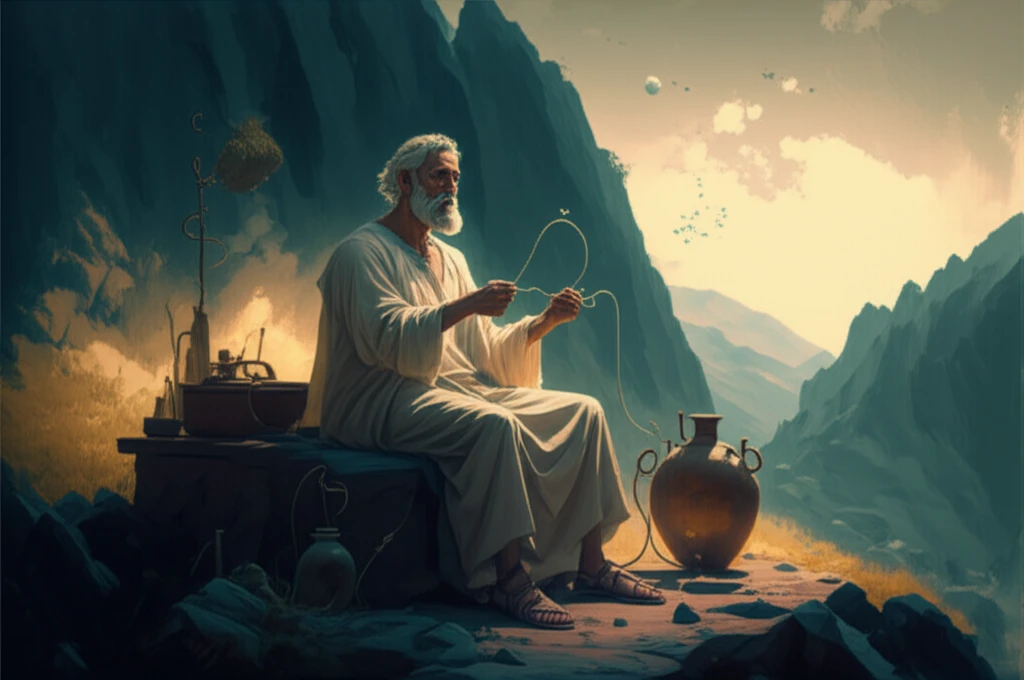
Ancient Greek physician practicing air therapy in a mountain setting.

Ancient Healing: Rediscovering Physical Therapy's Lost Arts

"From Ancient Greece to 19th Century Europe, explore the forgotten techniques of physical therapy and their surprising relevance today."


In his book, La thérapeutique physique d'autrefois (Physical Therapy of Yesteryear), Léon Mac-Auliffe highlights medicine as one of the most ancient sciences. He notes that humans have always sought to understand and modify their environment to improve their health. From this perspective, physical therapy has ancient origins.

Mac-Auliffe's historical review omits discussion of electrotherapy, mechanotherapy, and orthopedics. This is because during Mac-Auliffe's time these fields were considered already well-defined within medical literature.

Léon Mac-Auliffe, born February 29, 1876, and died February 7, 1937, was a doctor and historian. He founded a clinic for stomach ailments and contributed significantly to medical understanding during his time.

Ancient Air Therapy: Breathing New Life into Old Ideas

Ancient Greek physician practicing air therapy in a mountain setting.

The concept of air therapy dates back to Anaximenes of Milet (585-525 BC) who wrote, "The body of man is nourished by three things: by food, by drink, and by breath." Ancient civilizations believed that air, while essential, could also be harmful if of poor quality or contaminated.

Paul of Aegina, a Greek physician in the 7th century, advocated for high-altitude cures, which was linked to the idea of seeking “good air”. In the Middle Ages, the role of the perfumer was to purify and disinfect homes, making the air more breathable. This highlights the historical emphasis on air quality for health.

  • Good air was considered essential to life and health.
  • High altitudes and clean environments were sought for their therapeutic benefits.
  • Purification methods were used to combat “infected” air.
Even sea voyages were recommended as a kind of therapeutic cruise for those with lung ailments, tapping into the rejuvenating qualities of fresh, maritime air. Mountain cures became popular with Adolphi noting, "The air does not stagnate on the mountains but flows easily. This air is dry and cold."

Revisiting Ancient Wisdom

Mac-Auliffe's work serves as a historical record of early natural treatment methods. While often based on empiricism, these techniques laid the groundwork for modern physical medicine and rehabilitation. Today's research helps us understand and refine these approaches, tailoring treatments to individual needs with greater precision and safety.

About this Article -

This article was crafted using a human-AI hybrid and collaborative approach. AI assisted our team with initial drafting, research insights, identifying key questions, and image generation. Our human editors guided topic selection, defined the angle, structured the content, ensured factual accuracy and relevance, refined the tone, and conducted thorough editing to deliver helpful, high-quality information.See our About page for more information.

Everything You Need To Know

1

What were the main types of therapies practiced in ancient physical therapy?

Ancient physical therapy techniques involved the use of air, heat, water, cold, and exercise. These methods were foundational, influencing the development of modern wellness practices. The understanding of how these elements affect the body was central to ancient healing philosophies and practices.

2

Who was Léon Mac-Auliffe, and what was his contribution to the understanding of physical therapy?

Léon Mac-Auliffe was a doctor and historian who lived from 1876 to 1937. He wrote *La thérapeutique physique d'autrefois*, which documented early natural treatment methods. His work provides a historical record of these practices, which laid the groundwork for modern physical medicine and rehabilitation. Mac-Auliffe's focus highlighted the ancient roots of physical therapy.

3

How did ancient civilizations view the role of air in health and healing?

Ancient civilizations, influenced by figures like Anaximenes of Milet, recognized air's essential role in sustaining life. They believed that both the quality of air and its environment are crucial for health. Paul of Aegina advocated for high-altitude cures, and purification methods, such as those employed by perfumers, were used to improve air quality. The concept of seeking 'good air' was a cornerstone of ancient therapeutic practices.

4

What are some of the historical examples used in physical therapy concerning 'air'?

Examples of air therapy include high-altitude cures recommended by Paul of Aegina, and sea voyages. Mountain cures were also favored, as described by Adolphi, who noted the benefits of the dry, cold, and easily flowing air found in mountainous regions. These practices reflect the ancient understanding of how environmental factors influence health.

5

Why did Léon Mac-Auliffe omit certain therapies, such as electrotherapy and mechanotherapy, from his book?

Léon Mac-Auliffe did not include electrotherapy, mechanotherapy, and orthopedics in his historical review because, during his time, these fields were already well-established within medical literature. His focus was on documenting the early, natural treatment methods that formed the foundation of physical therapy, rather than revisiting the established fields that had developed more recently.

Newsletter Subscribe

Subscribe to get the latest articles and insights directly in your inbox.