
Ancient Asteroid Found in Oort Cloud: Rewriting Solar System History?

"Scientists discover a rocky body lurking in the icy depths of the Oort Cloud, challenging our understanding of planet formation and solar system dynamics."
Our solar system's story is etched in the compositions of small, primitive bodies that remain from its formation. The makeup of these objects, and their current locations, reveal how material was distributed during planet formation.
Comets, traditionally icy bodies, are observed, and provide insights into the chemistry of the early solar system. These comets are like time capsules.
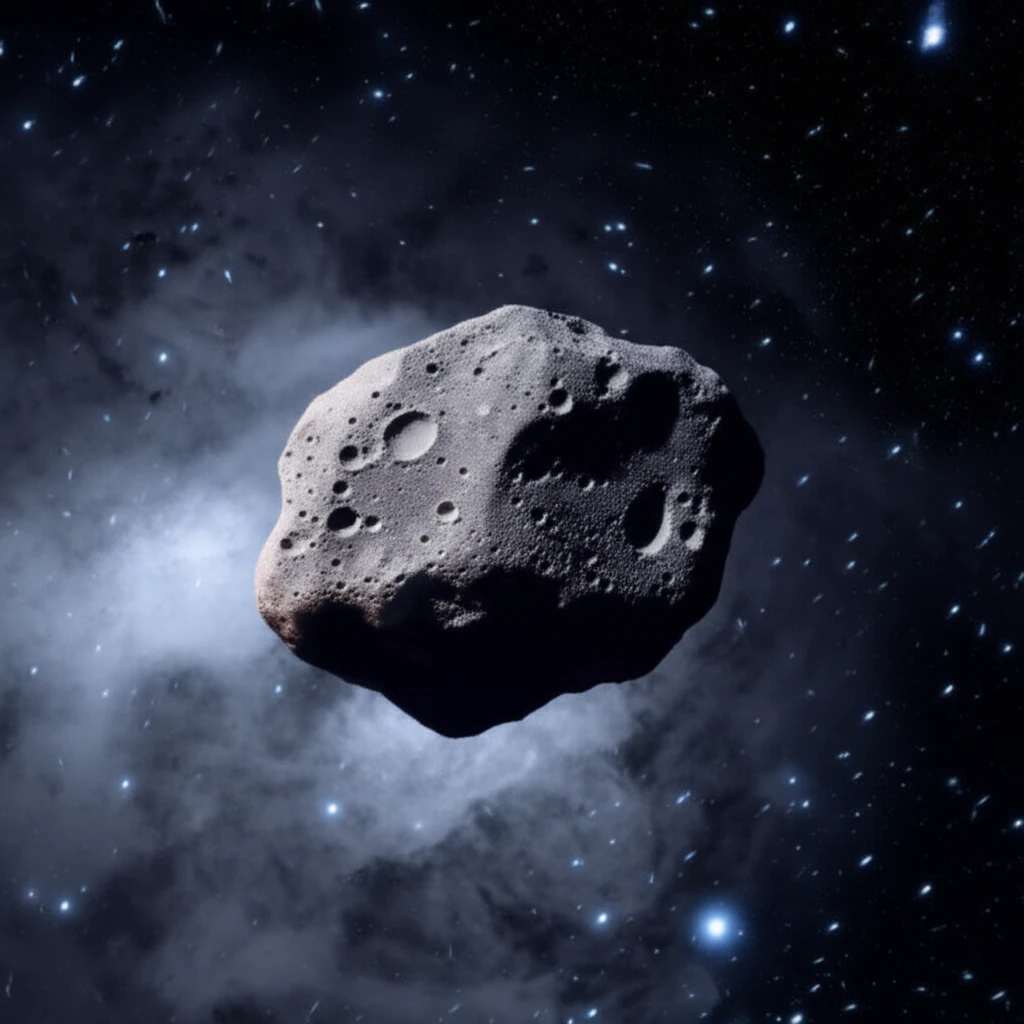
Now, imagine finding a rocky asteroid, similar to those in the inner solar system, way out in the Oort Cloud. That’s precisely what a team of astronomers has discovered, challenging existing models and potentially rewriting our understanding of how our solar system evolved.
C/2014 S3 (PANSTARRS): An Inner Solar System Immigrant?
The object, designated C/2014 S3 (PANSTARRS), has an orbit characteristic of comets originating from the Oort Cloud. What makes it stand out is its composition. Unlike the expected icy composition, C/2014 S3's spectrum closely resembles that of S-type asteroids found in the inner asteroid belt.
- Challenging Dynamical Models: Current models for solar system formation vary in their predictions about how much rocky material from the inner regions should be present in the Oort Cloud. C/2014 S3 provides a crucial data point to test these models.
- Migration Mysteries: Some models propose that giant planets significantly shifted their orbits early in solar system history, scattering material far and wide. The presence of inner solar system material in the Oort Cloud supports these migration-based models.
- A 'Manx' Comet: C/2014 S3 displays a very faint level of cometary activity, far less than typical ice-rich comets. Scientists are calling this a "Manx" object, after the tailless cat, suggesting it has retained only a small fraction of the water expected from its formation location.
What's Next for this Oort Cloud Discovery?
The discovery of C/2014 S3 opens a window into the early solar system. It highlights that some objects underwent aqueous processing and accreted water ice close to the protoplanetary disk snowline. This research will test models, as there is the need to characterise more Manx objects.
Future research characterizing more of these "Manx" objects is crucial. Determining the abundance of S-type asteroids in the Oort Cloud will provide strong constraints for dynamical models of solar system evolution.
C/2014 S3 offers a unique opportunity to test predictions about the amount of inner solar system material residing in the Oort Cloud and to refine our understanding of the processes that shaped our planetary system. It's a tantalizing glimpse into the solar system's chaotic past and the building blocks of our own world.