
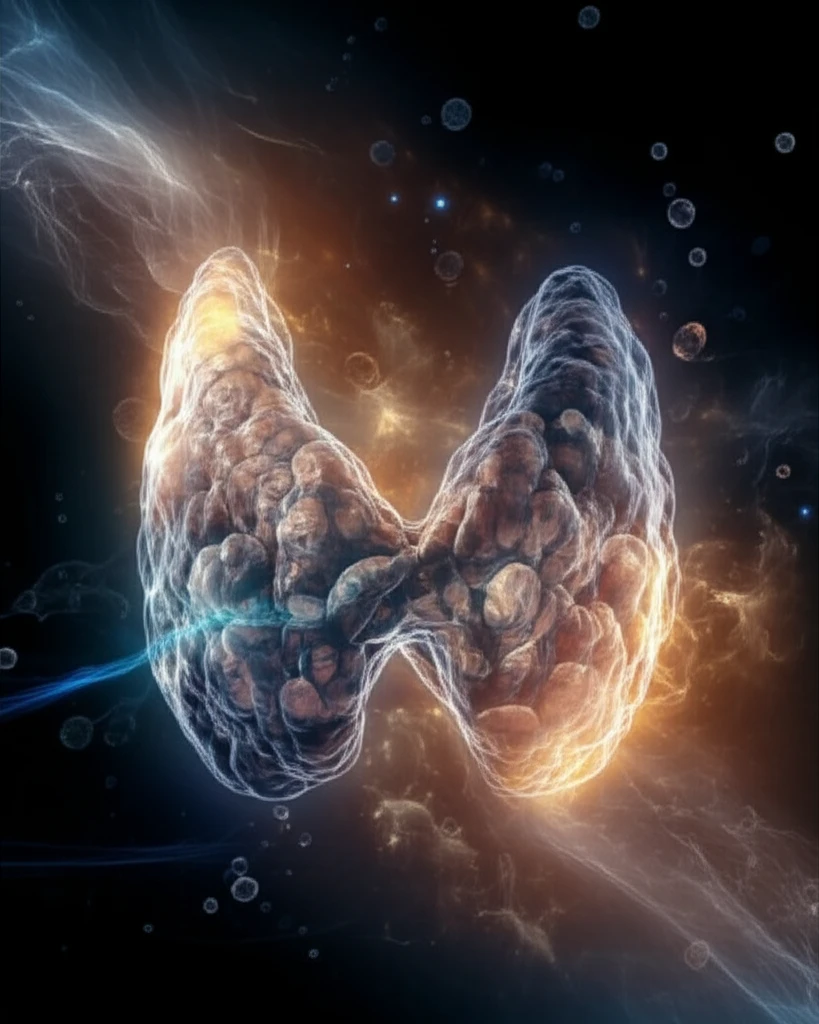
Microscopic view of transforming thyroid cancer cells.

Anaplastic Thyroid Cancer: New Hope on the Horizon?

"Discover how new targeted therapies are offering potential breakthroughs in the treatment of anaplastic thyroid cancer, a disease known for its aggressive nature and limited treatment options."


Anaplastic thyroid carcinoma (ATC) is a rare endocrine malignancy that spreads aggressively and is typically resistant to traditional cancer treatments [1-4]. This type of cancer is difficult to treat because it does not respond well to radioiodine, radiotherapy, or chemotherapy. For years, there has been minimal improvement in the survival rates of ATC patients, with a mean survival of approximately 6 months after diagnosis [1-3, 5].

Currently, the most effective approach involves a combination of surgery, chemotherapy (typically doxorubicin and cisplatin), and hyperfractionated accelerated external beam radiotherapy. This multimodal treatment extends median patient survival to about 10 months [6]. However, discovering effective systemic treatments remains critical to managing this aggressive cancer [7].

Emerging research focuses on promising future treatments, including peroxisome proliferator-activated receptor-gamma (PPARγ) agonists, Aurora kinase inhibitors, and tyrosine kinase inhibitors. This article explores these innovative therapies and their potential to transform ATC treatment.

PPARγ Agonists: Can They Redifferentiate Thyroid Cancer Cells?

Microscopic view of transforming thyroid cancer cells.

PPARγ agonists are members of a superfamily of nuclear hormone receptors known for their anti-neoplastic and anti-inflammatory effects [8, 9]. Studies suggest that PPARγ ligands can induce apoptosis (programmed cell death) and prevent the proliferation of various mammalian cells. Excitingly, these ligands also show promise in treating thyroid cancer [10].

PPARγ ligands have demonstrated significant potential in thyroid cancer treatment:

  • Inducing apoptosis in human papillary thyroid carcinoma cells [10]
  • Preventing distant metastasis of BHP18-21 tumors in mice [10]
  • Promoting redifferentiation in thyroid cancer cells, potentially reversing the characteristics that make cancer cells aggressive [11-14]
  • Downregulating the invasive potential of cancer cells [15]
Chung et al. [16] found that activating PPARγ with ligands like troglitazone and 15-deoxy-delta 12,14-prostaglandin J2 led to growth suppression in anaplastic thyroid cancer cells through p53-independent, but p21- and p27-dependent cytostatic pathways. Additionally, Aiello et al. [17] observed that ciglitazone and rosiglitazone inhibited the growth and migration of ATC cells, while increasing apoptosis. Rosiglitazone also boosted the expression of thyroid-specific differentiation markers, suggesting PPARγ agonists might help restore normal function to cancer cells.

Future Directions in ATC Treatment

While new therapeutic approaches against ATC are under development, more research is needed to identify effective therapies to control and cure this disease. Testing the sensitivity of primary ATC cells from each subject to different drugs could increase the effectiveness of the treatment in the next future. Although there are limitations in selective use of novel compounds, the possibility of testing the sensitivity of primary ATC cells to tyrosine kinase inhibitors could increase the effectiveness of treatments. Additionally, chemosensitivity tests are able to predict in vitro effectiveness in most cases.

About this Article -

This article was crafted using a human-AI hybrid and collaborative approach. AI assisted our team with initial drafting, research insights, identifying key questions, and image generation. Our human editors guided topic selection, defined the angle, structured the content, ensured factual accuracy and relevance, refined the tone, and conducted thorough editing to deliver helpful, high-quality information.See our About page for more information.

Everything You Need To Know

1

What is Anaplastic thyroid carcinoma (ATC), and why is it so challenging to treat?

Anaplastic thyroid carcinoma (ATC) is a very aggressive and rare form of thyroid cancer. It is difficult to treat because it often does not respond to standard treatments like radioiodine, radiotherapy, or chemotherapy. The disease spreads quickly, and historically, patient survival has been limited, with a mean survival of about 6 months after diagnosis. The main challenge is that it does not respond to conventional cancer treatments and thus the need for more effective systemic treatments.

2

What is the current standard treatment for Anaplastic thyroid carcinoma (ATC), and how effective is it?

The current most effective treatment approach for Anaplastic thyroid carcinoma (ATC) involves a combination of surgery, chemotherapy (typically doxorubicin and cisplatin), and hyperfractionated accelerated external beam radiotherapy. This multimodal treatment extends median patient survival to approximately 10 months. While this approach offers some improvement, the development of more effective systemic treatments remains crucial for managing this aggressive cancer.

3

What are PPARγ agonists, and how do they work in the context of Anaplastic thyroid carcinoma (ATC) treatment?

PPARγ agonists are a class of drugs that are being investigated for their potential in treating Anaplastic thyroid carcinoma (ATC). These agonists are known for their anti-neoplastic and anti-inflammatory effects. They have shown promise by inducing apoptosis (programmed cell death) in cancer cells, preventing their proliferation, and potentially promoting redifferentiation of thyroid cancer cells. This redifferentiation could reverse the aggressive characteristics of the cancer cells and restore some normal function.

4

What are some of the promising new treatments being investigated for Anaplastic thyroid carcinoma (ATC)?

Emerging research is exploring various treatments, including PPARγ agonists, Aurora kinase inhibitors, and tyrosine kinase inhibitors. PPARγ agonists, like troglitazone, ciglitazone, and rosiglitazone, have shown potential in suppressing the growth of ATC cells, promoting apoptosis, and potentially helping restore normal function to cancer cells. The exploration of these new therapies could lead to a significant change in how Anaplastic thyroid carcinoma (ATC) is treated.

5

What are the future directions for improving the treatment of Anaplastic thyroid carcinoma (ATC)?

Future research directions include the development of new therapeutic approaches to control and cure Anaplastic thyroid carcinoma (ATC). One promising avenue is testing the sensitivity of each patient's ATC cells to different drugs to increase treatment effectiveness. Investigating tyrosine kinase inhibitors and chemosensitivity tests could also improve treatment outcomes. These efforts aim to overcome the limitations of current treatments and provide more effective options for patients with this aggressive cancer.

Newsletter Subscribe

Subscribe to get the latest articles and insights directly in your inbox.