
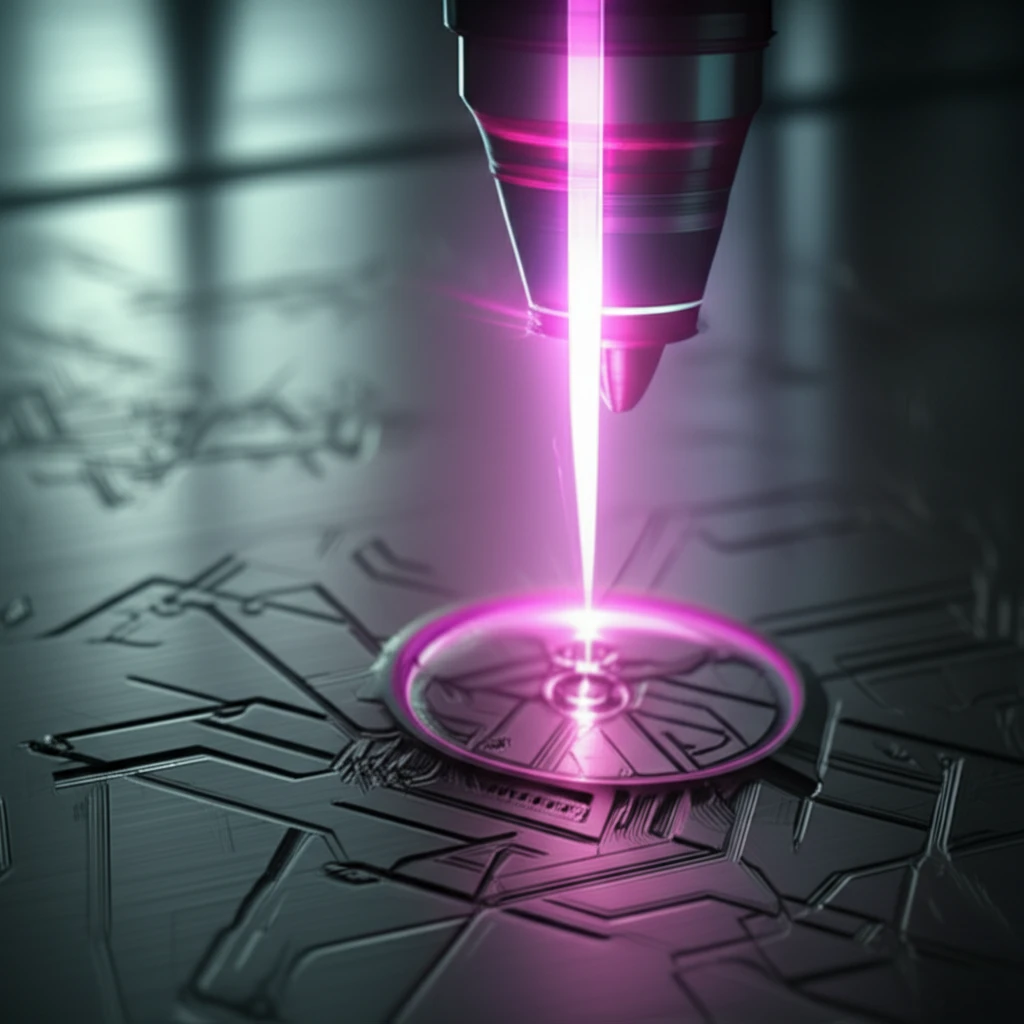
Aluminum's Glow-Up: How Laser Texturing is Redefining Surface Tech

"From aerospace to everyday gadgets, discover how modifying aluminum alloy surfaces with laser tech is boosting performance and creating next-gen materials."
The quest to control how liquids interact with surfaces has sparked intense scientific curiosity. Applications range from self-cleaning marvels to advanced anti-corrosion techniques, impacting industries from aerospace to consumer electronics. Research in surface modification is pivotal for those developing transportation equipment, liquid separation technologies, advanced antennas, and satellite components, all striving for peak performance and durability.
Scientists are constantly seeking innovative methods to craft surfaces with tailored properties. Critical factors include cost-effectiveness, ease of use, and the ability to create diverse textures and roughness levels. Several methods exist for modifying surfaces, each with unique advantages. Surface texturing methods are broadly known as Chemical deposition from gas phase and sublimation.
Among these techniques, laser irradiation stands out as a particularly promising method for altering surface morphology. By precisely applying pulsed laser radiation, we can fine-tune surface wetting and spreading characteristics. Manipulating laser parameters such as power, beam diameter, and ablation rate allows the creation of surfaces with controlled hydrophobic or hydrophilic properties from the same base material. This level of control opens up a vast range of potential applications.
Laser Texturing: The Method Behind the Magic
Researchers investigated how laser texturing affects the surface properties of AMG-6 aluminum alloy. Using a fiber laser system, they applied textures to the aluminum substrates and then measured the static contact angle (SCA) of water droplets on these surfaces to gauge their wettability.
- Laser Frequency: 99 Hz
- Laser Travel Speed: 800 x 10-3 m/sec
- Laser Power: Varied between 2, 6, 10, 14, and 18 W
The Future is Textured
Laser texturing is revolutionizing the functionality of aluminum alloy surfaces. The study demonstrated that the power of the laser significantly impacts surface characteristics, with higher powers leading to porous, hydrophobic textures. These findings pave the way for creating advanced materials with tailored surface properties, suitable for applications ranging from aerospace components to self-cleaning surfaces. Continued research and development in laser texturing promise a future where material surfaces are engineered with unprecedented precision and control.