
Alarm Fatigue in Hospitals: Can Smart Software Really Make a Difference?

"New research explores how smart software is helping hospitals reduce alarm fatigue and improve patient care."
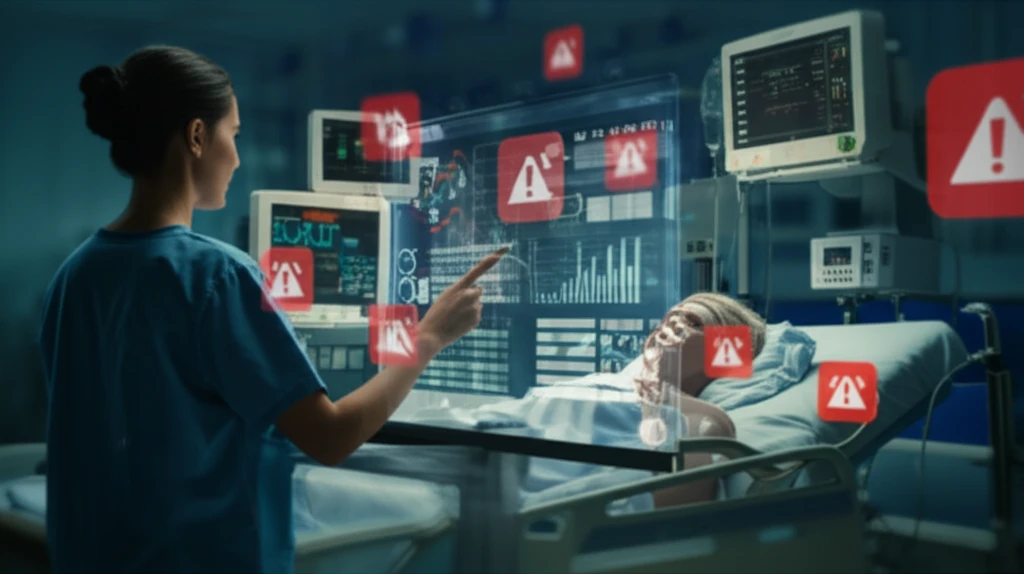
Hospitals can be noisy places, and much of that noise comes from medical devices designed to alert healthcare providers to potential problems. But with so many alarms going off, it's easy for healthcare workers to become desensitized, a phenomenon known as alarm fatigue. This can lead to critical alarms being missed, potentially endangering patient safety.
Alarm fatigue is a serious issue. In intensive care units (ICUs), where multiple monitors constantly track vital signs, the problem is particularly acute. The constant barrage of alerts can be overwhelming, making it difficult for nurses and doctors to focus on the most important information. This can lead to delays in treatment and, in some cases, adverse outcomes.
Fortunately, new technologies are emerging to address this challenge. One promising approach involves using smart software to customize alarms, filtering out irrelevant alerts and highlighting those that require immediate attention. This article delves into recent research on alarm fatigue and explores how this technology is helping to improve patient care.
How Smart Software is Changing Alarm Management in Hospitals
The study, published in PLOS ONE, focused on testing a new type of software called IntelliVue® Alarm Advisor. This software is designed to help nurses customize the alarms on patient monitors, filtering out non-essential alerts and highlighting critical changes in a patient's condition. The software provides visual alerts on the monitor when repeated alarms for the same violation are triggered and silenced within a certain timeframe. The system does not automatically change any alarm settings on its own but offers nurses the opportunity to do so.
- Heart Rate Alarms: The number of medium priority heart rate alarms decreased by 9.3%.
- Respiratory Rate Alarms: Respiratory rate alarms were reduced by 11.8%.
- Arterial Pressure Alarms: A reduction of 15.9% was observed in arterial pressure alarms.
- Improved Nurse Experience: Nurses reported less time spent responding to non-actionable alarms, and fewer situations where critical alarms were missed.
The Future of Alarm Management
This research offers valuable insights into the potential of smart software to reduce alarm fatigue and enhance patient safety in hospitals. As technology continues to advance, we can expect to see even more sophisticated solutions emerge. These may include more advanced algorithms that can predict patient deterioration, as well as systems that can integrate data from multiple sources to provide a more comprehensive view of a patient's condition. By embracing these innovations, healthcare providers can create a safer, more efficient, and patient-centered environment.