
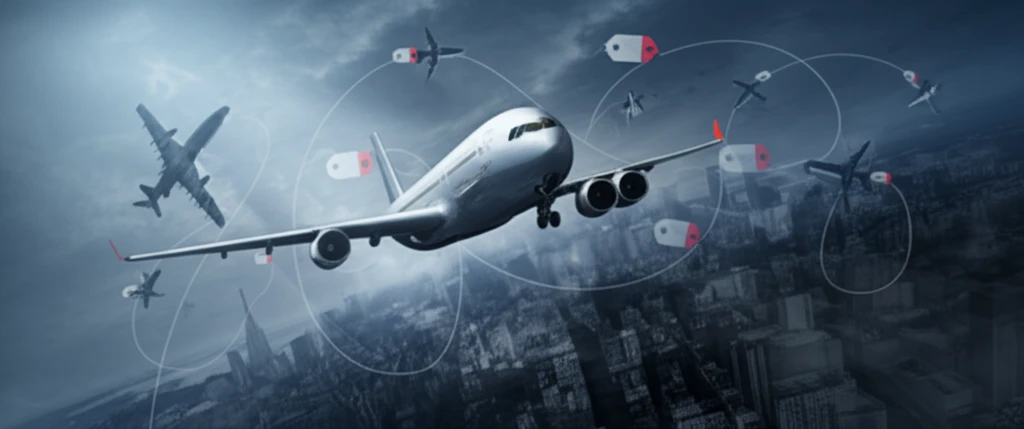
Airline Secrets: How Mergers and Multimarket Contact Affect Ticket Prices

"Dive into the hidden world of airline pricing strategies. Discover how mergers and extensive networks impact the fares you pay, and what it means for your travel budget."
The airline industry, a complex web of routes, fares, and competition, often leaves travelers scratching their heads about pricing. Why does a ticket cost so much one day and so little the next? The answer lies in a combination of factors, including airline mergers and the concept of 'multimarket contact,' where airlines compete on numerous routes simultaneously.
Collusion, both explicit and tacit, is a central issue in this industry. While direct collusion is illegal, airlines can subtly coordinate pricing through various means. Two prominent factors influencing this are multimarket contact and airline mergers. Extensive research has been conducted into both, particularly since a wave of mergers consolidated the U.S. airline market in recent decades.
This article breaks down the latest research into how multimarket contact and mergers affect airline ticket prices. We'll explore the strategies airlines use, the impact on competition, and what it all means for your travel budget. Understanding these dynamics can empower you to make smarter choices and potentially save money on your next flight.
Decoding Multimarket Contact: How Airlines Subtly Coordinate Prices
Multimarket contact occurs when the same airlines compete against each other on many different routes. The theory suggests that this repeated interaction can lead to tacit collusion. Instead of explicitly agreeing to fix prices, airlines may subtly coordinate to avoid aggressive price wars that could hurt profits across their entire network. Think of it as a silent understanding: 'I won't undercut you on this route if you don't undercut me on that one.'
- Increased Interdependence: Airlines become more reliant on each other's pricing decisions across their network.
- Reduced Incentive for Price Wars: Lowering prices on one route could trigger retaliation on others, making aggressive competition less appealing.
- Facilitated Coordination: Repeated interaction makes it easier for airlines to signal their intentions and maintain stable pricing.
The Future of Airline Pricing: What to Expect
The dynamics of airline pricing are constantly evolving. As airlines continue to merge and expand their networks, the impact of multimarket contact and market power will likely intensify. Understanding these forces can help travelers anticipate price trends and make informed decisions. Keep an eye on market concentration, route competition, and airline strategies to navigate the ever-changing world of airline ticket pricing and potentially save money on your next trip.