
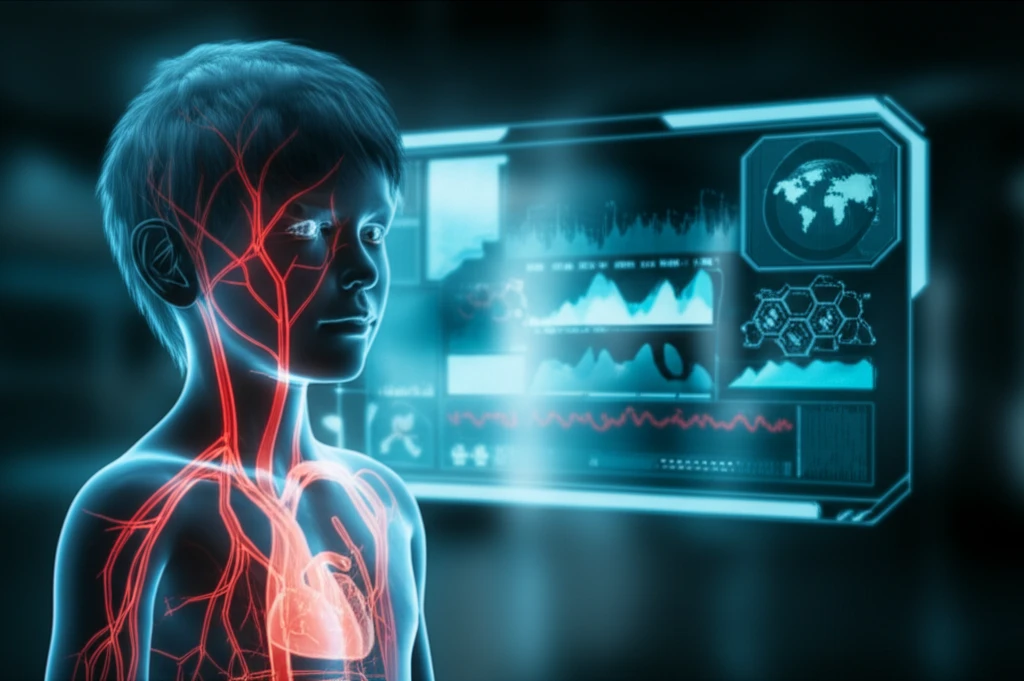
AI-powered system analyzing a child's vascular system, symbolizing advanced pediatric VTE detection.

AI to the Rescue: How Natural Language Processing is Revolutionizing Pediatric VTE Detection

"Discover how AI-powered tools are transforming the landscape of pediatric healthcare, offering a new layer of safety and efficiency in detecting deep vein thrombosis."


Venous thromboembolism (VTE), encompassing both deep vein thrombosis (DVT) and pulmonary embolism, poses a significant threat to children's health. Early and accurate diagnosis is critical, yet traditional methods often fall short, leading to delays in treatment and potentially life-threatening consequences.

Recognizing the need for improvement, researchers at The Children's Hospital of Philadelphia (CHOP) embarked on a pioneering study to explore the use of natural language processing (NLP) in analyzing radiology reports. Their goal was to develop a system that could automatically screen these reports, identifying children at risk of VTE with greater speed and accuracy.

The results of their study, published in the Journal of Thrombosis and Thrombolysis, demonstrate the remarkable potential of NLP to transform pediatric VTE detection. By harnessing the power of AI, clinicians can now access a new level of support, ensuring that more children receive the timely care they need.

What is Natural Language Processing (NLP) and Why is it a Game-Changer in Healthcare?

AI-powered system analyzing a child's vascular system, symbolizing advanced pediatric VTE detection.

Natural Language Processing (NLP) is a branch of artificial intelligence that enables computers to understand, interpret, and generate human language. In healthcare, NLP can be used to extract valuable information from unstructured text data, such as clinical notes, radiology reports, and research articles. This capability is particularly useful in identifying patterns, detecting anomalies, and automating tasks that would otherwise require manual review.

The traditional process of identifying HA-VTE cases involves manual review of hematology consult lists and ICD codes, which are time-consuming and prone to delays. These delays can result in missed opportunities for real-time intervention and prevention efforts. NLP offers a solution by automating the screening process and providing timely alerts to healthcare providers.

  • Enhanced Accuracy: NLP algorithms can identify subtle clues and patterns in radiology reports that might be missed by human reviewers.
  • Increased Efficiency: NLP automates the screening process, freeing up clinicians' time for other critical tasks.
  • Timely Intervention: NLP provides real-time alerts, enabling healthcare providers to intervene earlier and prevent complications.
  • Improved Patient Outcomes: By facilitating earlier diagnosis and treatment, NLP can improve outcomes for children with VTE.
The Children's Hospital of Philadelphia study showcased the efficiency of NLP. It scanned 6373 radiology reports, a task that would take a human over 3000 hours to complete in a year by spending over 5 minutes on each report, but the NLP system completed this in just 5 minutes per day.

The Future of Pediatric VTE Detection: A Call to Action

The findings of the CHOP study offer a compelling vision for the future of pediatric VTE detection. By embracing NLP and other AI-powered tools, healthcare institutions can enhance their quality improvement systems, reduce patient harm, and improve outcomes for children at risk of VTE. As the technology continues to evolve, we can expect even more sophisticated and effective solutions to emerge, further transforming the landscape of pediatric healthcare.

About this Article -

This article was crafted using a human-AI hybrid and collaborative approach. AI assisted our team with initial drafting, research insights, identifying key questions, and image generation. Our human editors guided topic selection, defined the angle, structured the content, ensured factual accuracy and relevance, refined the tone, and conducted thorough editing to deliver helpful, high-quality information.See our About page for more information.

Everything You Need To Know

1

What is Natural Language Processing, and why is it useful?

Natural Language Processing, or NLP, is a field of artificial intelligence focused on enabling computers to understand and process human language. NLP algorithms analyze text, like radiology reports, to extract relevant information. NLP is significant because it automates the process of identifying patterns and anomalies in unstructured text data, something that would usually require a lot of manual review. The implications of NLP include enhanced accuracy, increased efficiency, and more timely intervention.

2

What is Deep Vein Thrombosis (DVT), and why is it a concern in pediatric health?

Deep Vein Thrombosis, or DVT, is a condition where blood clots form in the deep veins of the body, most commonly in the legs. DVT is part of a broader condition called Venous Thromboembolism (VTE), which also includes pulmonary embolism. DVT is important because it can lead to serious complications, including pulmonary embolism, where the clot travels to the lungs, which can be life-threatening. The use of NLP helps to make the DVT diagnosis quicker and more efficient.

3

What is Venous Thromboembolism (VTE), and why is early detection so important?

Venous Thromboembolism, or VTE, encompasses both Deep Vein Thrombosis (DVT) and pulmonary embolism. VTE is significant because it represents a major threat to children's health, and early and accurate diagnosis is critical to improving patient outcomes. The implications of VTE are severe, as delays in treatment can lead to life-threatening consequences.

4

What are the traditional methods for identifying HA-VTE cases, and what are their limitations?

The traditional methods for identifying HA-VTE (hospital-acquired VTE) cases involve a manual review of hematology consult lists and ICD codes. This is important because these processes are time-consuming and prone to delays, which can result in missed opportunities for real-time intervention and prevention efforts. NLP offers a solution by automating the screening process and providing timely alerts to healthcare providers.

5

How does using Natural Language Processing improve the process of identifying VTE?

Using Natural Language Processing, or NLP, allows for enhanced accuracy in identifying subtle clues and patterns in radiology reports that might be missed by human reviewers. It increases efficiency by automating the screening process, freeing up clinicians' time for other critical tasks. NLP also enables timely intervention by providing real-time alerts, enabling healthcare providers to intervene earlier and prevent complications, ultimately leading to improved patient outcomes for children with VTE.

Newsletter Subscribe

Subscribe to get the latest articles and insights directly in your inbox.