
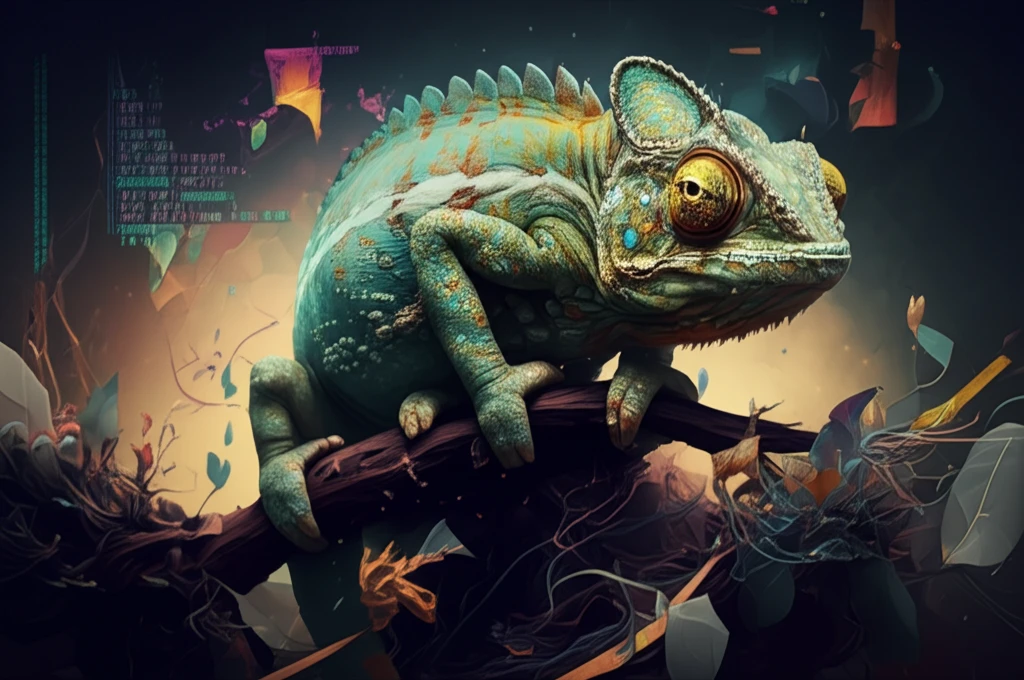
A chameleon adapts to a keyboard branch, symbolizing the need for prompts to evolve with AI.

AI Prompt Evolution: How to Adapt for Maximum Impact

"Unlock the full potential of generative AI by understanding how prompt engineering must evolve alongside rapidly advancing models."


The world of generative AI is moving at warp speed, with new models emerging almost every month. This rapid evolution raises a critical question for anyone using these tools: are your prompts evolving fast enough to keep pace? Just as a finely tuned engine requires the right fuel, generative AI needs well-crafted prompts to unleash its full potential.

A recent study dives deep into this issue, exploring how prompts must adapt as AI models become more sophisticated. The research highlights that simply relying on the same old prompts with newer models can leave significant performance gains on the table. It's not just about having the latest AI – it's about speaking its language fluently.

This article breaks down the key findings of this study, offering actionable insights and practical advice for anyone looking to level up their prompt engineering game. Whether you're a business leader, a creative professional, or simply an AI enthusiast, understanding prompt evolution is essential for maximizing the value of these powerful tools.

Why Your Prompts Need to Evolve with AI Models

A chameleon adapts to a keyboard branch, symbolizing the need for prompts to evolve with AI.

Imagine buying a state-of-the-art camera but continuing to use the same basic settings you used on your old phone. You might get decent pictures, but you're missing out on the advanced features and capabilities that make the new camera truly shine. The same principle applies to generative AI. As models like DALL-E evolve, their ability to interpret and respond to prompts changes dramatically.

The study highlights that performance improvements in generative AI are driven by two key factors: the enhanced technical capabilities of the models themselves and the changes in how users prompt those models. In other words, it's not enough to just have a better AI; you need to become a better prompter.

  • Increased Technical Capabilities: Newer models possess a greater capacity to understand nuance, context, and detail in your prompts.
  • Endogenous Changes in Prompting: As users, we learn to adapt our prompting strategies to take advantage of these increased capabilities.
The research team conducted an online experiment with nearly 1,900 participants, assigning them to use either DALL-E 2 or DALL-E 3 to recreate target images using prompts they wrote themselves. The results were clear: participants using DALL-E 3 achieved significantly better performance, not just because the model was superior, but because they adapted their prompts to leverage its strengths. It's like learning a new dance – you need to adjust your steps to match the music.

The Future of Prompting: Continuous Adaptation

The study's findings point to a future where prompt engineering is not a one-time skill, but a continuous process of adaptation. As generative AI models continue to evolve, people, firms, and institutions will need to constantly refine their prompting strategies to unlock the full potential of these technologies. The key takeaway is clear: to stay ahead in the age of AI, you need to become a lifelong learner of the prompt.

About this Article -

This article was crafted using a human-AI hybrid and collaborative approach. AI assisted our team with initial drafting, research insights, identifying key questions, and image generation. Our human editors guided topic selection, defined the angle, structured the content, ensured factual accuracy and relevance, refined the tone, and conducted thorough editing to deliver helpful, high-quality information.See our About page for more information.

This article is based on research published under:

DOI-LINK: https://doi.org/10.48550/arXiv.2407.14333,

Title: As Generative Models Improve, We Must Adapt Our Prompts

Subject: cs.hc econ.gn q-fin.ec

Authors: Eaman Jahani, Benjamin S. Manning, Joe Zhang, Hong-Yi Tuye, Mohammed Alsobay, Christos Nicolaides, Siddharth Suri, David Holtz

Published: 19-07-2024

Everything You Need To Know

1

Why is it important to evolve prompts along with AI models?

It is crucial to evolve prompts because generative AI models are constantly improving, and your prompts must adapt to take advantage of these advancements. Newer models, like DALL-E 3, have enhanced technical capabilities, allowing them to understand more nuance, context, and detail in your prompts. Failing to update your prompts means you won't fully utilize the model's potential, potentially leaving significant performance gains unrealized. The key is to speak the model's language fluently.

2

How do the technical capabilities of models and prompting strategies influence the performance of AI?

The performance of generative AI is driven by a combination of the technical capabilities of the models themselves and the changes in how users prompt those models. Newer models possess a greater capacity to understand nuance, context, and detail in your prompts. At the same time, users learn to adapt their prompting strategies to take advantage of these increased capabilities. The interaction between these two factors is what leads to improved performance.

3

What was the key finding of the study involving DALL-E 2 and DALL-E 3?

The study demonstrated that participants using DALL-E 3 achieved significantly better performance, not just because the model was superior, but because they adapted their prompts to leverage its strengths. It underscores that the ability to prompt effectively is as important as the model itself. This highlights the need for continuous adaptation in prompting.

4

What are the implications of not updating prompts as AI models evolve?

If you rely on outdated prompts, you risk missing out on the advanced features and capabilities of newer models. You might get decent results, but you will not be maximizing the value of the AI. The research suggests that simply using the same old prompts with newer models can lead to underperformance. It's similar to using basic settings on a state-of-the-art camera.

5

How can one stay ahead in the age of AI regarding prompt engineering?

To stay ahead, prompt engineering should be approached as a continuous process of adaptation and learning. Since generative AI models will continue to evolve, users need to constantly refine their prompting strategies. This includes staying informed about the latest model updates, experimenting with different prompt techniques, and learning from the results. It emphasizes the need to become a lifelong learner of the prompt to maximize the value of these powerful tools.

Newsletter Subscribe

Subscribe to get the latest articles and insights directly in your inbox.