
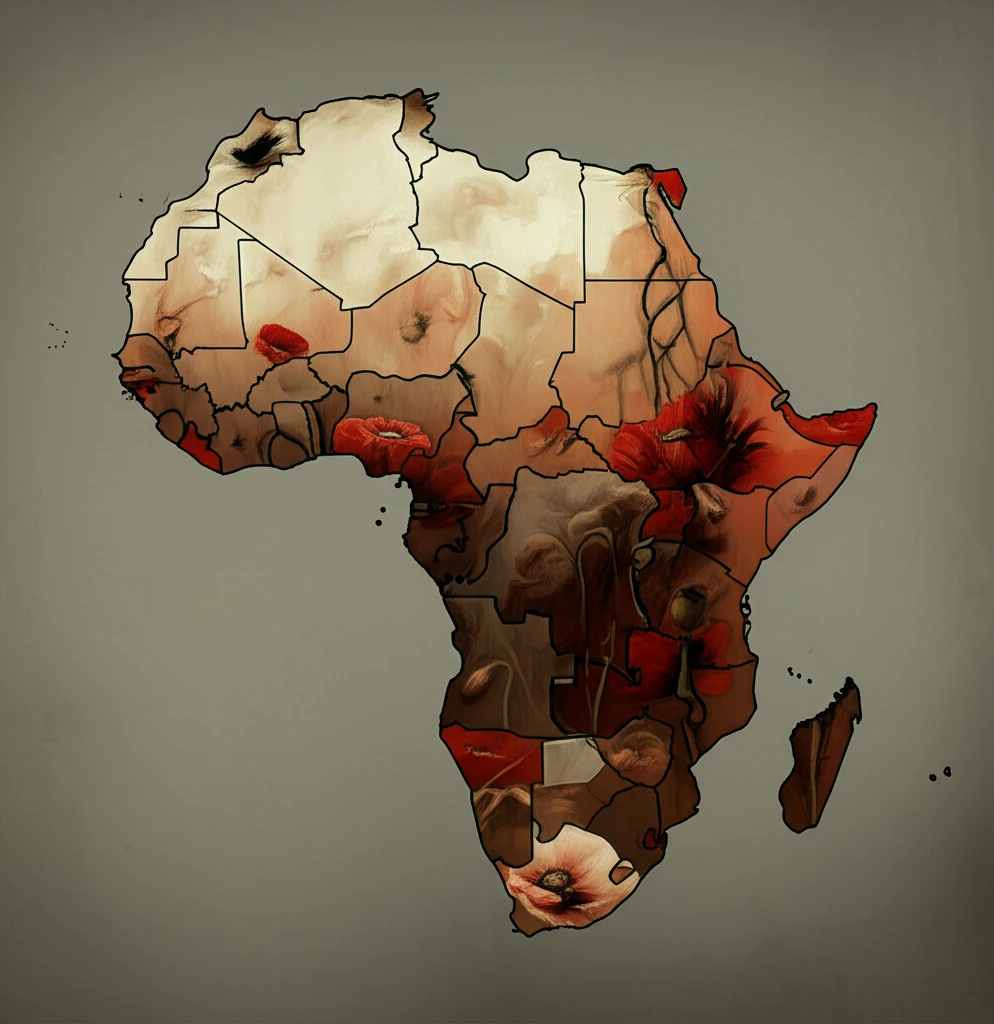
Stylized map of Africa interwoven with opioid poppy flowers, highlighting the opioid crisis.

Africa's Hidden Opioid Crisis: Understanding the Epidemic and Its Impact

"A deep dive into the rising opioid use disorder in Africa, its causes, and the urgent need for solutions."


The opioid crisis, a global phenomenon, is increasingly casting a shadow over the African continent. Historically, Africa served primarily as a transit route for drug trafficking. However, a concerning shift has emerged: internal consumption of opioids is on the rise, marking a significant change in the dynamics of drug use across the region.

In stark contrast to the rising misuse of opioids, access to these medications for legitimate clinical pain management remains severely limited in Africa. The continent faces a dual challenge: a growing epidemic of opioid use disorder (OUD) coupled with a lack of access to essential pain relief for those in need. This disparity underscores a complex public health crisis demanding urgent attention.

Compounding the problem, Africa grapples with the highest burden of HIV and Hepatitis C (HCV) in the world, infectious diseases often exacerbated by injection drug use. Furthermore, the region suffers from a critical shortage of healthcare workers and addiction treatment resources, creating a perfect storm of challenges in addressing the opioid crisis.

What Factors are Contributing to the Opioid Crisis in Africa?

Stylized map of Africa interwoven with opioid poppy flowers, highlighting the opioid crisis.

Several factors contribute to the growing opioid crisis in Africa. As global drug trafficking routes have shifted, African trade routes are increasingly utilized. The original intent was to smuggle opioids to higher-paying markets, namely Europe, but this high availability of opioids has created opportunities for local sales.

Several factors contribute to the rise of opioid use in Africa:

  • Changing Trafficking Routes: Global drug trafficking routes are increasingly using African trade routes, making opioids more available within the continent.
  • Increased Local Sales: The original purpose of smuggling opioids through Africa was to reach European markets. However, the availability of these drugs has created opportunities for local sales, fueling a burgeoning opioid market in sub-Saharan Africa.
  • Improved Infrastructure: The expansion of transport infrastructure in Africa has facilitated the distribution of opioids, making it easier to transport drugs across the continent.
  • Promise of Wealth: The lure of financial gain attracts individuals and criminal networks, further driving the opioid trade and its associated problems.
This combination of factors has led to a rise in opioid consumption for non-clinical indications. What initially began among people who smoked cannabis, in areas near ports where opioids were imported, has now spread to workers, farmers, youth, and others in both rural and urban settings.

The Path Forward: Addressing the Opioid Crisis in Africa

The opioid crisis in Africa demands immediate and comprehensive action. While evidence-based medications exist for opioid use disorder, they remain scarce in the region. It is imperative to implement policies and allocate resources to promote opioid use disorder prevention and management and reduce infectious disease transmission. The time to act is now, ensuring a healthier and more secure future for Africa.

About this Article -

This article was crafted using a human-AI hybrid and collaborative approach. AI assisted our team with initial drafting, research insights, identifying key questions, and image generation. Our human editors guided topic selection, defined the angle, structured the content, ensured factual accuracy and relevance, refined the tone, and conducted thorough editing to deliver helpful, high-quality information.See our About page for more information.

This article is based on research published under:

DOI-LINK: 10.1007/s40429-018-0232-9, Alternate LINK

Title: The Opioid Epidemic In Africa And Its Impact

Subject: Psychiatry and Mental health

Journal: Current Addiction Reports

Publisher: Springer Science and Business Media LLC

Authors: Ann E. Kurth, Peter Cherutich, Rosabelle Conover, Nok Chhun, R. Douglas Bruce, Barrot H. Lambdin

Published: 2018-10-30

Everything You Need To Know

1

What is the opioid crisis in Africa?

The opioid crisis in Africa is characterized by a growing problem of opioid use disorder coupled with limited access to opioid medications for legitimate clinical pain management. This means that while more people are misusing opioids, those who genuinely need them for pain relief often cannot get them. This disparity creates a significant public health challenge.

2

What are the main factors that have contributed to the rise in opioid use?

Several factors contribute to the opioid crisis in Africa. These include changing drug trafficking routes that now utilize African trade routes, leading to increased local sales of opioids. The expansion of transport infrastructure facilitates distribution, and the promise of financial gain attracts individuals and criminal networks to the opioid trade.

3

How has opioid use spread across different groups in Africa?

The spread of opioid use began among people who smoked cannabis near ports where opioids were imported. Over time, it has expanded to include workers, farmers, youth, and others in both rural and urban settings. This indicates a broader reach of opioid misuse affecting various segments of the population.

4

Why is the opioid crisis in Africa especially concerning?

The opioid crisis in Africa is particularly concerning because the continent already faces the highest burden of HIV and Hepatitis C. Injection drug use exacerbates these infectious diseases. Additionally, there is a critical shortage of healthcare workers and addiction treatment resources, making it difficult to address and manage the crisis effectively.

5

What actions are needed to address the opioid crisis in Africa?

Addressing the opioid crisis in Africa requires immediate and comprehensive action, including implementing policies and allocating resources for opioid use disorder prevention and management. It is also crucial to reduce infectious disease transmission by increasing access to treatment. These efforts are essential to ensuring a healthier and more secure future.

Newsletter Subscribe

Subscribe to get the latest articles and insights directly in your inbox.