
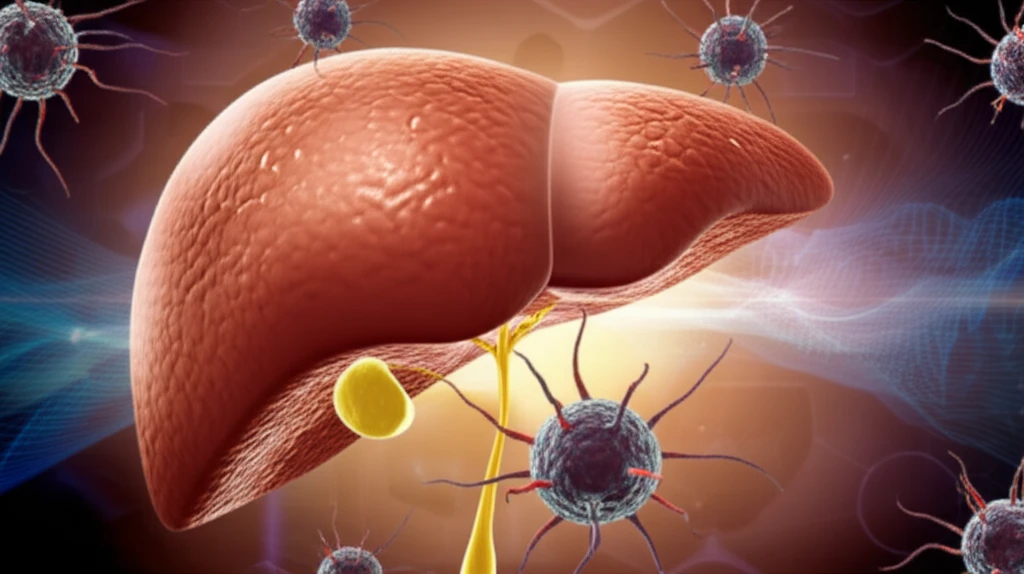
Abstract illustration of liver cells battling cancer cells, symbolizing hope and medical intervention for hepatocellular carcinoma.

Advanced Liver Cancer Therapies: Navigating Macrovascular Invasion and Metastatic Disease

"A comprehensive look at the latest treatments for advanced hepatocellular carcinoma (HCC), focusing on macrovascular invasion and metastasis, to help patients and families understand their options."


Hepatocellular carcinoma (HCC), a complex disease often rooted in chronic liver conditions, presents significant challenges when diagnosed at an advanced stage. Over the past two decades, our understanding of HCC's clinical and molecular intricacies has grown, leading to increased clinical trial activity aimed at improving outcomes for patients with poor prognostic factors such as macrovascular invasion and extrahepatic spread. This article synthesizes the available evidence to guide patients and their families through the treatment landscape.

Historically, systemic treatments for HCC were limited. The introduction of multi-kinase inhibitors like sorafenib in 2008 marked a turning point, demonstrating improved survival compared to placebo. However, despite numerous attempts, no subsequent study has shown a survival benefit superior to sorafenib alone in randomized controlled trials. As a result, treatment strategies have expanded to include loco-regional therapies, which target the unique blood supply of the liver, and are particularly effective for HCC.

This review explores both systemic and loco-regional approaches for treating advanced HCC with macrovascular invasion (MVI) or extrahepatic spread (EHS). By synthesizing existing evidence, we aim to provide a clear understanding of the therapies available and their potential benefits for individuals facing these complex conditions.

Understanding Macrovascular Invasion and Metastatic Disease in HCC

Abstract illustration of liver cells battling cancer cells, symbolizing hope and medical intervention for hepatocellular carcinoma.

Macrovascular invasion (MVI) and extrahepatic spread (EHS) represent significant challenges in the treatment of HCC. MVI occurs when the tumor invades major blood vessels, while EHS refers to the spread of cancer cells beyond the liver. Both conditions are associated with poorer prognoses, making effective treatment strategies crucial.

Several treatment options are available, each with its own set of benefits and limitations. Systemic therapies, such as sorafenib, aim to target cancer cells throughout the body. Loco-regional therapies, on the other hand, focus on treating the tumor within the liver.

  • Sorafenib: As a multi-kinase inhibitor, sorafenib has shown promise in improving overall survival for patients with advanced HCC, particularly those with Child-Pugh A liver function.
  • Transarterial Chemoembolization (TACE): This procedure involves delivering chemotherapy directly to the tumor site, followed by embolization to block blood supply. While TACE has established roles in HCC treatment, its effectiveness in cases with MVI and EHS is still being explored.
  • Radioembolization (Y90): A newer technique, radioembolization involves delivering radioactive beads directly to the tumor via a catheter, offering a targeted approach to treatment.
  • Combination Therapies: Combining systemic and loco-regional approaches may offer synergistic benefits, although high-quality data supporting their use are still needed.
Choosing the most appropriate treatment plan involves careful consideration of various factors, including the extent of the disease, liver function (Child-Pugh score), and overall health of the patient. A multidisciplinary approach, involving liver surgeons, hepatologists, interventional radiologists, and medical oncologists, is essential for developing an individualized treatment strategy.

Looking Ahead: The Future of HCC Treatment

The landscape of HCC treatment is continuously evolving, with ongoing research aimed at developing more effective and targeted therapies. As we move forward, generating high-quality data through well-designed clinical trials will be crucial for refining treatment strategies and improving outcomes for individuals with advanced HCC. A multidisciplinary approach, personalized to each patient's unique circumstances, remains the cornerstone of effective HCC management.

About this Article -

This article was crafted using a human-AI hybrid and collaborative approach. AI assisted our team with initial drafting, research insights, identifying key questions, and image generation. Our human editors guided topic selection, defined the angle, structured the content, ensured factual accuracy and relevance, refined the tone, and conducted thorough editing to deliver helpful, high-quality information.See our About page for more information.

This article is based on research published under:

DOI-LINK: 10.1002/hep.29486, Alternate LINK

Title: Therapies For Advanced Stage Hepatocellular Carcinoma With Macrovascular Invasion Or Metastatic Disease: A Systematic Review And Meta-Analysis

Subject: Hepatology

Journal: Hepatology

Publisher: Wiley

Authors: Richard S. Finn, Andrew X. Zhu, Wigdan Farah, Jehad Almasri, Feras Zaiem, Larry J. Prokop, Mohammad Hassan Murad, Khaled Mohammed

Published: 2017-12-19

Everything You Need To Know

1

What are macrovascular invasion (MVI) and extrahepatic spread (EHS) in the context of hepatocellular carcinoma (HCC), and why are they significant?

In hepatocellular carcinoma (HCC), macrovascular invasion (MVI) refers to the tumor invading major blood vessels, while extrahepatic spread (EHS) indicates that cancer cells have spread beyond the liver. Both MVI and EHS are associated with poorer prognoses, making effective treatment strategies crucial for improving patient outcomes. Their presence often complicates treatment decisions and necessitates more aggressive or combined therapeutic approaches. While some may point to surgical options, these are generally not viable options due to the disease progression.

2

How did the introduction of sorafenib impact the treatment of advanced hepatocellular carcinoma (HCC)?

The introduction of sorafenib in 2008 marked a significant turning point in the treatment of advanced hepatocellular carcinoma (HCC). As a multi-kinase inhibitor, sorafenib demonstrated improved survival compared to placebo in clinical trials, establishing a new standard of care for systemic therapy. It provided a much-needed option for patients with advanced disease, especially those with Child-Pugh A liver function. However, it's important to note that subsequent studies have not shown a survival benefit superior to sorafenib alone, leading to the exploration of other treatment strategies, including loco-regional therapies and combination approaches. Although sorafenib was a breakthrough, it wasn't a cure-all, and its limitations prompted further research into more effective treatments.

3

What are loco-regional therapies, and why are they considered effective for treating hepatocellular carcinoma (HCC)?

Loco-regional therapies are treatment approaches that target the tumor directly within the liver. These therapies are considered effective for treating hepatocellular carcinoma (HCC) because they capitalize on the liver's unique blood supply. Examples include Transarterial Chemoembolization (TACE) and Radioembolization (Y90). TACE delivers chemotherapy directly to the tumor site, followed by embolization to block blood supply, while Radioembolization (Y90) involves delivering radioactive beads directly to the tumor via a catheter. These methods minimize systemic side effects while maximizing the impact on the tumor, making them valuable options, especially for patients who may not be suitable candidates for systemic therapies. While these methods are viable options, their effectiveness in cases with MVI and EHS is still being explored.

4

Can you elaborate on the potential benefits and limitations of Transarterial Chemoembolization (TACE) and Radioembolization (Y90) in treating advanced hepatocellular carcinoma (HCC)?

Transarterial Chemoembolization (TACE) delivers chemotherapy directly to the tumor site, followed by embolization to block blood supply. It has established roles in HCC treatment, particularly for intermediate-stage disease. However, its effectiveness in cases with macrovascular invasion (MVI) and extrahepatic spread (EHS) is still being explored. Radioembolization (Y90), a newer technique, delivers radioactive beads directly to the tumor via a catheter, offering a targeted approach. TACE's limitations include the potential for incomplete tumor coverage and the development of resistance, while Y90 offers more targeted radiation but requires careful patient selection to avoid complications. The best practice involves considering a multidisciplinary approach when determining which treatment to use. Furthermore, both TACE and Y90 must be considered with the patient's overall health.

5

What is the significance of a multidisciplinary approach in managing advanced hepatocellular carcinoma (HCC), and which specialists are typically involved?

A multidisciplinary approach is essential for effectively managing advanced hepatocellular carcinoma (HCC) because the disease's complexity requires expertise from various specialties. This approach ensures that all aspects of the patient's condition are considered when developing an individualized treatment strategy. Typically, a multidisciplinary team includes liver surgeons, hepatologists, interventional radiologists, and medical oncologists. Liver surgeons assess the potential for surgical resection or transplantation. Hepatologists manage the underlying liver disease and overall liver function. Interventional radiologists perform loco-regional therapies like TACE and Y90. Medical oncologists administer systemic therapies such as sorafenib and immunotherapies. Collaboration among these specialists allows for comprehensive assessment, personalized treatment planning, and coordinated care, ultimately improving patient outcomes. Also, the Child-Pugh score must be considered.

Newsletter Subscribe

Subscribe to get the latest articles and insights directly in your inbox.