
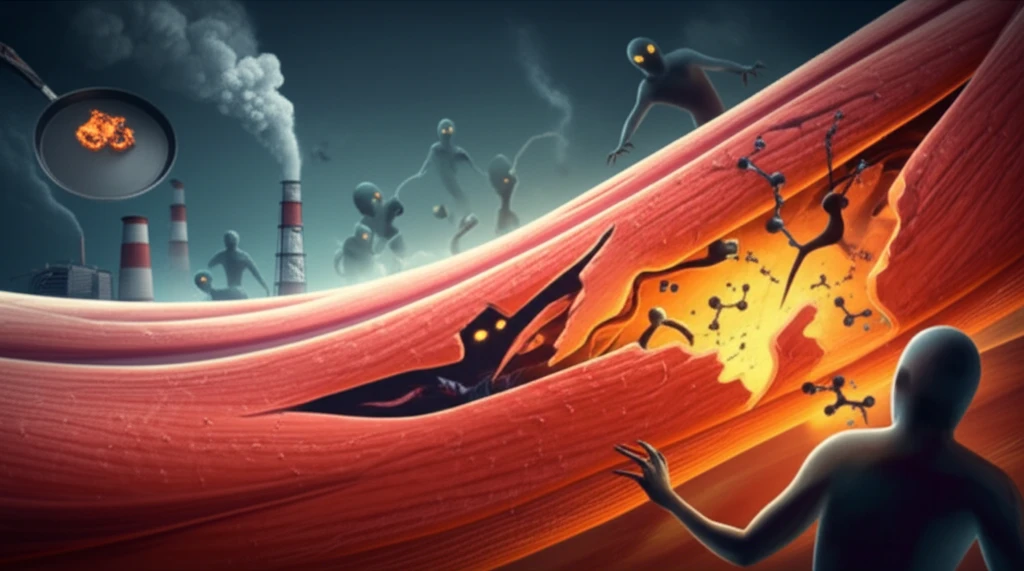
Illustration depicting acrolein attacking muscle fibers.

Acrolein's Assault on Muscles: How a Common Toxin Threatens Your Strength and Health

"Unveiling the Hidden Dangers: Understanding the Impact of Acrolein on Muscle Health and Regeneration"


We live in a world filled with invisible threats. From the air we breathe to the food we eat, our bodies are constantly exposed to a cocktail of compounds, some of which can silently undermine our health. Among these, acrolein stands out as a particularly insidious foe. This ubiquitous environmental toxin, often overlooked, is increasingly recognized for its detrimental effects on our muscles, impacting both strength and overall well-being.

Acrolein's presence is widespread. It's formed during high-heat cooking processes like frying, found in vehicle exhaust, and even present in cigarette smoke. While its impact has been studied in other areas of health, like cardiovascular disease, new research is shedding light on its direct effects on our muscles, revealing a concerning reality for our physical health.

This article dives into the science behind acrolein's assault on our muscles, exploring how it interferes with muscle regeneration and strength. We'll examine the research, understand the mechanisms at play, and discuss practical steps you can take to minimize your exposure and protect your muscular health.

Acrolein: The Silent Threat to Muscle Health

Illustration depicting acrolein attacking muscle fibers.

Acrolein, a highly reactive molecule, is far more common than most people realize. It's generated in various ways, including the burning of fossil fuels and the cooking of food. While your body has some natural defenses against it, prolonged exposure can lead to a buildup that causes significant damage, specifically to muscle tissue.

Recent studies have revealed that acrolein can directly impair muscle regeneration and decrease muscle mass. This is a serious concern, as our muscles are vital for mobility, balance, and overall metabolic health. From athletes to everyday individuals, everyone should be aware of the risks.

  • Muscle Atrophy: Acrolein exposure has been linked to a reduction in muscle size, potentially leading to weakness and reduced physical function.
  • Impaired Regeneration: The body's natural muscle repair process is also hindered by acrolein, making it harder to recover from injury or maintain muscle mass.
  • Reduced Endurance: Studies suggest that acrolein exposure might lead to poorer performance during endurance-based activities.
  • Increased Risk: Individuals with certain health conditions like diabetes or who smoke might be at an even greater risk due to increased exposure and sensitivity.
The studies examined the ways in which acrolein affects the cellular processes of muscle regeneration. Researchers discovered that acrolein can impede the crucial development of muscle fibers and can negatively affect the key molecular pathways that are essential for muscle repair. These findings indicate that even at relatively low levels of exposure, acrolein might contribute to muscle wasting, a condition linked to reduced quality of life and various health issues.

Protecting Your Muscles from Acrolein's Assault

Understanding the threat that acrolein poses is the first step in protecting yourself. This information is for awareness and educational purposes, and shouldn't be considered as medical advice. By taking proactive steps to reduce exposure and supporting your body's natural defenses, you can safeguard your muscular health and overall well-being. Stay informed, make mindful choices, and prioritize your health—your muscles will thank you for it.

About this Article -

This article was crafted using a human-AI hybrid and collaborative approach. AI assisted our team with initial drafting, research insights, identifying key questions, and image generation. Our human editors guided topic selection, defined the angle, structured the content, ensured factual accuracy and relevance, refined the tone, and conducted thorough editing to deliver helpful, high-quality information.See our About page for more information.

This article is based on research published under:

DOI-LINK: 10.1002/jcsm.12362, Alternate LINK

Title: Adverse Effects Of Acrolein, A Ubiquitous Environmental Toxicant, On Muscle Regeneration And Mass

Subject: Physiology (medical)

Journal: Journal of Cachexia, Sarcopenia and Muscle

Publisher: Wiley

Authors: Huang‐Jen Chen, Ching‐Chia Wang, Ding‐Cheng Chan, Chen‐Yuan Chiu, Rong‐Sen Yang, Shing‐Hwa Liu

Published: 2018-10-31

Everything You Need To Know

1

What is acrolein and why should I be concerned about it?

Acrolein is a ubiquitous environmental toxin formed during high-heat cooking, in vehicle exhaust, and in cigarette smoke. It's concerning because studies suggest that prolonged exposure can impair muscle regeneration, decrease muscle mass, and lead to muscle atrophy, potentially reducing physical function and overall well-being. While the body has natural defenses, constant exposure can overwhelm them.

2

How does acrolein specifically affect muscle health and regeneration?

Acrolein impairs muscle regeneration by impeding the development of muscle fibers and negatively affecting key molecular pathways essential for muscle repair. This interference can lead to muscle wasting, a condition linked to reduced quality of life and various health issues. Acrolein exposure has also been linked to a reduction in muscle size, potentially leading to weakness and reduced physical function and studies suggest that acrolein exposure might lead to poorer performance during endurance-based activities.

3

Are some people more susceptible to the negative effects of acrolein on muscle health?

Yes, individuals with certain health conditions like diabetes or those who smoke might be at an even greater risk from acrolein exposure. This increased risk is due to potentially higher exposure levels and increased sensitivity to the toxin. People with diabetes may have compromised detoxification pathways, while smokers directly inhale acrolein, exacerbating its impact.

4

Can exposure to acrolein affect athletic performance or recovery from injuries?

Emerging research suggests that Acrolein exposure might lead to poorer performance during endurance-based activities. The toxin's ability to hinder muscle regeneration and decrease muscle mass is likely to compromise the body's ability to recover from injury or maintain muscle mass over time. These effects can be particularly detrimental to athletes or individuals engaged in regular physical activity.

5

Beyond avoiding smoke and certain cooking methods, what other factors might influence acrolein exposure and how can I mitigate its impact on my muscle health?

While avoiding direct sources of acrolein like cigarette smoke and high-heat cooking is crucial, other environmental factors may play a role. For example, individuals living near industrial areas or high-traffic zones might experience increased exposure. Since acrolein impacts molecular pathways that are essential for muscle repair, consuming a diet rich in antioxidants and nutrients may help bolster the body's natural defenses. However, further research is needed to fully understand the extent of these influences and to develop comprehensive strategies for mitigating the impact of acrolein on muscle health.

Newsletter Subscribe

Subscribe to get the latest articles and insights directly in your inbox.