
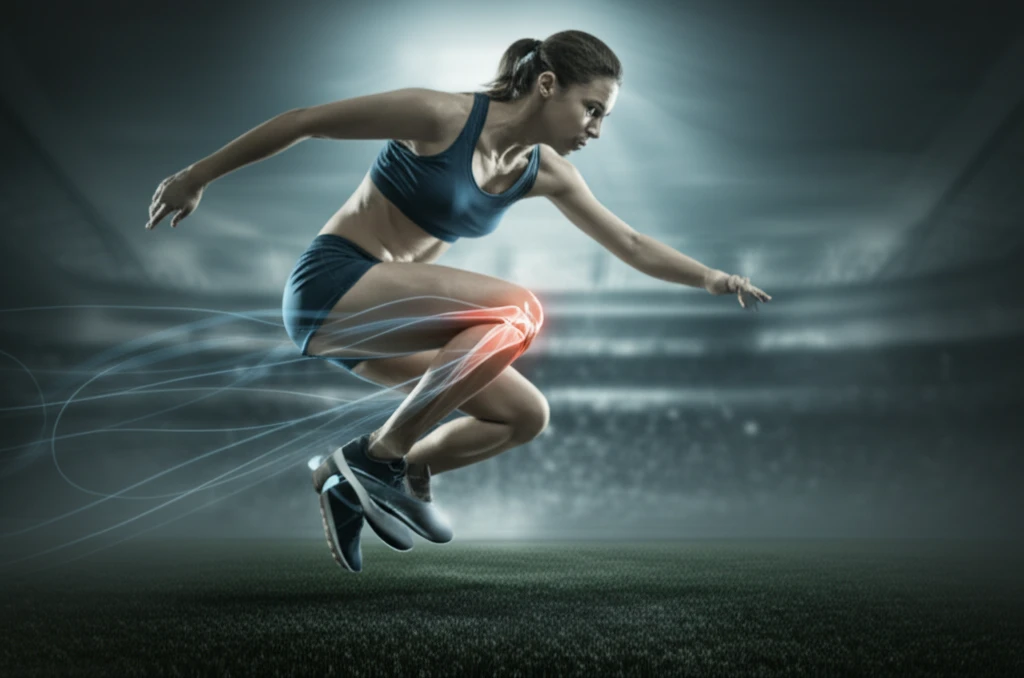
Illustration of a female athlete landing, highlighting the risk factors for ACL injuries.

ACL Injuries in Women: Why Are They More Common, and What Can Be Done?

"Understanding the Rising Rates and Prevention Strategies for ACL Tears in Female Athletes"


Anterior Cruciate Ligament (ACL) injuries are a significant concern in sports, and the statistics are particularly troubling for female athletes. Research consistently shows that women are at a higher risk of ACL tears compared to their male counterparts. This article delves into the reasons behind this disparity, examining the complex interplay of factors contributing to this trend.

From hormonal influences to biomechanical differences, the article explores the multifaceted nature of ACL injuries in women. It goes beyond the causes to provide practical insights into prevention strategies, rehabilitation techniques, and the crucial role of healthcare professionals, athletes, and coaches in mitigating this risk.

This comprehensive guide aims to empower athletes, coaches, trainers, and medical professionals with the knowledge needed to understand and address the challenges of ACL injuries in women, promoting safer and more successful participation in sports.

Why Are ACL Injuries More Common in Women?

Illustration of a female athlete landing, highlighting the risk factors for ACL injuries.

Several factors converge to increase the risk of ACL injuries in female athletes. These include anatomical differences, hormonal influences, and biomechanical variations. Understanding these aspects is crucial for developing effective prevention and treatment strategies.

  • Anatomical Differences: Women often have wider hips, leading to increased knee valgus (inward movement) during landing and cutting maneuvers, putting stress on the ACL.
  • Hormonal Influences: Fluctuations in hormones, particularly estrogen, throughout the menstrual cycle can affect ligament laxity, potentially increasing the risk of injury during certain phases.
  • Biomechanical Variations: Studies show that women often land with their knees straighter and use their quadriceps muscles more dominantly, increasing ACL strain.

It is important to note that these factors don't work in isolation but often interact in complex ways, making each athlete's risk profile unique.
Beyond these core contributors, other elements come into play. Muscle strength imbalances, inadequate training in neuromuscular control, and external factors like playing surfaces and footwear can further elevate the risk. It's a multifaceted issue that requires a holistic approach to address effectively.

Empowering Women in Sports: A Call to Action

ACL injuries pose a significant challenge to female athletes, but they are not insurmountable. By understanding the underlying causes, implementing proactive prevention strategies, and focusing on comprehensive rehabilitation, we can create a safer and more supportive environment for women in sports. This requires a collaborative effort from athletes, coaches, trainers, and medical professionals, all working together to empower women to pursue their athletic goals without unnecessary risk.

About this Article -

This article was crafted using a human-AI hybrid and collaborative approach. AI assisted our team with initial drafting, research insights, identifying key questions, and image generation. Our human editors guided topic selection, defined the angle, structured the content, ensured factual accuracy and relevance, refined the tone, and conducted thorough editing to deliver helpful, high-quality information.See our About page for more information.

This article is based on research published under:

DOI-LINK: 10.1016/j.csm.2017.05.004, Alternate LINK

Title: Update On Anterior Cruciate Ligament Rupture And Care In The Female Athlete

Subject: Physical Therapy, Sports Therapy and Rehabilitation

Journal: Clinics in Sports Medicine

Publisher: Elsevier BV

Authors: Jeremy M. Burnham, Vonda Wright

Published: 2017-10-01

Everything You Need To Know

1

What are the main reasons why women are more prone to ACL injuries compared to men?

Women experience ACL injuries more frequently due to a combination of factors, including anatomical differences where wider hips lead to increased knee valgus, hormonal influences such as estrogen fluctuations affecting ligament laxity, and biomechanical variations like landing with straighter knees and dominant quadriceps use which increases ACL strain. These elements often interact, creating unique risk profiles for each athlete.

2

How do anatomical differences contribute to the higher incidence of ACL tears in female athletes?

Anatomical differences, specifically wider hips in women, often result in increased knee valgus during activities such as landing and cutting. This inward movement of the knee places additional stress on the Anterior Cruciate Ligament, predisposing female athletes to a greater risk of ACL injuries. This is just one factor, and other elements need to be considered for a full understanding.

3

In what ways do hormonal fluctuations affect ACL injury risk in women, and what phases are women at highest risk?

Fluctuations in hormones, particularly estrogen, throughout the menstrual cycle can affect ligament laxity, potentially increasing the risk of ACL injury during certain phases. Research suggests that higher levels of estrogen may lead to increased joint laxity, making the ACL more vulnerable to tears. Understanding these hormonal influences is crucial for tailoring training and prevention strategies to mitigate risk during specific times of the month.

4

What role does landing technique play in the disparity of ACL injuries between male and female athletes?

Landing technique is a significant factor. Studies suggest that women often land with their knees straighter and rely more on their quadriceps muscles compared to men. This landing pattern increases the strain on the Anterior Cruciate Ligament, making it more susceptible to injury. Training programs focused on improving landing mechanics and neuromuscular control can help reduce this risk.

5

What comprehensive strategies can be implemented to reduce ACL injuries in women, and what is the importance of a collaborative approach?

Reducing ACL injuries in women requires a multifaceted approach that includes understanding anatomical differences, managing hormonal influences, and correcting biomechanical variations. Implementing proactive prevention strategies such as neuromuscular training, strength conditioning, and proper landing techniques is essential. A collaborative effort from athletes, coaches, trainers, and medical professionals is crucial to create a safer and more supportive environment, empowering women to pursue their athletic goals without unnecessary risk. Addressing muscle strength imbalances and external factors like playing surfaces and footwear are other elements that form a more holistic and effective injury reduction program.

Newsletter Subscribe

Subscribe to get the latest articles and insights directly in your inbox.