
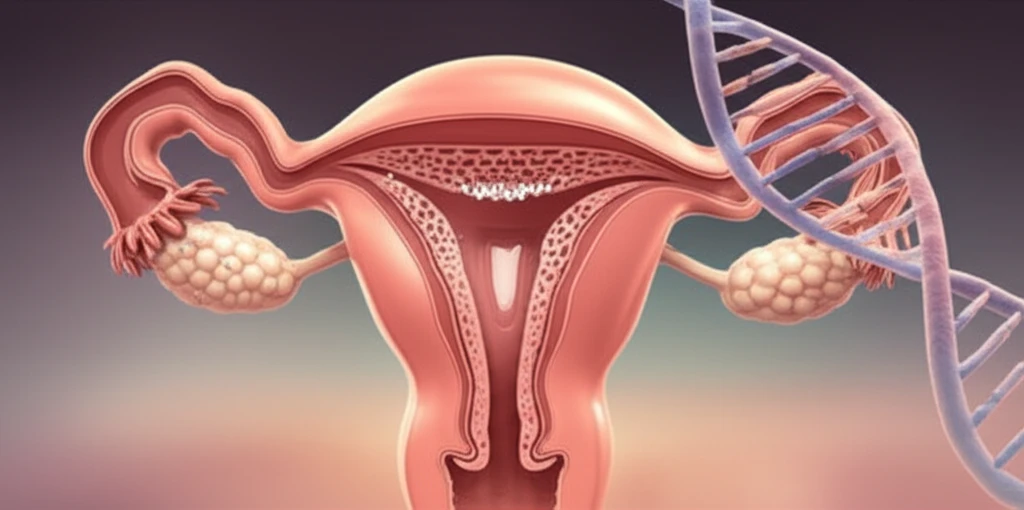
Illustration of a healthy uterus with supportive microfluidic porous scaffolds

A Breakthrough for Uterine Health: Porous Scaffolds Offer New Hope for Intrauterine Adhesion Prevention

"Revolutionary microfluidics technology paves the way for innovative treatments, offering a beacon of hope for women's reproductive health"


Intrauterine adhesions (IUAs), also known as Asherman's syndrome, present a significant challenge to women's reproductive health, often leading to infertility, recurrent miscarriages, and other serious complications. Current preventive measures have limitations, highlighting the urgent need for more effective solutions.

Now, a groundbreaking study introduces a novel approach: porous scaffolds engineered from biocompatible materials using advanced microfluidics. These scaffolds offer a unique combination of properties designed to prevent IUAs and promote tissue regeneration.

This article explores how these innovative scaffolds are created, their potential benefits, and the promising results they've demonstrated in preclinical studies, offering a new perspective on the future of uterine health and IUA prevention.

How Do These Microfluidic Scaffolds Prevent Intrauterine Adhesion?

Illustration of a healthy uterus with supportive microfluidic porous scaffolds

The innovative porous scaffolds leverage the precision of microfluidics to create structures with specific properties that address the challenges of IUA prevention. Here's a breakdown of their design and function:

The process begins with carefully selecting biocompatible materials. Gelatin methacryloyl (GelMA) and sodium alginate (Na-alginate) form the base of these scaffolds, offering excellent biocompatibility and biodegradability.

  • Microfluidic Precision: Droplet microfluidics enables the creation of highly uniform and controlled porous structures.
  • Customizable Design: By adjusting the microfluidic parameters, researchers can fine-tune the scaffold's pore size, mechanical properties, and shape to match the uterine cavity.
  • Drug Delivery: The porous structure allows for the incorporation and controlled release of therapeutic agents, such as bFGF, to promote tissue regeneration and prevent adhesion.
  • Biocompatibility: GelMA and Na-alginate ensure the scaffold integrates well with the body's tissues, minimizing adverse reactions.
Preclinical studies have demonstrated the effectiveness of these scaffolds in preventing IUA formation and promoting endometrial regeneration. The scaffolds provide a physical barrier to prevent adhesion, while the controlled release of drugs stimulates tissue repair and reduces inflammation.

A Promising Future for Uterine Health

The development of porous scaffolds using microfluidics represents a significant advancement in the prevention and treatment of IUAs. These innovative devices offer a unique combination of biocompatibility, customizable design, and controlled drug delivery, addressing the limitations of current approaches.

While further research is needed to fully evaluate their long-term efficacy and safety in humans, preclinical studies have demonstrated promising results, suggesting that these scaffolds have the potential to significantly improve the reproductive health and quality of life for women affected by IUAs.

As research progresses, these microfluidic scaffolds may pave the way for even more sophisticated and personalized treatments for a wide range of uterine health conditions, marking a new era in women's healthcare.

About this Article -

This article was crafted using a human-AI hybrid and collaborative approach. AI assisted our team with initial drafting, research insights, identifying key questions, and image generation. Our human editors guided topic selection, defined the angle, structured the content, ensured factual accuracy and relevance, refined the tone, and conducted thorough editing to deliver helpful, high-quality information.See our About page for more information.

This article is based on research published under:

DOI-LINK: 10.1016/j.actbio.2018.11.016, Alternate LINK

Title: Porous Scaffolds From Droplet Microfluidics For Prevention Of Intrauterine Adhesion

Subject: Molecular Biology

Journal: Acta Biomaterialia

Publisher: Elsevier BV

Authors: Yunlang Cai, Fangyuan Wu, Yunru Yu, Yuxiao Liu, Changmin Shao, Hongcheng Gu, Minli Li, Yuanjin Zhao

Published: 2019-01-01

Everything You Need To Know

1

How do these porous scaffolds work to prevent Intrauterine Adhesions (IUAs)?

Porous scaffolds are designed to prevent Intrauterine Adhesions (IUAs). They're created using microfluidics and made from biocompatible materials, specifically Gelatin methacryloyl (GelMA) and sodium alginate (Na-alginate). These scaffolds offer a physical barrier, preventing the uterine walls from sticking together and also allow for the controlled release of therapeutic agents, such as bFGF, to promote tissue regeneration. This dual action makes them effective in preventing and treating IUAs.

2

Why is microfluidics important in the creation of these scaffolds?

Microfluidics plays a crucial role in creating these porous scaffolds. Microfluidics enables the precise control over the scaffold's structure. This technology allows for the creation of uniform and customizable designs. Researchers can adjust microfluidic parameters to fine-tune the pore size, mechanical properties, and shape of the scaffold, ensuring it fits the uterine cavity and functions optimally. This level of precision is key to the scaffold's effectiveness in preventing Intrauterine Adhesions (IUAs).

3

Why are Intrauterine Adhesions (IUAs) a significant health concern?

Intrauterine Adhesions (IUAs), also known as Asherman's syndrome, are problematic because they can lead to infertility, recurrent miscarriages, and other severe complications. The current preventative measures are limited, making the development of effective solutions, such as porous scaffolds, extremely important. IUAs occur when the uterine walls stick together, which is what the scaffolds aim to prevent, thereby improving the chances of successful pregnancies and overall reproductive health.

4

What is the significance of Gelatin methacryloyl (GelMA) and sodium alginate (Na-alginate) in these scaffolds?

Gelatin methacryloyl (GelMA) and sodium alginate (Na-alginate) are vital because of their excellent biocompatibility and biodegradability. The porous scaffolds are made from these materials. Biocompatibility means that these materials are well-tolerated by the body, minimizing adverse reactions and ensuring the scaffold integrates well with the uterine tissues. Biodegradability ensures that the scaffold breaks down safely over time, leaving no harmful residues. This combination is essential for the scaffold's functionality and safety in preventing Intrauterine Adhesions (IUAs).

5

What role does bFGF play in this new approach to uterine health?

bFGF (basic Fibroblast Growth Factor) is a therapeutic agent incorporated into the porous scaffolds. The porous structure enables the controlled release of bFGF. This is significant because bFGF promotes tissue regeneration and reduces inflammation. This controlled release helps the uterine lining to heal and prevents the formation of Intrauterine Adhesions (IUAs), improving reproductive outcomes. The ability to deliver bFGF directly to the affected area enhances the effectiveness of the treatment.

Newsletter Subscribe

Subscribe to get the latest articles and insights directly in your inbox.