
22q11 Deletion Syndrome: Unlocking the Mystery of Psychosis Vulnerability

"Is there a link between this genetic anomaly and increased risk? Neurological soft signs reveal potential insights."
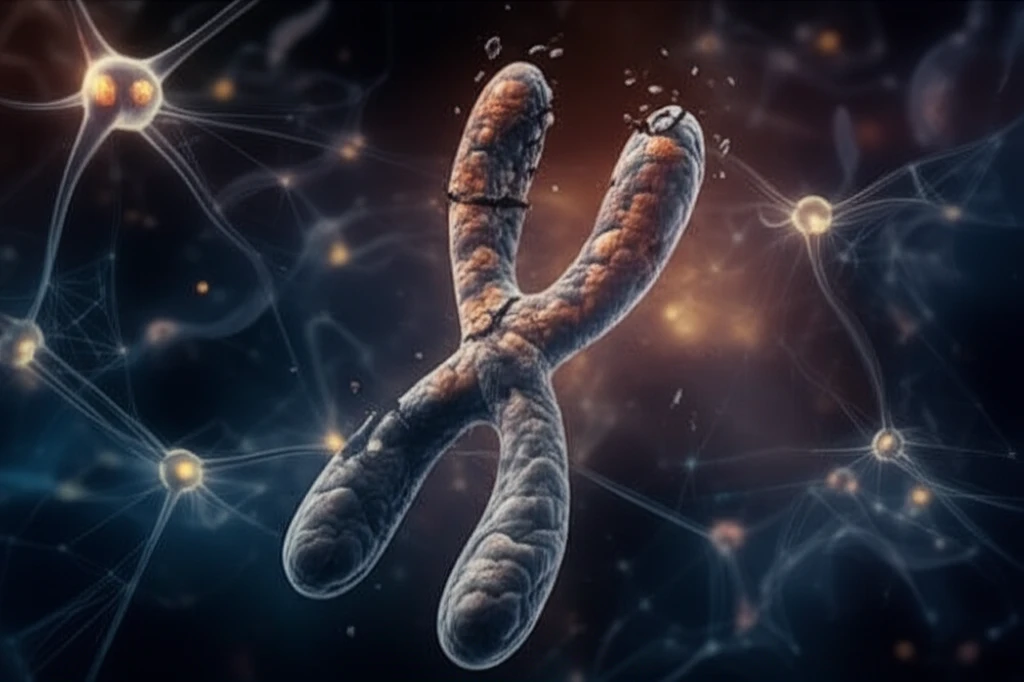
The 22q11 microdeletion syndrome (22q11DS), also known as velo-cardio-facial syndrome or Di George Syndrome, is a neurogenetic disorder impacting roughly 1 in every 4,000 live births. This condition arises from a missing piece of chromosome 22 and is a multisystemic disorder, leading to a wide range of congenital issues from facial differences and heart defects to immune deficiencies.
Adding to the complexity, 22q11DS is often associated with neurocognitive challenges, including intellectual disabilities, learning differences (particularly in math), and difficulties with visuospatial skills, attention, and executive functions. Moreover, a significant number of individuals with 22q11DS experience psychiatric disorders, most notably attention deficit/hyperactivity disorder (ADHD), autism spectrum disorder, anxiety, mood disorders, and schizophrenia spectrum disorders. Compared to the general population, those with 22q11DS face a dramatically increased risk of psychosis.
Given these factors, recent research has investigated a potential connection between ‘neurological soft signs’ (NSSs) and 22q11DS. Neurological soft signs are subtle motor, sensory, or integrative abnormalities that, while not indicative of specific brain lesions, may point to broader neurodevelopmental differences. Studies suggest that these signs could act as markers of vulnerability to schizophrenia. Thus, exploring the presence and nature of NSS in individuals with 22q11DS could further our understanding of the syndrome’s link to psychosis.
Neurological Soft Signs: What Do They Tell Us?
Neurological soft signs (NSS) encompass minor motor, sensory, and coordination-related features that don't fit neatly into specific diagnostic boxes but can indicate underlying neurological differences. Common NSS include:
- Overflow Movements: Involuntary movements in body parts not directly involved in a task.
- Dysrhythmia: Irregularities in the rhythm or timing of movements.
- Difficulties with Timed Activities: Challenges in performing tasks within a specific time frame, such as rapidly alternating hand movements.
Implications and Future Directions
This research highlights the significance of neurological soft signs as potential markers of atypical neurodevelopment in individuals with 22q11DS and those at ultra-high risk for psychosis. While NSS do not appear to directly correlate with specific positive or negative symptoms, their presence may indicate an underlying vulnerability to psychosis independent of psychopathology. Longitudinal studies with larger samples are needed to fully understand the predictive value of NSS and to clarify their relationship with specific brain circuits.