

Building Blocks of Life: How Two Morphogen Gradients Create a Vertebrate Embryo
Discover how scientists are recreating vertebrate embryos from scratch using opposing gradients of morphogens, paving the way for regenerative medicine.
Discover how scientists are recreating vertebrate embryos from scratch using opposing gradients of morphogens, paving the way for regenerative medicine.

Explore how researchers are mastering chirality at the supramolecular level, opening doors to custom-designed materials with unique functionalities. Discover the potential impact on various industries.

Delve into the cutting-edge of archaeological science and find out how controlled experiments with stone tools are rewriting our understanding of ancient technologies and the lives of our ancestors.

Discover how embryonic cells, once thought to be simple building blocks, orchestrate the complex development of the spinal cord with surprising twists and species-specific strategies.

Explore the effects of ractopamine hydrochloride and zilpaterol hydrochloride on growth, carcass traits, and meat tenderness in beef steers. Learn how these feedlot additives can optimize beef production.

This article explores the insidious role of silicate films in causing pitting corrosion in copper tubes used for drinking water, revealing how these films disrupt natural protective mechanisms and accelerate copper dissolution.
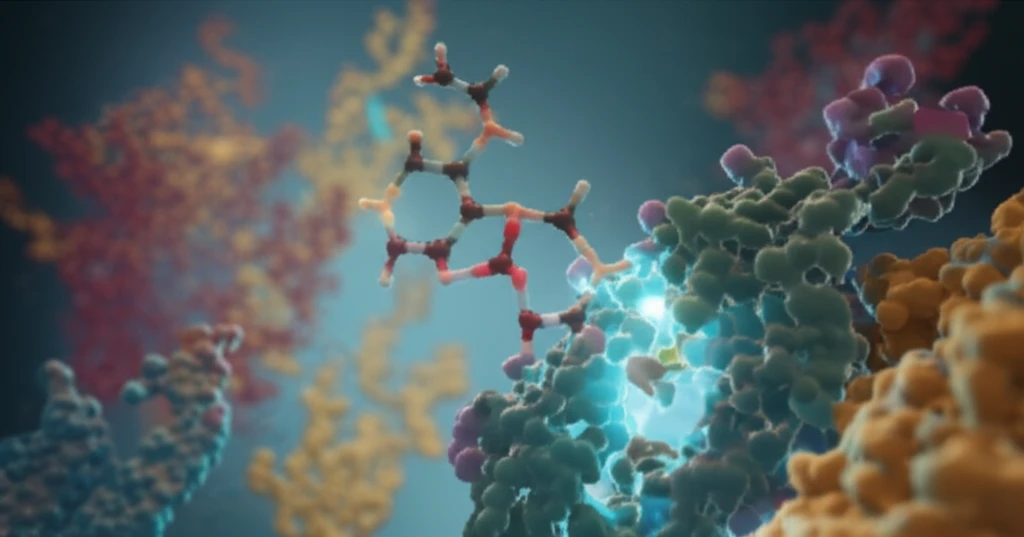
A new study introduces a refined way to calculate hydrogen bonding penalties during drug binding, potentially revolutionizing how effective medications are designed.

This guide reveals the optimal number of repetitions needed in popcorn field trials to balance precision and cost-effectiveness, ensuring reliable results for superior breeding and higher yields.

Dive into the unseen world of Amazon fish as we explore the bacteria present in Butterfly Peacock Bass and Piramutaba. Learn how this knowledge can improve handling and preservation for safer, healthier eating.
Dive into the fascinating world of archaeal proteins and their unique structural properties, revealing how temperature-dependent flexibility can impact enzyme activity and pave the way for innovative biotechnological applications.
Page 138 of 200