
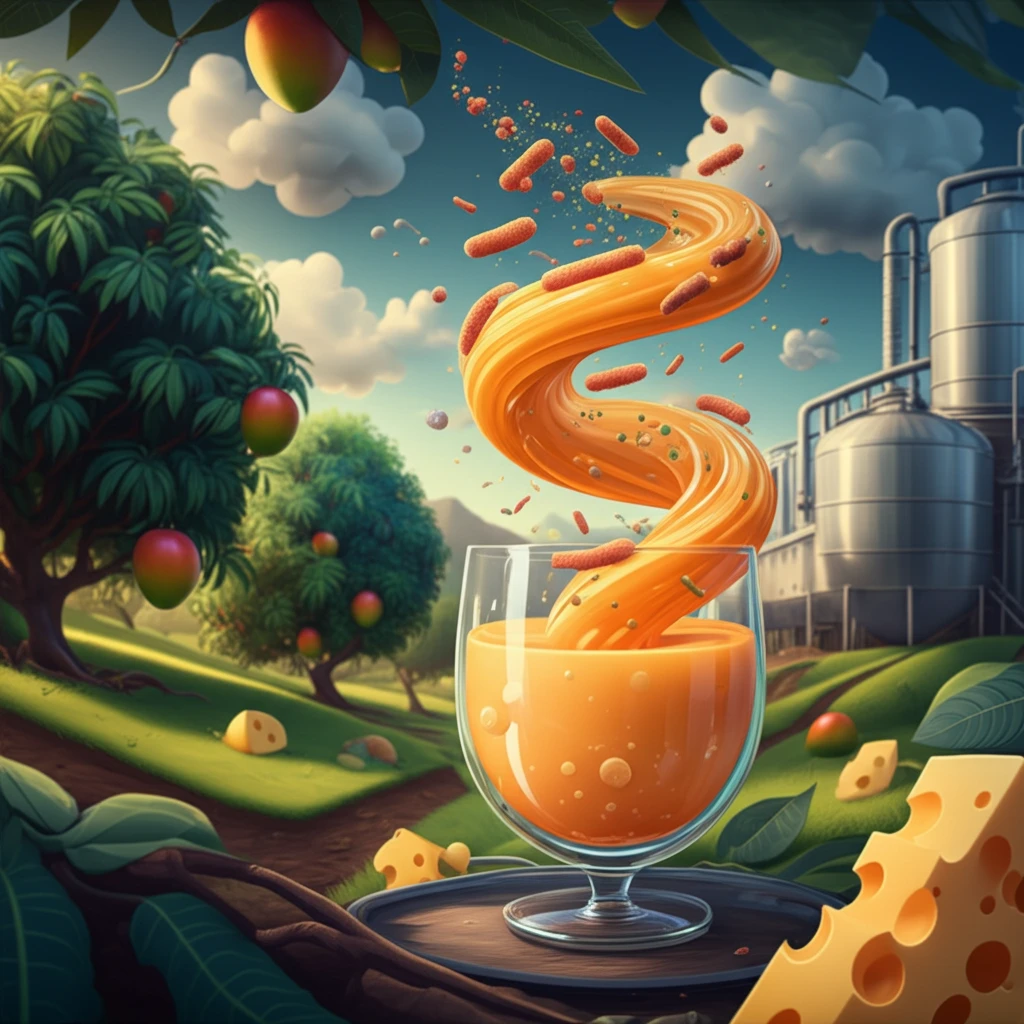
Whey to Go! Turn Cheese Byproduct into a Delicious Mango Drink

"Discover how fermenting whey cheese with mango creates a healthy, flavorful beverage—and reduces food waste."
In an era increasingly conscious of food waste and the quest for innovative, healthy beverages, a unique solution is emerging: transforming cheese whey into a delicious and nutritious drink. Whey, the liquid leftover from cheese production, is often discarded, contributing to environmental concerns. However, researchers are now exploring its potential as the base for fermented drinks, enhanced with natural flavors like mango.
This approach not only addresses the issue of whey waste but also taps into the growing demand for probiotic-rich foods. Fermented drinks, known for their health benefits, gain an extra boost when made from whey, which is packed with essential amino acids and nutrients. The addition of mango, a beloved tropical fruit, introduces a burst of flavor and additional vitamins, making the drink both appealing and beneficial.
The concept of creating a fermented mango whey drink is rooted in the desire to utilize resources efficiently and create value-added products. It combines traditional fermentation techniques with modern nutritional understanding, offering a sustainable and health-conscious beverage option. As consumers seek alternatives to sugary drinks, this innovative approach presents a promising avenue for the food and beverage industry.
An Unquantified but Growing Upcycling Opportunity
Cheese production leaves behind whey as a side stream, and much of it has historically been treated as a disposal concern rather than a resource. In recent years, there has been growing interest in turning such dairy byproducts into value-added foods and beverages, including fermented drinks. A mango-flavored whey beverage would be one example of this broader upcycling trend, though reliable figures on its scale or adoption are not readily available. Any impact estimate should therefore be treated cautiously and would depend heavily on local dairy output and consumer openness to upcycled products.
Fermentation Basics and the Discipline It Demands
Fermentation is an established method in which microorganisms—typically yeast or bacteria—convert sugars into products such as alcohol, lactic acid, or gases, and the term “fermented” simply describes foods that have undergone that process. The technique spans a remarkable range of food categories, including fermented cheeses, yogurts and creams, condiments, vegetables, grains, and even drinks, which reflects both its flexibility and its importance across cuisines. Common examples such as yogurt, kefir, kimchi, and sauerkraut are widely promoted for supporting gut health, largely through the live bacteria they contain. The main limitations lie in process control: consistent temperature, sanitation, and reliable starter cultures are needed to produce a safe, repeatable flavor—exactly the kind of discipline a whey-based mango drink would require.
Live-Culture Foods as the Historical Benchmark
One recent overview describes fermented foods such as yogurt, kimchi, and kefir as prized above all for their live bacteria and associated gut-health benefits. The same article cautions that not every product sold as fermented strictly qualifies, since truly fermented foods depend on live microbial activity rather than vinegar or artificial processing alone. It also offers practical guidance on how much fermented food to eat to actually gain those benefits. That framing makes traditional, live-culture products the reference point, which is a sensible starting place when considering a whey-based fermented mango drink.
What Makes Fermented Mango Whey Drink a Game Changer?
Fermented mango whey drink is creating a buzz for several compelling reasons. First and foremost, it addresses the critical issue of food waste by repurposing whey, a byproduct that often ends up as environmental pollutant. By transforming whey into a consumable product, the process supports sustainability and reduces the ecological footprint of cheese production.
- Reduces Waste: Transforms a cheese-making byproduct into a valuable product.
- Nutrient-Rich: Packed with essential amino acids, vitamins, and minerals.
- Probiotic Benefits: Supports gut health through fermentation.
- Delicious Flavor: Combines the tanginess of whey with the sweetness of mango.
- Sustainable: Promotes eco-friendly practices in the food industry.
A Young, Still-Unproven Research Niche
Research interest in turning leftover dairy streams, including whey, into beverages and other fermented products appears to be growing, though no specific reviews on a whey-and-mango combination could be confirmed here. Much of what circulates on the topic is descriptive rather than definitive. Claims about taste, shelf life, and live-culture content should therefore be treated as tentative until controlled trials or published product studies appear. If current trends hold, the research direction points toward upcycling as a legitimate focus in food science, but the evidence is not yet settled.
Practical Setbacks That Deserve Honest Reporting
Not every attempt to repurpose cheese byproduct into a drink succeeds, and candid accounts of these failures are scarce. Recurring trouble spots include off-flavors, unwanted acidity, inconsistent fermentation, and a shorter shelf life than conventional beverages. A whey drink can also fail commercially if consumers perceive it as little more than recycled waste. Documenting these hurdles would strengthen future recipe development, including a mango-flavored version, by clarifying which known failure points to design around.
Whey Drinks Versus Conventional Alternatives
A fermented whey beverage sits in an unusual middle ground: it is a dairy-processing stream, yet it can be formulated to feel closer to a refreshing fruit juice. Its possible advantages, such as whey's protein or calcium content sitting alongside the sweetness of mango, are plausible but not firmly established in comparisons. With no direct comparisons available, kefir and yogurt-based smoothies offer an imperfect but useful analogy for what a live-culture whey drink might deliver. Overall this category is still young, and its relative standing is best judged through small, well-run trials rather than broad claims.
The Future of Whey: A Sustainable and Delicious Choice
Fermented mango whey drink represents a forward-thinking approach to food production, blending sustainability, health, and flavor into a single product. As research continues to refine the fermentation process and explore new flavor combinations, this innovative beverage has the potential to become a staple in the health-conscious market. By choosing fermented mango whey drink, consumers can enjoy a tasty and nutritious beverage while supporting efforts to reduce food waste and promote sustainable practices.
A Promising but Testable Concept
Taken together, the case for a whey-based mango drink rests on sensible foundations—fermentation is an established technique, upcycling addresses genuine food-waste concerns, and tropical fruit flavors can mask whey's sometimes-strong taste. A cautious expert reading would note that each of these strengths depends on execution: reliable cultures, proper sanitation, and consumer acceptance. Advocates would argue the concept deserves real-world trials precisely because the byproduct is abundant and inexpensive. The honest synthesis is that this is a promising, testable idea rather than a proven product.
Likely Milestones if the Category Matures
Should the concept develop, plausible milestones include standardized starter-culture recipes, improved fruit-flavor pairings, and packaging that keeps any live cultures intact while remaining shelf-stable. Future work could also produce the nutritional comparisons and consumer-preference data that are currently missing. Scaling is another frontier, since a recipe that works in a home kitchen or small dairy may not transfer cleanly to industrial production lines. These directions are plausible, but none is guaranteed to materialize.
One Piece of a Larger Food-Waste Puzzle
Cheese byproduct is only a small part of the broader food-waste problem, and turning it into a drink will not resolve the systemic pressures of dairy production, such as water use, packaging, and distribution logistics. Food-safety regulation also matters, since fermented beverages rely on live cultures and can spoil or grow harmful microbes if mishandled. A single niche product can therefore only be a partial response to these structural issues. That wider lens tempers enthusiasm with a dose of realism about the scale of impact.
Everyday Value in Home Kitchens and Small Dairies
At its most human level, this concept is about everyday people—home cooks, small dairy operators, and families—finding a tasty way to use something that would otherwise go down the drain. A mango-flavored drink is approachable because it leans on familiar sweetness and a recognizable fruit, which may lower the barrier to trying something new. For a home cook, it can turn a weekend cheesemaking project into a second, crowd-pleasing beverage instead of a cleanup chore. The real-world payoff would register in small, tangible ways: less waste discarded, and another bottle of something good to drink.