
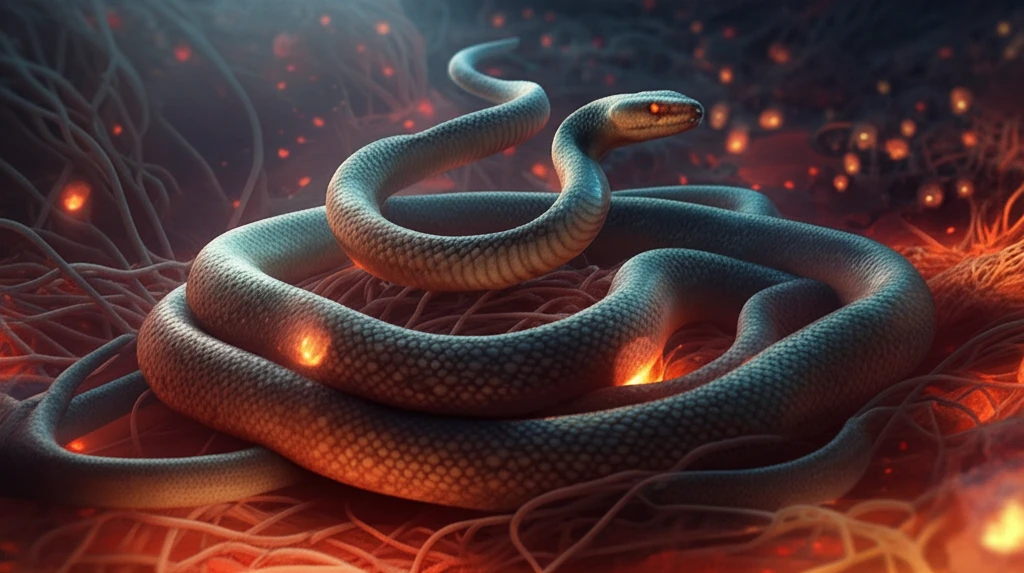
Venomous Truth: Unmasking the Cancer Risk Lurking in Snake Bites

"Could a snake bite increase your risk of cancer? New research explores the surprising link between snake venom and cellular changes that may lead to tumor development."
For years, scientists have known that certain toxins can trigger a cascade of events leading to the malignant transformation of healthy cells. Aflatoxin, a mycotoxin, serves as a well-established example of such a carcinogen. More recently, researchers have begun to explore the connection between bacterial toxins, particularly those with hemolytic action (the ability to rupture red blood cells), and the potential development of cancer.
A new study has been trying to understand the potential cancer-causing properties of membranotoxins, focusing on acquired hemolytic anemia as a model. Hemolytic anemia, characterized by the premature destruction of red blood cells, can arise from various sources, including exposure to snake venoms, certain bacterial toxins, and even some medications. Intriguingly, autoimmune hemolytic anemia, where the body's immune system attacks its own red blood cells, has also been linked to a higher incidence of malignant tumors, with studies suggesting a prevalence of 45-47%.
Despite these observations, the precise mechanisms by which normal cells transform into cancerous ones in the context of hemolytic anemia remain largely unknown. This lack of understanding underscores the need for further research into the intricate interplay between toxins, cellular damage, and cancer development.
Snake Venom Composition and Anticancer Properties
Snake venoms are complex secretions of venomous snakes containing numerous bioactive substances, including cytotoxins and apoptosis inducers, that have attracted significant attention for their anticancer potential. Published studies describe and elucidate the anti-cancer potential of snake venom, which has contributed to the treatment of many medical conditions. Researchers have identified compounds in snake venom that present great potential as antitumor agents, making venom a unique source from which novel cancer therapeutics can be developed.
Challenges in Venom-Based Cancer Therapy
Snake venom crotoxin is being developed as a novel cancer therapy by biotech startups, with remarkable analgesic properties also reported during clinical trials. However, a key challenge remains: killing cancer with venom is not difficult, but doing so without killing the patient simultaneously is the real difficulty. Researchers at institutions including UNC are working to identify which venom compounds can be combined with other treatments to efficiently kill cancer cells while preserving healthy, life-dependent cells.
Early Research Foundations
Research into snake venom as a potential cancer treatment has been ongoing for decades, with scientists progressively identifying and characterizing individual venom compounds and their biological activities. While specific foundational milestones are difficult to pinpoint from available sources, the field has built upon a growing understanding of venom biochemistry and its interactions with human cellular processes. This gradual accumulation of knowledge has laid the groundwork for more targeted therapeutic development in recent years.
The Venom Connection: How Snake Bites Could Trigger Cancer
According to scientific research, some toxins, infectious viruses, and carcinogenic agents can induce cell fusion and destruction in somatic cells. The way these agents affect cells depends on the size and number of pores created in the plasma membrane. Large pores cause irreversible damage and cell death (cytolysis). High doses of carcinogens can lead to an increase in giant polynuclear cells, but further increases can cause massive cellular lysis. Low doses, however, can result in dikaryons, which are cells with two nuclei and high oncogenic potential.
- Toxins or agents damage cell membranes, creating pores.
- Cells fuse together, forming hybrid cells with altered genetic material.
- These hybrid cells can become precancerous.
- Further genetic changes can transform these cells into cancerous cells.
Venom as Medicine: Emerging Evidence
Recent reviews suggest that snake venom compounds hold promise as future anticancer agents, with researchers continuing to explore their therapeutic applications. Scientists are working to improve upon existing venom-derived treatments and develop new operators from snake venoms that could be valuable in tumor treatment. While the research is still developing, the potential for venom-based therapies to complement or enhance current cancer treatments remains an active area of investigation.
Limitations and Setbacks
Significant challenges persist in translating snake venom research into viable cancer treatments, particularly around toxicity and selectivity. The difficulty of isolating beneficial compounds while minimizing harm to healthy tissue remains a major obstacle that has slowed clinical progress. Additionally, the complexity of venom composition means that identifying which specific molecules drive anticancer effects requires extensive and costly research.
Venom-Derived Molecules Across Species
Among the toxic molecules being investigated for cancer treatment are melittin, a peptide found in bee venom, and contortrostatin, a protein derived from copperhead snake venom. Although researchers cannot yet fully explain exactly how these toxins bind to cancer cells, this selective binding quality makes them particularly promising candidates for cancer therapy. The comparison between venom compounds from different species highlights both the diversity of potential treatments and the need for further mechanistic research.
The Importance of Monitoring and Awareness
Given these findings, it's crucial for individuals who have been in contact with snakes that possess hemolytic venom to be closely monitored for any signs of malignant tumors. Further research is needed to fully understand the mechanisms at play and develop strategies for prevention and early detection. While the link between snake venom and cancer is still being investigated, remaining vigilant and informed is paramount for those at potential risk.
Interpreting the Evidence
The body of research on snake venom and cancer demonstrates genuine scientific interest and some promising findings, though the field remains in relatively early stages. Experts generally agree that venom-derived compounds warrant further investigation, but caution that significant hurdles remain before clinical application. The complexity of both snake venoms and cancer biology means that progress will likely be incremental rather than revolutionary.
From Historical Roots to Future Therapies
The earliest reports about snake venoms being used in cancer treatments appeared in the 1930s, marking nearly a century of research in this area. Since those initial investigations, numerous studies have examined the activities, isolations, purifications, and structural elucidations of components from snake venoms. This long history of research suggests that while progress has been steady, the field continues to evolve with new discoveries and refined understanding of venom biochemistry.
Cross-Species Venom Research
Research into venom-based cancer treatments extends beyond snake venom alone, with studies examining other arthropod venoms such as tarantula cubensis extract. This commercially available preparation contains chemically complex digestive enzyme mixtures and is widely used in veterinary medicine, though very limited studies have examined its molecular impact on human tumors. The broader context of venom research reveals both the promise and the limitations of applying animal-derived compounds to human cancer treatment.
Clinical Translation Challenges
Despite decades of laboratory research, translating snake venom findings into treatments that benefit patients remains an ongoing challenge. The gap between promising in vitro results and effective clinical therapies highlights the complexity of moving from basic research to real-world applications. Patients and clinicians alike await clearer evidence of safety and efficacy before venom-based treatments can be considered viable options in standard cancer care.