
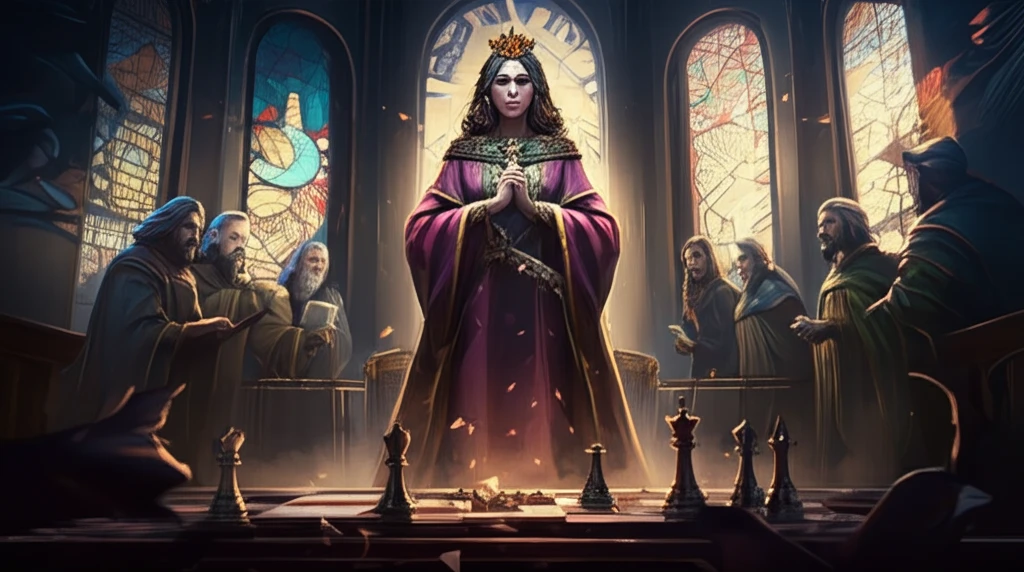
Unveiling the Women Who Shaped Medieval Europe: Power, Politics, and Personal Lives

"Beyond the Kings and Knights: Discover the Untold Stories of Influential Women in Medieval History"
The Middle Ages, often portrayed as a world dominated by men, held within it a fascinating network of powerful and influential women. While historical narratives have traditionally focused on kings, knights, and clergy, recent scholarship sheds light on the significant roles women played in shaping medieval Europe's political, social, and cultural landscape.
These women, whether through royal lineage, religious influence, or sheer force of personality, navigated complex power structures and left an indelible mark on their times. From queens and regents to abbesses and reformers, their stories offer a richer, more nuanced understanding of the medieval world.
This article delves into the lives and legacies of some of these remarkable women, exploring their contributions to politics, religion, and society, and highlighting the ways in which they challenged and redefined traditional gender roles.
Women's Varied Medieval Roles
Research into medieval women reveals they occupied a wide variety of roles that were not always dissimilar to those of modern women. The agency, strength, and importance of women in the Middle Ages are increasingly recognized as presenting a historical precedent for ongoing discussions about women's rights. This growing body of work, including studies of names, communities like the Beguines, and general societal roles, underscores their significant presence in the medieval world.
Methodological Gaps in Study
The provided source material for this subsection does not contain substantive, relevant information on the historical study methods, standard approaches, or their specific limitations regarding medieval women. The available links pertain to unrelated modern topics such as dating preferences, a medical procedure, and aviation limitations, offering no direct insight into the historiography of the subject.
Artifacts and Women's Stories
Recent scholarship and exhibitions highlight that medieval women's lives were 'more vibrant than people expect,' with a surprising variety of roles in politics, religion, and the arts. Rare artifacts are crucial, as they allow medieval women's stories to be told in their own words, challenging previous historical narratives. This perspective is foundational to modern understanding, moving beyond simplistic portrayals.
Blanche of Castile: A Royal Powerhouse
Blanche of Castile, Queen of France and regent for her son Louis IX, stands as a prime example of a woman wielding considerable political power in the medieval era. Her life, expertly detailed in recent historical analysis, reveals a shrewd leader who navigated treacherous political landscapes and secured the Capetian dynasty's future.
- Founded and supported religious institutions like Royaumont Abbey.
- Transformed the French court into a center of culture and learning.
- Maintained peace and stability during Louis IX's minority.
- Successfully navigated complex political alliances.
Increasing Scholarly Attention
The field of medieval women's history has seen a dramatic increase in academic output, with more being written in recent decades than in the two centuries prior. Recent archaeological research, such as the study of a 'coffin birth' in Imola, provides unique biological insights into the lives and deaths of medieval women. Comprehensive resources like The Oxford Handbook of Women and Gender in Medieval Europe further synthesize this expanding body of knowledge.
Limited Direct Counter-Evidence
The specific source material provided for this subsection does not contain clear counter-arguments or documented failures regarding the history of medieval women. The available links include a personal gripe website, literary criticism of a 19th-century novel, and research on medieval dental calculus, none of which directly present opposing scholarly viewpoints on the main topic.
Foundational Texts for Comparison
While the direct source list contains limited relevant comparative material, the foundational work 'Medieval Women' by Eileen Power is identified as a key text. Such works enable comparisons between the experiences of women across different medieval periods and social strata. They provide the baseline for analyzing the diversity of women's lives in terms of class, region, and era.
Beyond the Throne: A Legacy of Influence
The stories of Blanche of Castile and other influential women of the Middle Ages challenge traditional historical narratives and offer a more complete understanding of this complex period. Their contributions to politics, religion, and society demonstrate the diverse ways in which women shaped the medieval world, leaving a lasting legacy that continues to inspire and inform us today. By examining their lives and experiences, we gain valuable insights into the dynamics of power, gender, and social change in a pivotal era of European history.
Challenging Medieval Ideology
Christine de Pizan's 'The Book of the City of Ladies' is a seminal work that fearlessly challenges the negative ideas about women prevalent in the Middle Ages. Its central argument represents a direct and influential counter-narrative to the anti-women ideology of the time. This text serves as a critical synthetic piece, constructing an alternative vision of women's value and capabilities.
Source Limitations
The provided source material for this subsection does not contain relevant information on the future outlook or next research frontiers for the study of medieval women. The available links refer to an unrelated trend forecasting website, international economic outlooks, and global poultry production, offering no insight into the academic field in question.
Overcoming Historical Barriers
Modern discussions about women overcoming systemic challenges find historical parallels in the barriers faced by medieval women. While the provided sources are not all directly focused on medieval history, the broader theme of combating exclusion and burnout is relevant. Understanding these persistent systemic challenges helps contextualize the resilience and achievements of women throughout history.
Archaeological Evidence of Lives and Punishments
Archaeological discoveries provide a stark, humanizing look into the realities of medieval women's lives and deaths. Research on skeletal remains, such as a woman found on the Thames foreshore, can uncover evidence of brutal punishment and public display. Similarly, the study of 'coffin births' offers a poignant insight into the tragic circumstances some women endured, making their personal stories tangible.