
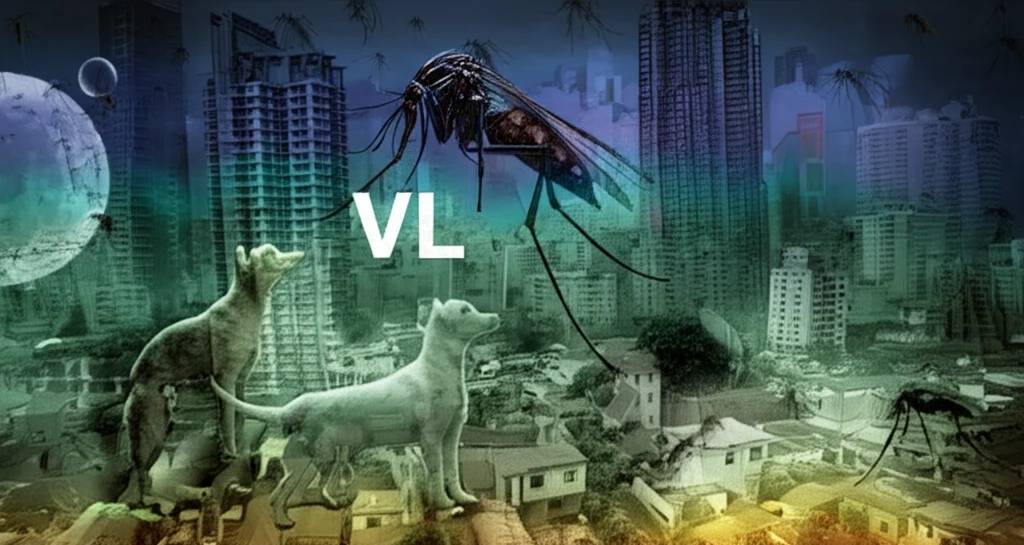
Unveiling the Urban Threat: How Visceral Leishmaniasis Spreads Among Us

"Discover the alarming rise of Visceral Leishmaniasis in urban settings and how socio-environmental factors fuel its spread. Understand the risks and protective measures you can take."
Visceral leishmaniasis (VL), a disease prevalent across Asia, Europe, Africa, and the Americas, poses a significant global health challenge. Affecting 88 countries, mostly those classified as developing, VL results in an estimated 200,000 to 400,000 new cases annually, with a stark 20,000 to 40,000 proving fatal. Understanding its spread and impact is crucial for effective prevention and control.
In Brazil, VL has become a severe public health concern due to its difficult management, high mortality rate, and widespread occurrence across all five regions. Recent years have shown a concerning trend: the urbanization of VL. This shift is closely linked to environmental, social, and demographic factors, along with the adaptation of the sandfly Lutzomyia longipalpis to urban settings and the presence of domestic reservoirs. These elements combine to create a complex web of transmission.
Araçuaí, located in the Jequitinhonha Valley of Minas Gerais, Brazil, presents an interesting case study. While recognized as an endemic area for VL, many aspects of its transmission dynamics remain poorly understood. This article will explore a study analyzing the spatial distribution of both human and canine VL cases in Araçuaí, shedding light on the socio-environmental factors that contribute to its occurrence within the city.
A Global Burden Concentrated in Four Regions
Leishmaniasis remains a major health problem concentrated in four eco-epidemiological regions of the world: the Americas, East Africa, North Africa, and Western and Southeast Asia. Researchers studying visceral leishmaniasis in Brazil have used probabilistic models to characterize disease incidence, comparing outcomes across different spatial resolutions and scales. Statistical modelling has further shown that village-level patterns of visceral leishmaniasis incidence can be inferred from larger administrative-level surveillance data, offering potential for improved regional monitoring.
Diagnostic and Treatment Challenges Persist
Conventional diagnostic modalities for visceral leishmaniasis—including microscopy, in vitro culture, and serological assays—are constrained by suboptimal sensitivity, invasive sampling requirements, and prolonged turnaround times. Treatment of visceral leishmaniasis is very challenging, with few treatment options available. The long duration of treatment and significant drug toxicity further limit progress toward achieving visceral leishmaniasis elimination goals.
From Kala-Azar Discovery to Diagnostic Breakthroughs
Visceral leishmaniasis, also known as kala-azar, first came to the attention of Western doctors in 1824 in Jessore, British Raj (now Bangladesh), where it was initially thought to be a form of malaria. Diagnosis in the hematology laboratory was later advanced by direct visualization of the amastigotes, known as Leishman–Donovan bodies, typically observed in bone marrow aspirate smears. Following recovery from visceral leishmaniasis, a chronic cutaneous form called post-kala-azar dermal leishmanoid can develop, characterized by maculo-papular and nodular skin lesions.
The Alarming Spread of VL: Key Findings from Araçuaí
A recent study focused on Araçuaí, Brazil, has revealed critical insights into the spatial dynamics of VL. The research aimed to analyze the distribution patterns of human and canine VL cases and identify the socio-environmental factors influencing these patterns. Here's a breakdown of the significant findings:
- Aggregated Patterns: Spatial analysis revealed that human and canine VL cases exhibited significant aggregation, suggesting localized transmission hotspots.
- Central Area Concentration: A higher occurrence of both human and canine infections was observed in the central areas of Araçuaí, highlighting specific zones of increased risk.
- Correlation Between Cases: A notable positive correlation was found between the densities of human and canine VL cases, reinforcing the role of domestic animals in the transmission cycle.
- Negative Correlation with Vegetation: Conversely, a negative correlation was observed between vegetation density (NDVI) and VL cases, indicating that areas with less vegetation might be more prone to VL occurrence.
Ongoing Scientific Exploration
Major science news aggregators including Phys.org and Medical Xpress maintain dedicated feeds tracking the latest research, advancements, and breakthroughs in visceral leishmaniasis. These platforms serve as go-to sources for news on medical developments related to the disease. The continuous stream of research output underscores the active scientific interest in understanding and combating this neglected tropical disease.
East Africa as the New Epicenter
Following the successful visceral leishmaniasis elimination programme in Southeast Asia, East Africa has emerged as the primary hotspot for transmission. Demographic data from the WHO African Region reveal that 50% of reported cases in East Africa involve children under 15 years of age. Additionally, nearly 25% of cases in the region are female, highlighting the disproportionate burden on young populations.
VL as a Systemic Threat to Vulnerable Populations
Visceral leishmaniasis is a systemic protozoan disease transmitted by phlebotomine sandflies, with poor and neglected populations in East Africa and the Indian sub-continent particularly affected. The parasite belongs to the genus Leishmania, transmitted to humans specifically by the bite of female sand fly vectors. Early and accurate diagnosis and treatment remain recognized as key components of visceral leishmaniasis control strategies.
Protecting Our Communities: Actionable Steps to Combat VL
The findings from Araçuaí offer valuable insights for targeted interventions. By understanding the spatial distribution and socio-environmental drivers of VL, competent agencies can develop more effective control strategies. This includes enhanced environmental sanitation, responsible pet ownership programs, and strategic vector control measures. Educating the public about these factors is key to reducing VL incidence and protecting communities.
Antimonials Endure, But Rapid Tests Advance
Visceral leishmaniasis is described by experts as one of the most neglected parasitic diseases, causing large-scale mortality and morbidity among impoverished populations in the Indian subcontinent and Africa. A retrospective analysis of nearly 5,000 patients with visceral leishmaniasis in East Africa demonstrated the continued efficacy of pentavalent antimonials with relatively low rates of relapse or death. Rapid diagnostic tests for visceral leishmaniasis, which affects patients in India, Bangladesh, Nepal, East Africa, the Mediterranean region, and Brazil, offer promise for improving timely identification of the disease.
A Growing Market, but No Universal Cure in Sight
The visceral leishmaniasis market is projected to reach USD 1.72 billion at a compound annual growth rate of 4.95% between 2025 and 2035, reflecting growing commercial interest in treatments and diagnostics. Visceral leishmaniasis, also known as kala-azar, is characterized by fever, enlarged spleen, and other systemic health problems. However, systematic research across geographical regions has shown that a universal treatment is far from being achieved, as drug efficacy and treatment strategies vary significantly by location.
A Hidden Burden Rooted in Poverty
If left untreated, visceral leishmaniasis can be fatal, making it one of the most lethal neglected tropical diseases. The disease predominantly affects tropical and subtropical regions, where warm, humid conditions and poor housing favor the survival and proliferation of sandfly vectors. Multiple epidemiological, pathogenic, and socioeconomic factors influence the occurrence and persistence of leishmaniasis, underscoring its deep connection to poverty and inadequate public health infrastructure.
Insidious Disease, Diagnostic Confusion, and Co-Infection Risks
Visceral leishmaniasis is an insidious neglected disease with worldwide distribution, caused by parasites from the Leishmania donovani complex. The parasite can be transmitted by different species of phlebotomine sand flies and is capable of infecting numerous mammalian hosts. When visceral leishmaniasis co-occurs with other conditions such as COVID-19, diagnostic confusion can result, contributing to dangerously delayed diagnosis and treatment for affected patients.