
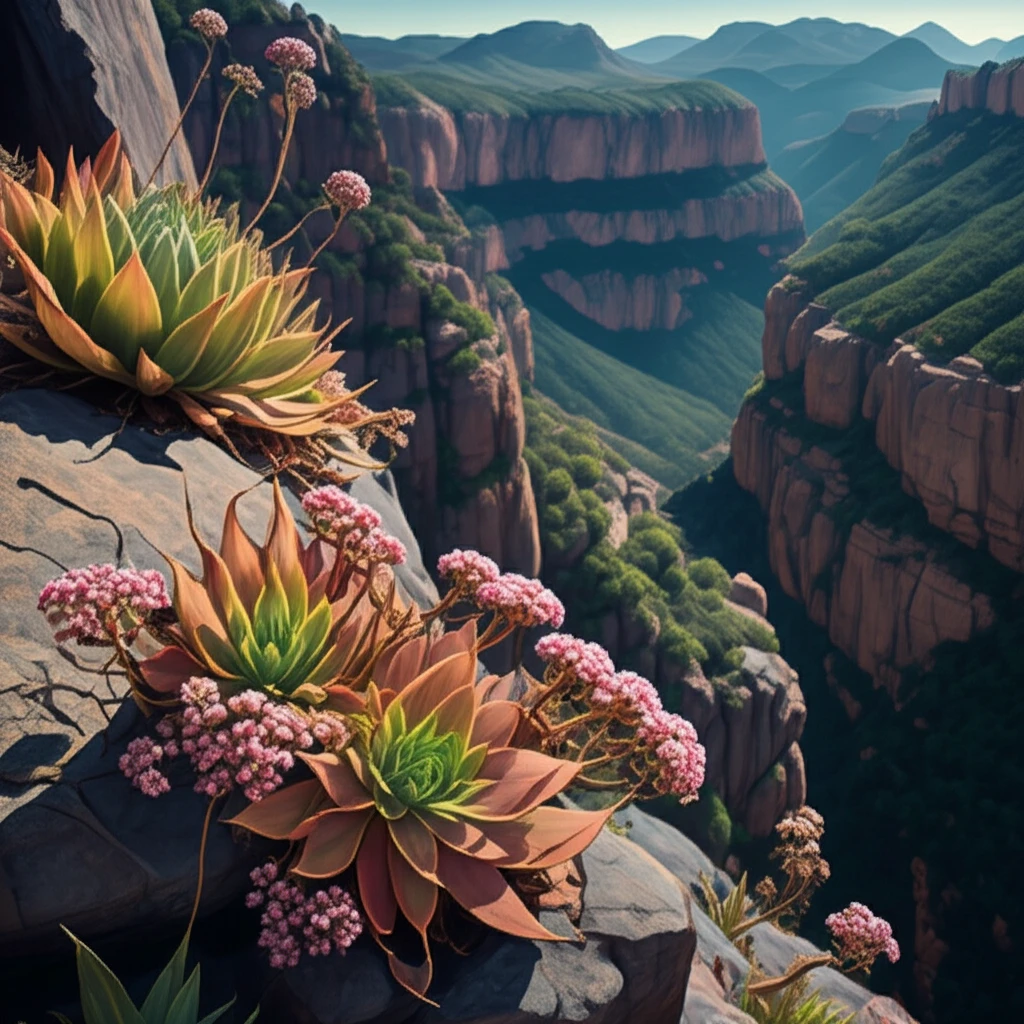
Unveiling the Rosy Secret: Discovering the New Sedum Species of Chihuahua

"A succulent surprise in Mexico! Learn about Sedum sinforosanum, a brand-new plant species with unique features and why its discovery matters to botany enthusiasts."
In the rugged landscapes of Chihuahua, Mexico, a botanical surprise awaited discovery. Hidden within the dramatic Barranca de Sinforosa, a new species of Sedum has been identified and named Sedum sinforosanum. This succulent, belonging to the Crassulaceae family, presents unique characteristics that distinguish it from its relatives, captivating botanists and plant enthusiasts alike.
The journey to identifying Sedum sinforosanum began with a plant shared by Jean-Marc Chalet. Initially recognized as a Sedum similar to Sedum suaveolens, further investigation revealed key differences. This led Julia Etter and Martin Kristen to explore the area near Topia and later Guachochi, guided by Chalet's initial location data. The expedition, which also aimed to rediscover the lost Echeveria tobarensis, ultimately led to the unearthing of a truly novel species.
Sedum sinforosanum's discovery highlights the incredible biodiversity still hidden within seemingly explored regions. Its unique traits and specific habitat raise intriguing questions about its evolution and adaptation, making it a valuable addition to our understanding of the Sedum genus and the ecological richness of northern Mexico.
The Sedum Genus and Its Growing Ranks
The genus Sedum encompasses approximately 460 accepted species, making it one of the larger genera within the Crassulaceae family (Reference URL 1). Among these, Sedum sinforosanum was formally described by J.Reyes, Etter & Kristen as a distinct species, added to the growing list of recognized Sedum taxa (Reference URL 1). The species was first published through Kew's Plants of the World Online, reflecting its formal taxonomic acceptance within the global botanical record (Reference URL 2). This recent addition underscores that even well-studied succulent genera continue to yield new discoveries in underexplored regions.
Discovering and Describing Sedum sinforosanum
Sedum sinforosanum, commonly called the Sinforosa Stonecrop, is a rare succulent native to the deep canyons of Chihuahua, Mexico (Reference URL 1). The plant forms small rosettes of fleshy, grey-green to rose-colored leaves whose margins are markedly pink, a distinctive morphological feature aiding identification (Reference URL 2). Its rarity and restricted range in the Barranca de Sinforosa make it a challenging species to locate and study in situ, highlighting limitations in field-based survey methods for canyon-dwelling flora. Understanding its care and growing requirements remains an emerging area of knowledge given the species' recent formal description.
Early Observations and Documentation
Sedum sinforosanum has been documented on iNaturalist, where citizen scientists have contributed observations of the species in the wild (Reference URL 1). These observations provide a baseline record of the plant's occurrence and seasonal patterns, contributing to broader knowledge of its distribution. The accumulation of field observations represents an important step in understanding the ecology and habitat preferences of this recently described canyon endemic.
Distinctive Characteristics of Sedum sinforosanum
Sedum sinforosanum stands out due to a combination of features. Unlike Sedum suaveolens, which tends to be less branched, Sedum sinforosanum exhibits a highly caespitose growth habit, forming dense clusters. Its rosettes are notably smaller and possess a rosy hue, contrasting with the bluish tones of Sedum suaveolens.
- Highly caespitose (forms dense clusters)
- Smaller, rosy-colored rosettes
- Absence of bracteoles on pedicels
- Bright yellow, truncate nectaries
Formal Description and Taxonomic Placement
Sedum sinforosanum was formally described as a new species originating from the Barranca de Sinforosa in the state of Chihuahua, northwestern Mexico (Reference URL 1). The species is classified within subgenus Sedum L. due to its free petals and sepals, and it is noted as being generally glabrous in morphology (Reference URL 2). The description was published by J.Reyes, Etter, and Kristen, establishing the species within the Crassulaceae family with formal taxonomic rigor. This peer-reviewed work provides the foundational morphological and geographic data necessary for distinguishing S. sinforosanum from closely related Sedum taxa in the region.
Challenges in New Species Validation
No substantive counter-arguments or documented failures regarding the recognition of Sedum sinforosanum were identified in the available source material for this subsection. The sole source located was unrelated to Sedum taxonomy or botanical research. In the absence of conflicting data, the formal description and acceptance of S. sinforosanum by taxonomic authorities and repositories such as Kew appears to stand uncontested in the accessible literature.
Endemic Status and Distinguishing Features
Sedum sinforosanum is endemic to the Sinforosa Canyon, which forms part of the larger Copper Canyon system in the state of Chihuahua, northwestern Mexico (Reference URL 1). The species is a small succulent producing rosettes of fleshy leaves that range from grey-green to rose-colored, with margins that are conspicuously pink (Reference URL 1). This restricted geographic range within a specific canyon system distinguishes it from other widely distributed Sedum species and positions it as a narrow endemic of conservation interest. Its morphological traits—particularly the distinctly colored leaf margins—serve as key diagnostic characters separating it from related taxa in the region.
Why This Discovery Matters
The discovery of Sedum sinforosanum underscores the importance of continued botanical exploration, even in areas that may seem well-trodden. It highlights the potential for uncovering new species and deepening our understanding of plant diversity. Furthermore, this discovery emphasizes the need for conservation efforts to protect these unique habitats and the species they harbor. The Barranca de Sinforosa, with its rugged terrain and diverse ecosystems, remains a treasure trove of botanical wonders, and Sedum sinforosanum is a beautiful testament to that fact.
Reflecting on a Canyon-Born Discovery
The identification of Sedum sinforosanum illustrates how geographically isolated habitats such as deep canyon systems can harbor undescribed plant diversity. The species' formal description highlights the ongoing value of targeted botanical exploration in rugged, less-accessible terrain. While the available literature on S. sinforosanum remains relatively limited given its recent discovery, early taxonomic and morphological assessments suggest it is a well-differentiated species within the Sedum lineage. Further study will likely deepen understanding of its phylogenetic relationships and ecological niche within the Copper Canyon region.
Unanswered Questions and Future Research
As a recently described species, Sedum sinforosanum presents numerous avenues for future investigation, including detailed population surveys, genetic analysis, and assessment of its conservation status. The species' narrow endemic range in the Barranca de Sinforosa raises questions about its vulnerability to habitat disturbance and climate variation. Additional fieldwork in the Copper Canyon system may reveal whether S. sinforosanum represents a broader pattern of undescribed canyon flora. Long-term monitoring and collaborative research will be essential for informing any conservation strategies pertaining to this rare succulent.
Canyon Endemics and Taxonomic Awareness
The discovery of Sedum sinforosanum in the Barranca de Sinforosa was first shared among enthusiast communities before broader scientific dissemination, reflecting the role of collectors and hobbyists in flagging potentially new taxa (Reference URL 1). Canyon systems like those in Chihuahua present systemic challenges for botanical survey work due to their remoteness, steep terrain, and limited accessibility. These physical barriers likely contribute to the continued discovery of new species in the region, as large portions of canyon flora remain under-documented. Increased collaboration between academic botanists and field observers may help address these gaps in knowledge.
Connecting People to Rare Flora
The story of Sedum sinforosanum's discovery touches on the human drive to explore, document, and share knowledge of the natural world. From the botanists who formally described the species to the citizen scientists contributing observations online, the human element is central to bringing lesser-known species to broader attention. For plant enthusiasts and collectors, species like S. sinforosanum add to the richness of the succulent hobby while also prompting reflection on the importance of preserving wild habitats. As interest in rare and endemic plants grows, the balance between enthusiasm and conservation responsibility remains an important consideration.