
Unseen No More: How One Photographer's Lens Changed the California Grape Strike

"Richard Steven Street's biography rescues Jon Lewis, revealing the power of photography in the farmworker movement and the untold stories behind the California Grape Strike."
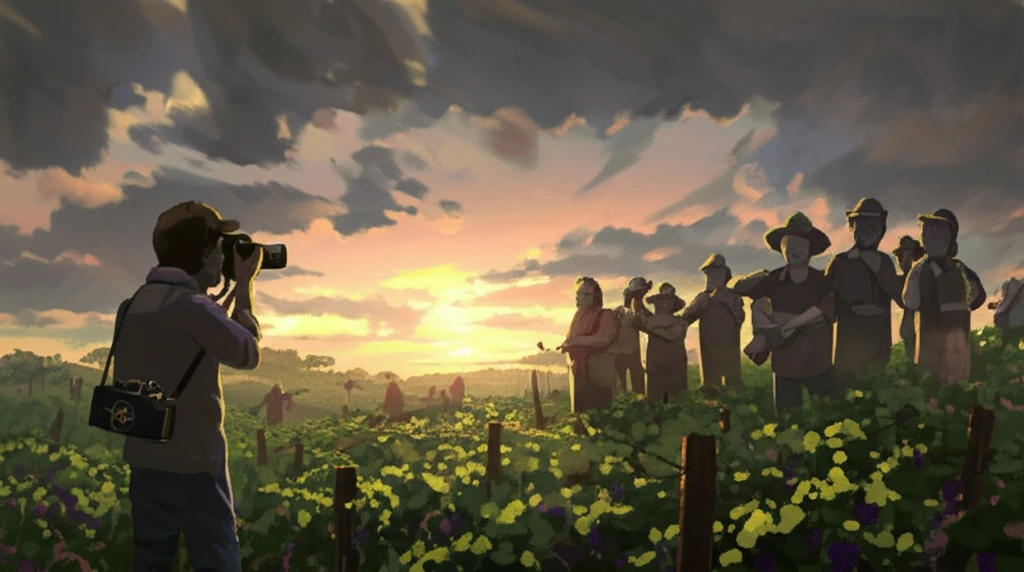
History is often told through the grand narratives of leaders and landmark events. But what about the stories etched in the faces of everyday people, captured through the lens of a camera? Richard Steven Street's biography, 'Jon Lewis: Photographs of the California Grape Strike,' offers a compelling look at one such story. It rescues Jon Lewis, a largely unknown photographer, from obscurity and shines a light on his pivotal role in documenting the historic California Grape Strike.
Jon Lewis was more than just a photographer; he was an ex-Marine and a college graduate on the cusp of a photojournalism career. Drawn into the burgeoning farmworker movement by Luis Valdéz, Lewis found himself at the heart of the National Farm Workers Association strike in Delano. For eight months, and frequently thereafter, he walked alongside the workers, documenting their struggle and their unwavering determination. This biography not only tells Lewis's story but also uses his photographs to create a powerful and intimate history of the farmworker movement.
Street’s work unveils a dual narrative: the history of a movement and the life of a man dedicated to capturing its essence. It’s a story of social justice, sacrifice, and the profound impact that a single individual with a camera can have on the course of history. The article is perfect for those who are fascinated with social movements and the role of photography in shaping social change.
Timeline, Impact, and State Opposition
The Delano grape strike was organized by the Agricultural Workers Organizing Committee (AWOC), a predominantly Filipino and AFL-CIO-sponsored labor organization, against table grape growers in Delano, California, to fight the exploitation of farm workers. The strikes that ran between 1965 and 1970 ultimately unified the region's two primary agricultural unions and demonstrated the effective power of boycotts. The strike and its associated grape boycott continued until July 29, 1970, when California table grape growers signed union contracts and agreed to grant workers better pay, benefits, and protections. The conflict also drew in state politics, with Governor Ronald Reagan becoming embroiled in the fight and vetoing the Agricultural Labor Relations Act, which would have granted farm workers collective bargaining rights.
Collective Action, Boycott, and Nonviolence
Accounts of the Delano grape strike emphasize a standard approach built on collective worker organization and a nationwide consumer boycott rather than violence. On September 7, 1965, Filipino grape workers in Delano voted to strike rather than accept the reduced wages proposed by the growers. The boycott that accompanied the strike was sparked by discontent that had built far before 1965, with grievances among California's farmworkers running deep. As one analysis of the strike observes, the story shows that when groups work together, change can happen without violence.
From Coachella to Delano: Roots of the Strike
The Delano strike came a year after activists had forced Congress to end the Bracero contract labor program, which had long shaped farm labor in California. Earlier that year, Filipino workers in Coachella, where California's grape harvest begins, went on strike and won a 40-cent per hour wage increase while forcing authorities to drop charges against arrested strikers. Larry Itliong organized that Coachella strike, and Filipino workers had been a large and important part of the Coachella Valley farm workforce from the 1920s through the 1970s. On September 8, 1965, the Delano Grape Strike itself began in California.
The Power of a Photograph: Documenting the Grape Strike
Richard Steven Street argues that Jon Lewis deserves recognition as a key documentary photographer of the 20th century. However, Lewis's close ties to the United Farm Workers (UFW) made his work less appealing to mainstream media outlets. Despite this, his photographs offer unparalleled access to the realities of the grape strike, providing a ground-level view of the movement’s struggles and triumphs. The biography highlights how Lewis's commitment to the UFW, while limiting his professional opportunities, gave him a unique and invaluable perspective.
- A history of the farmworker movement.
- A remarkable photographic record.
- An affecting biography of Jon Lewis.
- Insight into the sacrifices of volunteers.
Scholarly Review of the Strike's Photography
Recent academic commentary on the strike's visual record includes a book review of "Richard Steven Street, Jon Lewis: Photographs of the California Grape Strike," published in the Southern California Quarterly in December 2014 (vol. 96, no. 4). The review evaluates Jon Lewis's photographs, which document the California grape strike and its participants. Its publication signals ongoing scholarly interest in the imagery of the conflict and in how the strike was visually recorded and preserved for later study.
Arrests and Resistance Along the Way
The strike's path to recognition was marked by setbacks as well as victories. In Coachella, where the grape harvest begins, Filipino workers who went on strike that summer were arrested, and organizers had to force authorities to drop the charges against the arrested strikers. When the strike spread to Delano on September 8, 1965, grape pickers were again protesting persistently poor pay and working conditions. Retrospectives that ask why the Delano grape strike proved so impactful note that its achievements came against real resistance, which is precisely what made the movement so unique and instrumental.
A Turning Point in American Labor History
Commentators describe the Delano grape strike as a turning point in American labor history, one that led to the formation of the United Farm Workers (UFW) and sparked national attention to the exploitation of agricultural workers. The strike is regularly compared and connected to broader labor history themes, including collective action, farmworker solidarity, and the 1970 labor victory that followed. Contemporary discussions on social platforms continue to frame the strike alongside related topics such as labor movements in California, historical strikes in the U.S., and Mexican labor relations, using it as a reference point for ongoing worker organizing. In these comparisons, the strike's significance is measured both by its immediate effects and by the lasting institutional legacy of the UFW.
A Legacy of Justice and Remembrance
While Street acknowledges that condensing complex historical contexts can be challenging, the biography ultimately succeeds in its mission: rescuing Jon Lewis from obscurity and highlighting the profound impact of his work. 'Jon Lewis: Photographs of the California Grape Strike' serves as a testament to the power of photography in documenting social movements and the importance of recognizing the contributions of those who stand on the front lines of history. The book works well as a history and helps inform people of the world around them.
A 'Chic' Cause on the New York Liberal Scene
By 1969, contemporary commentary observed that the grape strike had taken on a cultural currency far beyond the fields of California. The New York Times reported that "the grape strike has become chic," writing that "you aren't really 'in' the New York liberal scene until you've been to a fund-raising party for the union at George Plimpton's apartment." The observation captured the distance between the celebrity fundraising circuit and the hard road still ahead to settle the strike.
Lessons for Filipino American History
An account published for Filipino American History Month frames the Delano grape strike as a durable lesson in Filipino American leadership and labor organizing. It reports that the strike was led by the Agricultural Workers Organizing Committee (AWOC), with Larry Itliong among its key Filipino leaders. According to this account, after ten days of striking, farmers agreed to the workers' demands of $1.40 per hour and 25 cents per box of grapes. The strike is presented as an ongoing teaching point for how Filipino American history is remembered and passed on to new generations.
Decades of Discrimination and Cross-Ethnic Solidarity
The strike must be understood against a backdrop of systemic challenges, including decades of discrimination, shoddy pay, and poor working conditions endured by grape pickers in California's Central Valley. In 1965, that accumulated frustration reached a breaking point. The strike that began on September 8, 1965 is credited with bringing Hispanic and Filipino farmworkers together, which analysts cite as one of the key reasons the movement proved so impactful. Their shared grievances over pay and conditions helped sustain a struggle that extended far beyond the grape fields.
The Workers Behind the Strike
At the center of the Delano story are the workers themselves—the people who labored in the grape fields for poor pay and under poor working conditions. On September 8, 1965, a group of farmers who worked in the grape fields went on strike in Delano, California, to protest those conditions. One retrospective that recasts the strike around its human participants notes that this decision to withhold their labor was both a personal choice and a collective act. The account identifies five ways the strike was so historic, grounding its legacy in the experiences and risks taken by the workers themselves.