
Unmasking Ancient Conflicts: What Broken Noses Reveal About Pre-Columbian Life

"Delve into the hidden stories of violence and resilience in pre-Columbian Atacama, where nasal fractures offer a unique lens into social dynamics and conflict resolution."
Archaeological investigations often grapple with the elusiveness of conflict. While weaponry and defensive structures provide circumstantial evidence, the human body offers a direct testament to acts of violence endured by individuals. Bioarchaeology, the study of human remains, allows us to examine skeletal trauma as a window into the past, revealing the scarring of violence through broken and altered bones.
This approach provides an intimate lens through which to view violence in antiquity, offering insights that transcend the broad strokes of warfare or imperial conquest. Small-scale conflicts and interpersonal disputes, often obscured in grand narratives, require careful examination to uncover their context and meaning. By integrating bioarchaeology, we gain a more intimate and contextualized understanding of violent injury, allowing us to analyze conflict at the individual and community levels.
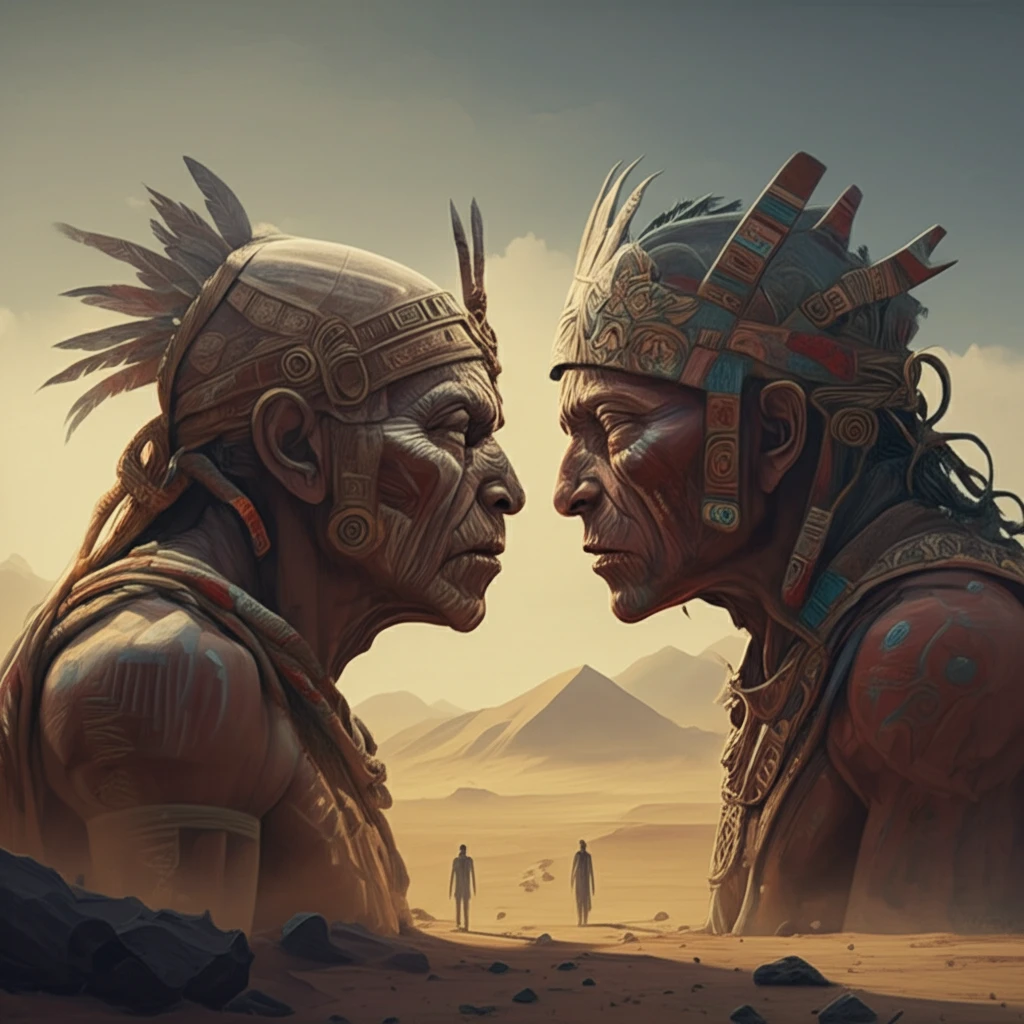
In the arid landscape of pre-Columbian San Pedro de Atacama, a remarkable number of individuals bear the marks of face-to-face confrontations: broken noses. These injuries, prevalent during the Middle Period (AD 400–1000) among the Atacameño oases, raise intriguing questions about the nature of violence in a society characterized by long-term occupation and access to freshwater resources. This article explores the bioarchaeological evidence of nasal fractures, offering a glimpse into the hidden conflicts that shaped life in this ancient community.
Violence in Pre-Columbian Americas
Archaeological evidence increasingly reveals that violence was common throughout North and South America long before European contact, contradicting romanticized narratives of peaceful pre-Columbian societies. The history of violence examines the prevalence, patterns, and underlying causes of aggressive and lethal acts across human societies from prehistoric eras to modernity, with empirical data revealing pronounced trends in interpersonal and collective conflict. Pre-Columbian populations were not fixed, and demographic estimates remain debated among scholars, complicating assessments of violence rates and their societal impact.
Studying Ancient Violence: Methods and Gaps
Studying violence in ancient societies requires interdisciplinary approaches that integrate archaeological evidence, skeletal analysis, and historical records, yet these methods face inherent limitations in reconstructing past behaviors. Legal and normative frameworks reveal that violence has always been regulated differently across societies, with contemporary conceptions of justified suffering shaping how scholars interpret ancient practices. Standard methodological approaches often struggle to distinguish between ritualistic, interpersonal, and warfare-related injuries in the archaeological record.
Foundational Work on Pre-Columbian Warfare
The 2014 volume Embattled Bodies, Embattled Places: War in Pre-Columbian Mesoamerica and the Andes represents a significant milestone in scholarship, seamlessly weaving together history, iconography, area studies, and anthropology to situate pre-Columbian violence in its particular historical context. Christopher Columbus' violent first contact with indigenous peoples, including the Taíno, marked a catastrophic turning point that scholars have increasingly documented through primary sources and archaeological evidence. These foundational discoveries have reshaped understanding of both pre-contact conflict patterns and the devastating impact of European arrival.
The Silent Narratives of Nasal Fractures
The study, encompassing 493 individuals from eight cemeteries in San Pedro de Atacama, reveals that 15.8% suffered antemortem cranial fractures. Strikingly, the overwhelming majority (80.8%) of these fractures targeted the nasal bones. This concentration of injuries suggests that face-to-face confrontations were a dominant form of violent interaction in this society.
- Gender Disparity: Males were significantly more likely to sustain nasal fractures than females, suggesting a gendered dimension to conflict.
- Age-Related Patterns: Nasal fractures were primarily observed in adults, indicating that participation in violent encounters was largely confined to mature individuals.
- Social Context: Variations in fracture rates across different cemeteries, particularly within the Solcor ayllu, suggest that social status and kin relations may have influenced exposure to violence.
- Temporal Consistency: The prevalence of nasal fractures remained relatively stable throughout the Middle Period, indicating a long-established tradition of face-to-face conflict.
Contemporary Research Landscape
Current psychological and anthropological research continues to explore the cognitive and social mechanisms underlying human violence, offering frameworks that may help interpret ancient behavioral patterns. Neuroscience and psychological research in mental health and cognitive function increasingly inform our understanding of aggression and conflict behavior across cultures and time periods. While direct application to pre-Columbian skeletal evidence requires caution, these interdisciplinary approaches provide valuable context for interpreting ancient injuries such as facial trauma.
Challenging Dominant Narratives
Some scholars challenge the emphasis on pre-Columbian violence, arguing that archaeological evidence can be misinterpreted or selectively presented to support narratives of inherent indigenous aggression. Violence reduction efforts in modern communities demonstrate that structural and social factors heavily influence conflict patterns, suggesting similar complex dynamics likely operated in ancient societies. Critics note that focusing solely on skeletal evidence of trauma without considering broader social, economic, and environmental contexts provides an incomplete picture of pre-Columbian life.
Cross-Cultural Perspectives on Conflict
Comparative analysis of pre-Columbian societies reveals diverse approaches to conflict, from large-scale warfare in Mesoamerica to more localized disputes in other regions. Early American history before European contact included complex trade networks, political alliances, and territorial disputes that shaped patterns of violence and its regulation. Understanding pre-Columbian conflict requires moving beyond simplistic comparisons and acknowledging the unique cultural, environmental, and social factors that influenced each society's relationship with violence.
Revisiting the Past Through Broken Bones
This exploration of traumatic injury in the Middle Period aimed to shed some light on the practices that resulted in nasal fractures becoming nearly commonplace. However, the consistency with which this activity was engaged in during the length of the Middle Period suggests that more than acts of interpersonal violence we may be documenting some form of socially sanctioned activity that involved face-to-face confrontation. Without more detailed study we are unable to identify what these individuals shared that resulted in injury. While it seems unlikely that there were “attackers” and “victims” in the traditional sense, what this may be is evidence of a local means of conflict resolution involving direct confrontation between adult individuals. Moreover, it is possible that there was a regularized quality to these contests that produced standardized injury patterns. Unsurprisingly, it is evident that the peace and prosperity that characterized the Middle Period was not tied to a complete lack of hostilities between different social groups and this leaves open the possibility for a deeper exploration of violence in this time of growing prosperity and increasing social hierarchization.
Integrating Evidence and Interpretation
The study of broken noses and facial trauma in pre-Columbian skeletal remains offers a unique window into ancient social dynamics, conflict resolution, and cultural practices. While no single source of evidence can fully reconstruct past behaviors, the convergence of archaeological, anthropological, and historical data provides increasingly nuanced understandings of pre-Columbian life. Scholars continue to debate the relative significance of ritualistic versus interpersonal violence, highlighting the complexity of interpreting skeletal evidence without contemporary cultural context.
Advancing Archaeological Interpretation
Future research will likely benefit from advancing analytical techniques, including improved imaging technologies and bioarchaeological methods that can extract more detailed information from skeletal remains. The study of first contact violence and its long-term consequences remains an active area of inquiry, with new discoveries continuing to reshape historical narratives. Interdisciplinary collaboration between archaeologists, forensic anthropologists, and indigenous communities holds promise for more holistic and respectful approaches to studying pre-Columbian conflict.
Systemic Barriers to Understanding
Understanding pre-Columbian violence faces systemic challenges including incomplete archaeological records, preservation biases, and the destruction of indigenous knowledge systems through colonization. Modern political and social dynamics continue to influence how pre-Columbian history is researched, interpreted, and presented to public audiences. Addressing these challenges requires acknowledging the limitations of current evidence while remaining open to new methodologies and perspectives that can illuminate previously hidden aspects of ancient life.
Connecting Past and Present
Pre-Columbian sites across the United States serve as tangible connections to ancient histories, with tribal communities actively engaged in preserving and interpreting these cultural landscapes. Research on identity-based political violence offers frameworks for understanding how group identity and resource competition shaped conflict patterns in both historical and contemporary contexts. The human impact of pre-Columbian violence, as revealed through skeletal evidence, reminds us that ancient societies grappled with similar challenges of conflict, justice, and social cohesion that continue to resonate today.