
Unlocking the Secrets of Breast Health: How Tiny Vesicles Hold the Key to Cell Communication

"Researchers discover a novel way cells communicate in breast tissue, potentially leading to breakthroughs in breast cancer treatment and understanding mammary gland development."
The human body is an intricate network of cells, all communicating and working together to keep us healthy. One of the key ways cells communicate is through the extracellular matrix (ECM), a complex meshwork of molecules that surrounds and supports cells. The ECM isn't just structural; it also plays a vital role in regulating cell behavior and ensuring tissues function correctly.
Recent research has highlighted the importance of a protein called milk fat globule-EGF factor 8 (MFG-E8) in mammary gland development and morphogenesis. MFG-E8, equipped with an Arg-Gly-Asp (RGD) motif and a phosphatidylserine (PS)-binding motif, facilitates cell adhesion and signaling, essential for various cellular processes. Understanding exactly how MFG-E8 operates within the cellular microenvironment is a hot topic, as its function is tied to integrin-dependent cell processes.
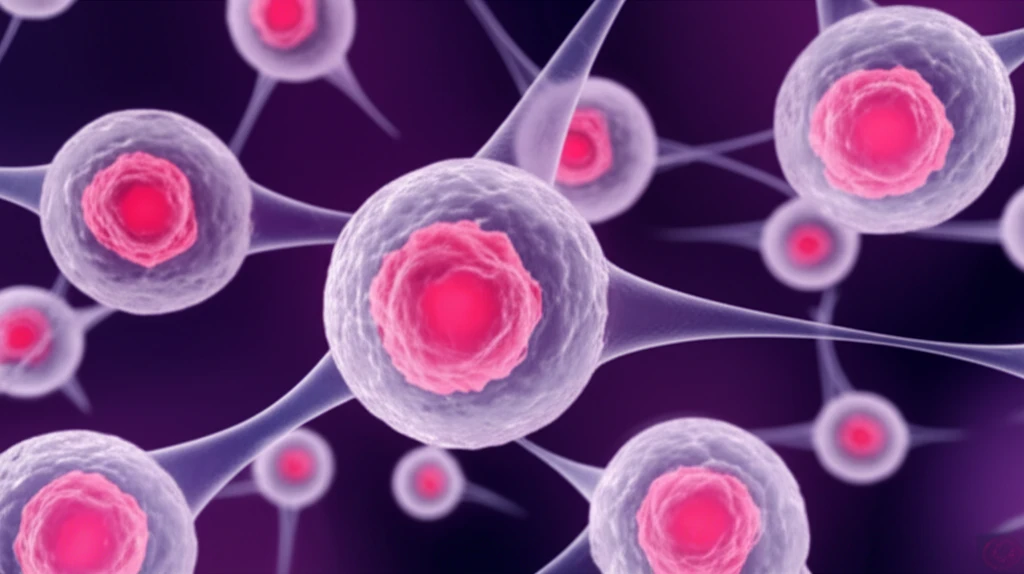
A groundbreaking study sheds light on how MFG-E8 is localized in the extracellular matrix via extracellular vesicles (EVs), small particles that cells release to communicate with each other. This research, conducted on mouse mammary epithelial cells, reveals that EVs act as a scaffold for MFG-E8, influencing cell behavior and potentially impacting integrin-dependent processes. These findings could revolutionize our understanding of cell communication and pave the way for new therapeutic interventions.
Communication Networks and Breast Cancer Impact
A study using data from community.breastcancer.org examined how online breast cancer community posts form distinctive communication networks at different cancer stages. Research on liver metastasis has also examined cell-cell communication, including the role of E-cadherin in helping circulating tumor cells attach to endothelial cells. The CDC provides an official U.S. Cancer Statistics Data Visualizations Tool for exploring current federal cancer data.
Communication as Clinical Care
The CLEAR model proposes a structured communication protocol built around Connect, Listen, Explain, Ask, and Reassure. Its authors argue that direct, empathetic communication by breast radiologists is a core clinical act affecting patients' psychological wellbeing and physiological stress response. Research on advanced breast cancer likewise describes communication between healthcare professionals and patients as particularly challenging and calls for comprehensive communication-skills training.
From Early Observations to Precision Medicine
Historical accounts describe breast cancer research as developing substantially from the 19th century onward. Reviews of the subject trace changing understanding of breast cancer causes and treatment across time. More recent historical summaries connect this progression with the discovery of genetic markers and the emergence of precision medicine.
How Does MFG-E8 Localization Work?
The study uncovers that MFG-E8, critical for mammary gland development, localizes to the basal lamina—a foundation layer of the mammary gland—during involution, the process where the gland returns to its pre-pregnancy state. Using mammary COMMA-1D cells, researchers observed that both exogenously introduced and endogenously expressed MFG-E8 are deposited into the extracellular matrix with the help of membranous particles. This deposition hinges on the PS-binding motifs found in the discoidin domains of MFG-E8, which are vital for EVs association.
- MFG-E8's Dual Role: MFG-E8 is a secretory protein with both an RGD motif and a PS-binding motif, making it essential for cell adhesion and signaling.
- Localization Matters: The study found that MFG-E8 localizes to the basal lamina of the mammary gland during involution.
- EVs as Scaffolds: EVs act as scaffolds, facilitating MFG-E8's deposition into the extracellular matrix.
- PS-Binding Motifs: The PS-binding motifs in the discoidin domains of MFG-E8 are crucial for association with EVs.
- Integrin-Dependent Suppression: Immobilized MFG-E8 suppresses β-casein expression through integrin-dependent mechanisms.
Extracellular Vesicles and Cancer Progression
A review of lactadherin reports that the protein is present in extracellular vesicles derived from cancer cell lines and from cancer patients. The review associates this presence with cancer aggressiveness and worse prognosis, while presenting lactadherin as a possible participant in extracellular-vesicle-mediated cancer progression. Separately, bioengineering research describes using the C1C2 domain from MFG-E8 to bind phosphatidylserine and anchor fused molecules onto an extracellular-vesicle membrane.
Why Cell Communication Is Context-Dependent
Research on dynamic cell communication argues that the breast cancer microenvironment can produce different or even opposite effects from histologically identical cell types or the same signaling molecules. It also raises the problem that the same drug may behave differently at different stages of tumor progression. Communication challenges are not limited to tumor biology: advanced breast cancer treatment also creates difficult interactions between healthcare professionals and patients, highlighting the need for continuing communication-skills training.
Why This Matters
Understanding the precise localization and function of MFG-E8, particularly its interaction with extracellular vesicles, could open new avenues for treating breast cancer. By understanding the mechanism by which EVs mediate MFG-E8 localization, researchers may find ways to disrupt abnormal cell signaling in cancerous tissues. These insights could also be pivotal in developing targeted therapies that promote healthy mammary gland function and prevent disease.
Communication as a Dynamic System
A review of the breast cancer microenvironment describes multiple types of cellular communication and treats internal and external environmental factors as variable signaling influences. It emphasizes that accurate and efficient cell communication helps regulate and coordinate cellular physiological and biochemical reactions in response to changing conditions. The same review discusses extracellular-vesicle-mediated communication as part of the broader tumor communication landscape.
Tracing Causal Signaling Cascades
A 2026 study uses causal modeling to examine cell-cell communication dynamics. Its example describes activated T cells secreting ligands that bind cognate receptors on non-T cells. This treatment-induced sequence propagates through ligand-receptor-mediated intercellular communication and drives differentially expressed gene expression in another cell population.
Real-World Evidence and Patient Tools
Reviews of real-world data in breast cancer research examine electronic health records, insurance claims, and patient registries, including their use in triple-negative breast cancer studies. Such data can provide insight into treatment effectiveness and safety in diverse patient populations and complement controlled clinical trials. A separate scoping review examines breast cancer mobile-health applications published since 2020, focusing on their functionalities, target populations, and reported limitations in real-world use beyond prototype or pilot phases.