
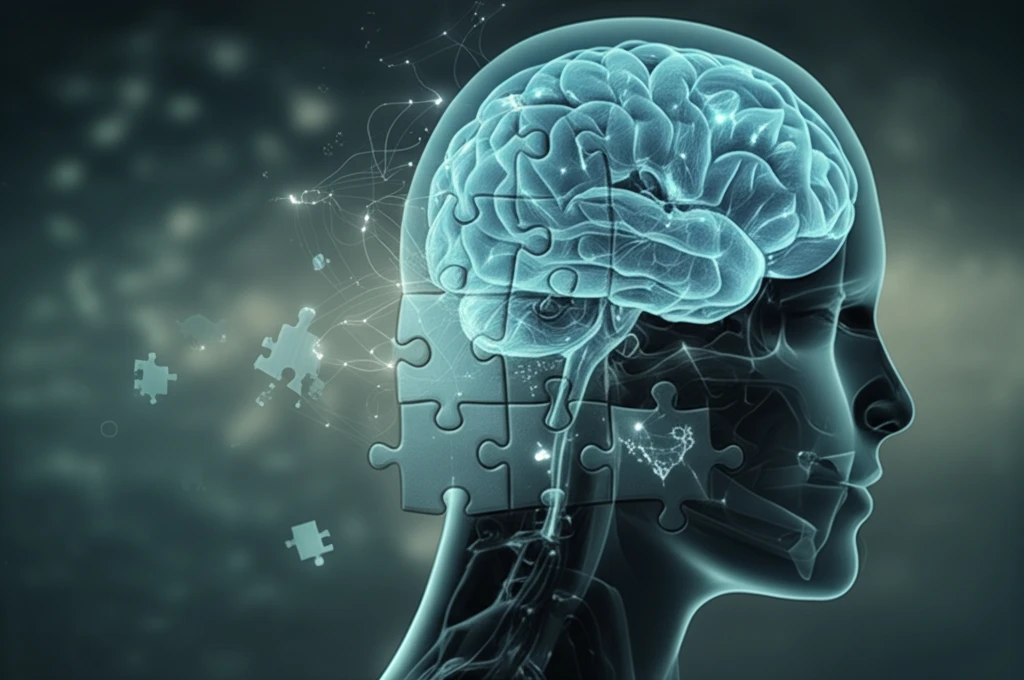
Unlocking the Puzzle: How Anxiety and Autism Intertwine

"Understanding the Overlap, Similarities, and Differences to Better Support Neurodivergent Individuals"
Anxiety and autism spectrum disorder (ASD) have long been recognized as co-occurring conditions. From the earliest descriptions of autism by Kanner and Asperger, anxiety symptoms were noted as significant features. Understanding how these two conditions interact is crucial for providing effective support and interventions.
The relationship between anxiety and ASD is complex. Is anxiety simply another symptom of ASD, or is it a distinct condition that individuals with ASD are more vulnerable to? This question has puzzled clinicians and researchers for decades, complicated by the fact that mental health issues are often overshadowed by the more prominent features of ASD.
This article delves into the intricate connection between anxiety and ASD, exploring their overlapping characteristics, unique presentations, and the challenges in diagnosis and treatment. By understanding these nuances, we can better support individuals navigating both conditions.
Prevalence, Employment, and Anxiety's Toll
CDC surveillance from its Autism and Developmental Disabilities Monitoring (ADDM) Network reports the combined prevalence of autism spectrum disorder per 1,000 children across multiple surveillance sites. Nearly 30% of autistic individuals experience anxiety symptoms, and about half of autistic children struggle with sleep, according to current statistics compiled by Gitnux. Employment is a major hurdle: WorldMetrics reports that 64% of autistic adults are unemployed, while a 2021 peer-reviewed study cited by Gitnux found 47% of autistic adults report work difficulties. Anxiety can intensify core challenges such as social withdrawal, stronger rigidity, and insistence on routines, and it can also lead to shutting down, self-injury, and/or aggression.
Why Standard Treatments Fall Short
Sources agree that anxiety is common in autistic people but tends to run through different mechanisms than neurotypical anxiety. Autistic anxiety is primarily driven by intolerance of uncertainty and sensory differences rather than distorted cognition, which is why standard anxiety treatment often produces limited results. Other analyses similarly point to sensory, social, and predictive mechanisms underlying anxiety in autistic adults. Because each person's anxiety has a different set of triggers, approaches to managing symptoms differ from person to person.
A History of Shifting Understanding
Modern understanding of autism has been shaped over time by cultural, scientific, and societal factors, with conceptual and treatment approaches evolving across decades. Within that history, anxiety has emerged as a major co-occurring challenge. A recent National Autistic Society survey found 59% of autistic people said anxiety had a high impact on their ability to get on with life. Experiencing such high levels of anxiety can lead to exhaustion and meltdowns, and it may also lead to autistic fatigue and burnout.
The Confounding Overlap: Untangling Shared Symptoms
One of the primary challenges in understanding anxiety in ASD is the significant overlap in symptoms. Several behaviors and characteristics common in ASD can mimic or mask anxiety, making accurate diagnosis difficult. Some of the key areas of overlap include:
- Compulsive and ritualistic behaviors are often associated with ASD, but they can also be indicative of obsessive-compulsive disorder (OCD), an anxiety disorder.
- Communication deficits can further complicate the picture. Individuals with ASD may struggle to express their feelings of anxiety, leading to misinterpretations or underreporting of their distress.
- Restricted and repetitive interests: Can also be a symptom, if anxiety gets in the way of doing it.
Distinct Mechanisms Under Study
Emerging research suggests that anxiety in autism can be 'distinct,' driven by amygdala reactivity, sensory overload, and unpredictability rather than typical triggers. A study reported by PsyPost found that autistic individuals and people with social anxiety differ in how they experience empathy: the autism group had the highest average ratio, followed by the social anxiety group, and then the control group. That ratio was also positively linked to the severity of autistic traits and anxiety symptoms, but only in the autism group. Given this overlap, practical resources emphasize tools for reducing stress in everyday life.
Disputed Rates and Conflated Experiences
Reported prevalence figures have drawn pushback. One analysis of CDC data from 2020 states that 1 in 36 (2.8%) 8-year-old children — 4% of boys and 1% of girls — have an autism spectrum disorder, and critics have questioned the increase in reported rates. On the clinical side, overlapping experiences are often conflated: autistic meltdowns and anxiety attacks are distinct but frequently confused. Anxiety attacks may feel different for autistic individuals, often more sensory, more internalized, or more difficult to communicate, which complicates recognition and treatment.
How Autistic Anxiety Differs
Comparative guides distinguish autistic anxiety from neurotypical anxiety and from social anxiety. Neurodivergent Insights explains that anxiety becomes disordered when it is disproportionately intense compared to the actual risk involved, illustrating the point with a fire alarm example from Dr. Jonathan Dalton. Popular explainers on TikTok walk through key distinctions between social anxiety and autism. One video describes a type of anxiety specific to autism that does not align with any existing anxiety disorder in the DSM.
Moving Forward: A Call for Comprehensive Understanding and Tailored Support
The journey to understanding anxiety in ASD is ongoing, with much progress made and more still needed. By acknowledging the complexities, refining assessment methods, and embracing tailored interventions, we can empower individuals with ASD to navigate anxiety effectively and thrive. The key lies in recognizing that anxiety in ASD may present differently but is no less real or impactful and deserves the same level of attention and support.
When Anxiety Becomes a Crisis
Expert commentary highlights how severe anxiety can become for autistic individuals and their families. In one case shared with Autism Speaks, a parent describes a 12-year-old son with autism, mild intellectual disability, and anxiety attacks so severe that the family ends up in the emergency room. Loud noises are the worst triggers — the school fire alarm, thunderstorms, a balloon popping, fireworks. The case shows how sensory triggers and anxiety can combine into crises requiring urgent care.
A Growing Treatment Market
Market forecasts point to substantial growth ahead in autism treatment. Market Research Future projects the autism disorder and treatment market will reach $14.98 billion at a 7.22% compound annual growth rate, with forecasts running from 2025 to 2035. The projected expansion reflects rising demand for autism-related therapies and interventions. Because this is an industry projection, it should be read as an estimate rather than a settled outcome.
Overlap, Phenotypes, and Co-Occurrence
Autism spectrum disorder is characterized by challenges with social interactions, repetitive behaviors, and executive functioning, and it is associated with several co-occurring conditions, including social anxiety. Symptom overlap between autism and anxiety makes recognition and support more complex. Research on the broader autism phenotype (BAP) — autistic traits present in individuals without an autism diagnosis, particularly relatives of autistic people — notes that tools such as the BAPQ can assess autistic traits across a population. Practical guidance emphasizes recognizing when the two conditions co-occur so both can be supported together.
Living with the Overlap
First-person accounts convey what the autism–anxiety overlap feels like from the inside. One late-diagnosed autistic adult describes Level 1 autism as involving anxiety, masking, and hyper-vigilance — parts of the experience that often go unnoticed by others. Free online screening quizzes for adults are available to help people identify potential autistic traits. For families, practical approaches to reducing anxiety in autistic children focus on helping the nervous system feel safe and calm through predictable routines, sensory supports, visual schedules, movement, sleep support, and calm connection.