
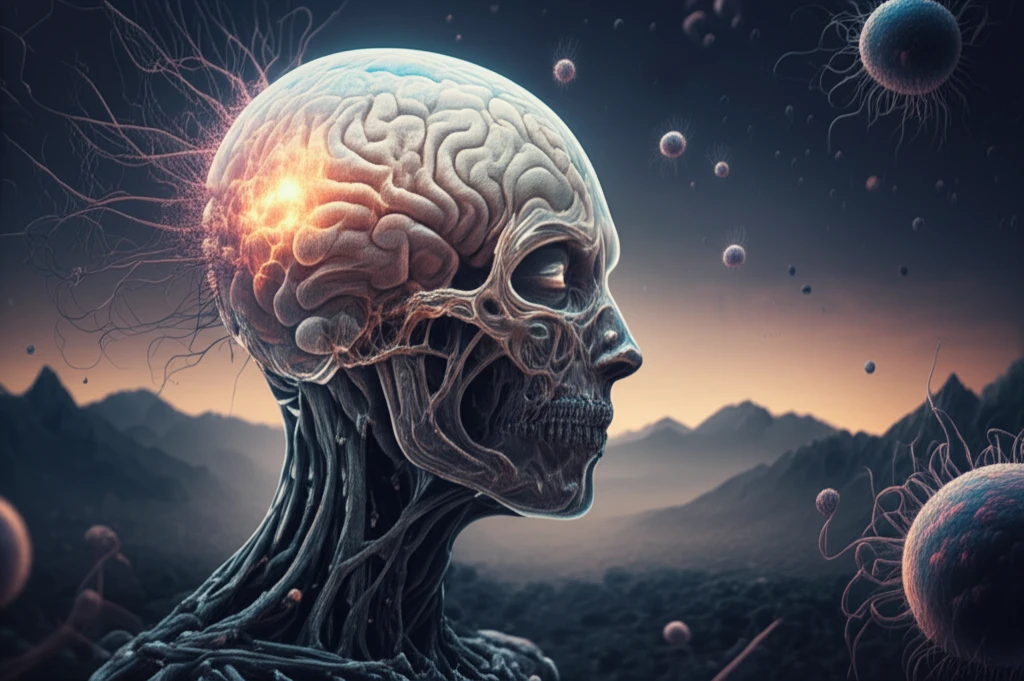
Unlocking the Mystery: How the Immune System Influences Aging and Alzheimer's

"A closer look at the connection between the peripheral immune system, aging, and Alzheimer's disease, and what correcting past errors reveals about future research."
The human body is a complex network of interconnected systems, each influencing the others in ways we are only beginning to understand. Among these, the immune system stands out as a critical player in maintaining health and defending against disease. Recent research has illuminated a fascinating link between the immune system, the aging process, and neurodegenerative conditions like Alzheimer's disease, creating a ripple of interest across the scientific community and for those seeking insights into longevity and brain health.
Alzheimer's disease, a devastating condition characterized by cognitive decline and memory loss, affects millions worldwide. As our global population ages, understanding the factors that contribute to or protect against Alzheimer's becomes increasingly crucial. While genetic predisposition and lifestyle choices are known to play a role, the influence of the immune system is now emerging as a significant area of focus. This article dives into the implications of a key research paper, addressing corrections made and what these refinements mean for our understanding of Alzheimer's and aging.
Initially published research sometimes contains errors, and the scientific community depends on corrections and clarifications to ensure accuracy. A recent correction to a paper titled 'Peripheral immune system in aging and Alzheimer's disease' provides an opportunity to refine our understanding of this complex relationship. By examining the specifics of these corrections, we can gain a clearer picture of how the immune system interacts with the aging brain and what potential therapeutic avenues might be explored.
A Growing Public Health Mandate
Alzheimer's disease represents an urgent public health mandate, according to researchers studying the aging brain. The condition is a progressive disease that causes loss of memory and other functions, and today its cause is not known and there is no cure. A close functional connection between the immune system and the central nervous system is increasingly recognized as relevant to late-onset Alzheimer's, where aging represents the most important risk factor.
The Limits of Current Treatment
St. Elizabeth Healthcare reports that the cause of Alzheimer's is not known and there is currently no cure, underscoring the limits of accepted treatment approaches. Because immune systems are supposed to protect the body, researchers are now investigating how these defenses may instead go awry in disease. When immune systems go awry, they can wreak havoc, triggering everything from diabetes to, scientists now believe, Alzheimer's disease.
From Immune Memory to the Brain
Susan Kaech has long studied how the immune system develops long-term "memories" of the pathogens it encounters. Her lab has observed that each time a mouse gets an infection, new immune cells enter the brain. This line of work helped lay the foundation for understanding the interplay between the immune system and the brain in the context of aging and Alzheimer's disease.
The Interplay Between Immunity, Aging, and Alzheimer's
The original study, as noted in the correction, contained 'several small omissions and errata' within its tables. While these may seem minor, in scientific research, precision is paramount. These corrections primarily concern data presented in tables, which are crucial for interpreting the study's findings. Understanding what these corrections entail can provide deeper insights into the nuances of the research. The immune system, responsible for defending the body against pathogens and maintaining tissue homeostasis, undergoes significant changes with age. This phenomenon, known as immunosenescence, involves a decline in immune function and an increase in chronic inflammation. Both aspects can impact brain health.
- Immunosenescence: The decline in immune function associated with aging.
- Chronic Inflammation: Persistent, low-grade inflammation that can damage tissues and organs, including the brain.
- Amyloid Plaques: Abnormal protein deposits in the brain, characteristic of Alzheimer's disease.
- Neuroinflammation: Inflammation within the brain, often triggered by immune responses.
A Possible Immune Link, with a Sex Difference
A study reported by the University of Colorado Anschutz found a potential immune system link to Alzheimer's disease, with the connection appearing mostly in one sex. The research builds on the idea that when immune systems go awry, they can trigger a range of conditions, from diabetes to Alzheimer's disease. Scientists now believe immune system failures may play a role in driving the disease.
Uncertainty in Cause and Cure
St. Elizabeth Healthcare states that today the cause of Alzheimer's is not known and there is no cure, a reminder of how much remains unexplained. Even as immune system connections are increasingly recognized, the field still lacks a complete account of how aging and immunity interact in late-onset disease. These unknowns highlight the gaps and limitations in current understanding and treatment.
Protection vs. Overreaction
The immune system is a network that defends the body against microbes, drawing on its parts, the body's other defences, and responses such as fever. In Alzheimer's research, however, the same defenses may go awry and cause harm rather than protection. This contrast between the immune system's protective role and its potential to contribute to disease is central to current investigation.
Future Directions and Implications
The evolving understanding of the immune system's role in aging and Alzheimer's disease offers hope for future interventions. As research progresses, it may become possible to develop targeted therapies that modulate immune function to protect the brain from age-related decline. These could include immunotherapies designed to clear amyloid plaques, anti-inflammatory strategies to reduce neuroinflammation, or interventions to boost the function of aging immune cells. For now, individuals can focus on lifestyle choices known to support both immune and brain health, such as maintaining a balanced diet, engaging in regular physical activity, managing stress, and prioritizing sleep. While the puzzle is far from complete, each correction, each study, and each new insight brings us closer to a future where Alzheimer's disease is no longer an inevitability of aging.
Scientists Drawn to the Brain–Immune Connection
Researchers describe becoming captivated by the interplay between the immune system and the brain in the context of aging and Alzheimer's disease. A close functional connection between the immune system and the central nervous system is increasingly recognized in the field. This convergence of immunology and neuroscience is reshaping how scientists think about late-onset Alzheimer's, where aging is the most important risk factor.
Physical Activity and a Sharper Mind
Aerobic exercise may help reduce the risk of Alzheimer's disease, and physical activity is reported to support memory, brain health, and healthy aging. It may become more difficult to pay attention or switch tasks as we age, but practicing healthy brain habits can help keep bodies healthy and brains sharp. Experts note that it is never too late to take these steps.
Six Habits for Brain Health
Alzheimer's Los Angeles outlines six ways to keep the brain healthy, noting that it may become more difficult to pay attention or switch tasks with age. Practicing healthy brain habits can help keep our bodies healthy and our brains sharp, and it is never too late to take action. These lifestyle habits sit alongside biological research on immunity as complementary paths to protecting the aging brain.
Small Steps, Real-World Impact
Healthy lifestyle guidance, such as living a healthy lifestyle in 12 simple steps, speaks to the everyday choices people can make. Underlying these choices is the immune system, which relies on its parts and the body's other defences to protect against microbes. Understanding how immunity and daily habits interact could help people maintain brain health throughout aging.