
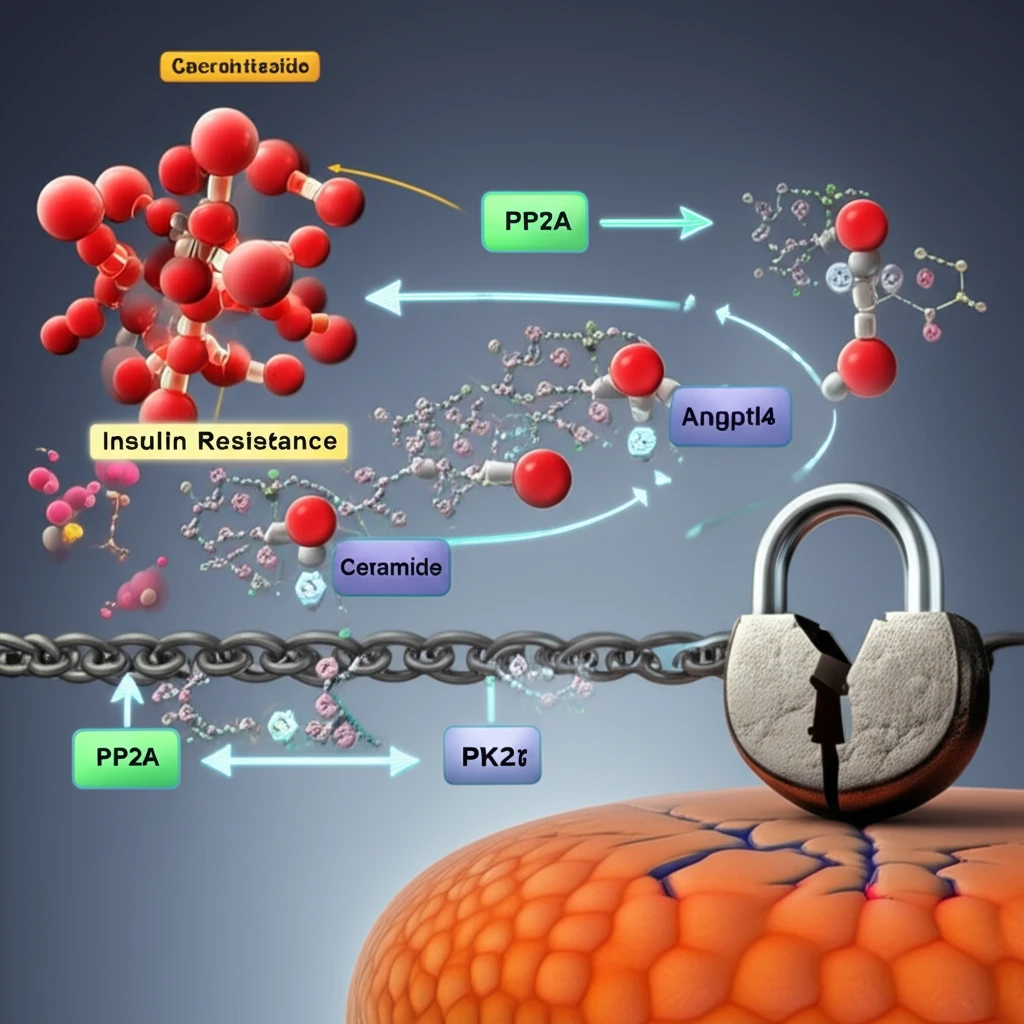
Unlocking the Mystery: How Glucocorticoids, Angptl4, and Ceramides Impact Insulin Resistance

"A groundbreaking study reveals the intricate connection between glucocorticoid exposure, Angptl4, and ceramide production in driving insulin resistance, offering potential new therapeutic targets."
Insulin resistance is a growing health concern, acting as a major precursor to type 2 diabetes and cardiovascular diseases. While the role of glucocorticoids—hormones essential for regulating various bodily functions—in inducing insulin resistance has long been recognized, the precise mechanisms have remained elusive.
Emerging research has shed light on a critical pathway involving Angptl4 (angiopoietin-like 4), a protein regulated by glucocorticoids, and ceramides, a class of lipids. This axis appears to play a pivotal role in how glucocorticoids trigger insulin resistance, offering new targets for therapeutic intervention.
This article explores the groundbreaking study that unveils the intricate relationship between glucocorticoids, Angptl4, and ceramides, delving into the molecular mechanisms that drive insulin resistance. By understanding this complex interplay, we can pave the way for innovative strategies to combat metabolic disorders and improve overall health.
Glucocorticoids and Insulin Resistance: A Documented Link
A systematic meta-analysis of nine electronic databases found a significant correlation between glucocorticoid exposure and insulin resistance in healthy individuals. New-onset insulin resistance can emerge early in patients receiving ongoing glucocorticoid therapy, particularly with dexamethasone. Acute glucocorticoid exposure stimulates insulin secretion and beta-cell hyperplasia as a compensatory mechanism to counterbalance the induced insulin resistance.
Assessing Insulin Resistance: Methods and Challenges
The hyperinsulinemic-euglycemic clamp is considered the gold standard method for assessing insulin resistance due to its precision, though its complexity limits widespread clinical application. In practice, fasting insulin concentration and responses to glucose challenges are measured using validated indices to evaluate insulin resistance status. Insulin resistance is recognized as a major factor linking obesity, diabetes, and certain cancers, with hyperinsulinemia and subclinical inflammation playing central roles.
75 Years of Glucocorticoid Research
For three-quarters of a century, glucocorticoids have been used to treat rheumatic and autoimmune diseases, with understanding of their molecular mechanisms evolving dramatically. Initially, in the late 1950s, glucocorticoids were considered important regulators of energy metabolism. The discovery of insulin itself stands as a revolutionary milestone that transformed diabetes therapy and prognosis, with historical mentions tracing back to ancient Egyptian, Indian, and Chinese texts. Cortisone development by Dr. Edward Kendall and his team at the Mayo Clinic in the 1930s marked the culmination of years of pioneering work.
The Glucocorticoid-Angptl4-Ceramide Connection: A Deep Dive
The study, conducted by researchers at the University of California, Berkeley, focused on the effects of chronic glucocorticoid exposure on insulin resistance. They discovered that Angptl4, a glucocorticoid target gene, plays a crucial role in mediating glucocorticoid-induced lipolysis (the breakdown of fats) in white adipose tissue (WAT).
- Angptl4: A key protein that mediates glucocorticoid-induced lipolysis in white adipose tissue.
- Ceramides: A class of lipids whose hepatic concentrations increase with glucocorticoid treatment, impacting insulin sensitivity.
- PP2A and PKCζ: Downstream effectors of ceramide that play a role in insulin resistance.
Mechanisms of Glucocorticoid-Induced Hyperglycemia
Glucocorticoids contribute to hyperglycemia by disrupting multiple physiological metabolic mechanisms, increasing insulin resistance while decreasing insulin secretion. Insulin production is reduced due to decreased expression of glucose transporter type 2 (GLUT2) and glucokinase receptors on pancreatic beta cells. Glucocorticoid-induced hyperglycemia is observed in over one-third of patients treated with glucocorticoids, yet this issue is often neglected in clinical practice. The key pathophysiology includes systemic insulin resistance that exacerbates hepatic steatosis and visceral obesity, alongside proteolysis and lipolysis of muscle and adipose tissue.
Considerations and Limitations
While the association between glucocorticoids and insulin resistance is well-documented, individual responses vary considerably based on genetic factors, dosage, and duration of therapy. Some patients maintain glucose homeostasis despite prolonged glucocorticoid exposure, suggesting protective mechanisms that are not yet fully understood. The complexity of metabolic pathways means that targeting single mechanisms may not yield comprehensive therapeutic benefits.
Evaluating Therapeutic Approaches
Different classes of medications affecting insulin sensitivity operate through distinct molecular pathways, making direct comparisons challenging. Glucocorticoid-induced insulin resistance involves multiple organ systems simultaneously, whereas other forms may be more localized. Current evidence suggests that addressing the underlying inflammatory component may be more effective than targeting insulin resistance in isolation.
Implications and Future Directions
This study unveils the critical role of Angptl4 in glucocorticoid-augmented hepatic ceramide production, which ultimately induces whole-body insulin resistance. These findings offer valuable insights into the pathogenesis of metabolic disorders and identify potential targets for therapeutic interventions. Further research is needed to fully elucidate the complex interplay between glucocorticoids, Angptl4, ceramides, and other signaling pathways involved in insulin resistance.
Integrating Current Evidence
The relationship between glucocorticoids and insulin resistance represents a complex interplay of metabolic, hormonal, and inflammatory factors. Clinical management requires balancing the anti-inflammatory benefits of glucocorticoids against their metabolic consequences. Ongoing research continues to reveal new mechanisms that may offer therapeutic opportunities without compromising glucocorticoid efficacy.
Emerging Therapeutic Targets and Market Projections
The insulin resistance improvement drug market is anticipated to reach USD 10.3 billion in 2026, driven by the escalating global burden of metabolic disorders. Recent research has identified the Angptl4-ceramide axis as a key mechanism through which glucocorticoids trigger insulin resistance. This discovery paves the way for innovative therapies that could mitigate the harmful metabolic side effects of glucocorticoid treatment while preserving their essential anti-inflammatory properties.
Metabolic Syndrome and Systemic Implications
Glucocorticoid-induced insulin resistance shares common mechanisms with obesity, metabolic syndrome, and type 2 diabetes, with downregulation of hepatocyte insulin receptors being one of many biological actions. Long-term glucocorticoid treatment is associated with numerous adverse outcomes including weight gain, insulin resistance, and diabetes, though the pathogenesis remains incompletely understood. Glucocorticoids also suppress osteoblast function and osteocalcin synthesis, adding skeletal complications to the metabolic burden.
Patient Experience and Clinical Reality
Patients receiving glucocorticoid therapy often face difficult trade-offs between managing inflammatory conditions and dealing with metabolic side effects. The neglect of glucocorticoid-induced hyperglycemia in clinical practice means many patients may not receive adequate monitoring or intervention. Improved education and awareness among healthcare providers could enhance patient outcomes and quality of life for those on long-term glucocorticoid treatment.