
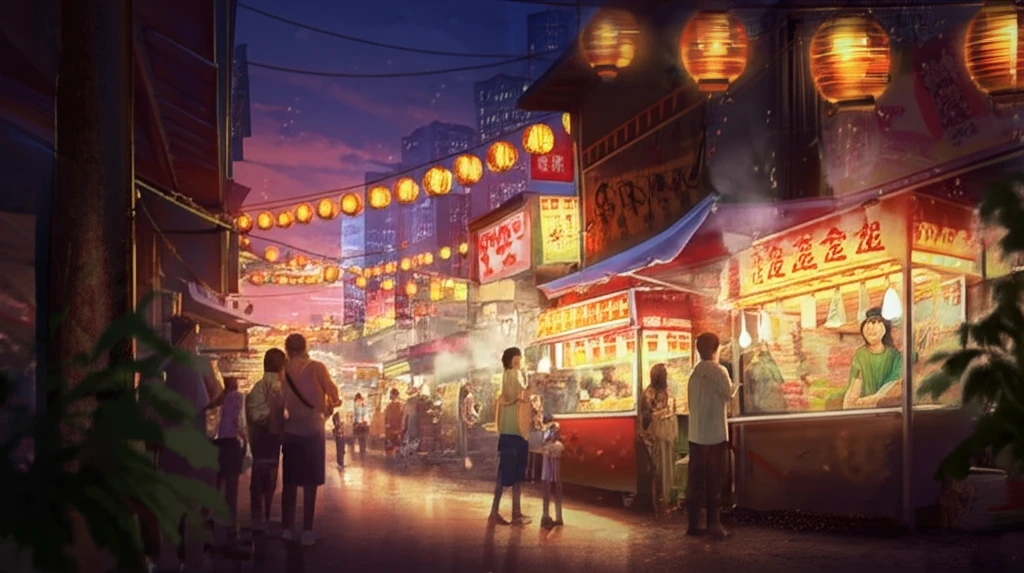
Vibrant Taiwan night market scene with focus on street food and happy customers.

Unlocking Taiwan's Night Market Secrets: A Food Lover's Guide to Service Quality

"Delve into the unique world of Taiwan's night markets and discover how service quality shapes the ultimate culinary experience."


Taiwan's night markets are more than just a collection of food stalls; they are a vital part of the nation's cultural identity and a significant draw for tourists from around the globe. These bustling hubs offer a sensory overload of sights, sounds, and, most importantly, flavors. While the focus is often on the incredible array of street food, the quality of service plays a crucial role in shaping the overall experience.

In the maze of crowded stalls and sizzling delicacies, service quality can make or break a customer's visit. From the friendliness of the vendors to the efficiency of the ordering process, every interaction contributes to the perception of value. Understanding what customers expect and how those expectations are met is essential for night market vendors aiming to thrive in this competitive environment.

This article delves into the key elements of service quality in Taiwan's night markets, drawing on research to highlight the factors that matter most to customers. Whether you're a foodie planning your next trip or a vendor looking to improve your business, this guide offers valuable insights into the heart of Taiwan's night market culture.

AI Search Multiple angles on this topic

Measuring Night Market Service Quality

A Taiwan night-market service-quality questionnaire was developed from five theoretical models to measure service quality. The instrument contains eight dimensions and 36 questions, with data collected randomly at the ten night markets elected by ballot. Separately, a 2021 study interviewed 46 experts from several industries and occupations in Taiwan to examine relationships among night-market tourism brand equity, benefits, motivations, satisfaction, and development. These sources describe measurement approaches, but the supplied material does not specify their limitations.

A 150-Year Night Market Tradition

Taiwan's night-market culture is described as having a 150-year history, stretching from the Qing Dynasty's Dadaocheng coal-oil lamp market to contemporary international tourist attractions. The source reports that Taiwan had 164 regulated night markets in 2023, with Tainan accounting for 49. It also characterizes Taiwan as having the world's highest night-market density, averaging one market for every 38,000 residents.

What Defines Service Quality in Taiwan's Night Markets?

Vibrant Taiwan night market scene with focus on street food and happy customers.

Service quality in night markets encompasses various aspects, often influenced by cultural norms and the fast-paced environment. Research identifies several key dimensions that impact customer satisfaction:

These service attributes play pivotal roles in shaping the visitor’s overall experience:

  • Tangibles: Cleanliness, visual appeal of the stalls, and overall ambiance.
  • Reliability: Accuracy in order fulfillment, consistency in food quality.
  • Responsiveness: Promptness in service, willingness to accommodate requests.
  • Assurance: Vendor knowledge, trustworthiness, and ability to instill confidence.
  • Empathy: Friendliness, personalized attention, and understanding of customer needs.
  • Food Quality: Freshness, taste, presentation, and variety of options.
  • Price/Value: Perceived fairness of pricing relative to the quality and quantity of food.
  • Communication: Clear and effective interaction, providing accurate information.
AI Search Multiple angles on this topic

Research on Service Quality and Visitor Behavior

A study titled “An Assessment of Visitors' Behavioral Intentions in the Taiwan Tourist Night Market Using a Multilevel and Hierarchical Approach” identifies four primary dimensions and 11 subdimensions of service quality. A separate 2025 study, “Resistance intention and its drivers in night market visit failure,” reports that Study 1 used personal interviews, while Studies 2 and 3 used experimental research. The supplied material does not give the specific findings of those interviews or experiments. Another listed pilot study concerns consumer focus and impulse buying and notes that Taiwan night markets attract many foreign visitors annually.

Comparing Taipei's Night Markets

A 2026 comparison considers five Taipei night markets: Shilin, Raohe, Ningxia, Nanjichang, and Huaxi. It frames the comparison around food, crowds, and atmosphere. The supplied source description does not provide individual rankings or explain which market performs best on those criteria, so no market can be identified as the overall winner from this material.

These dimensions interact to create a holistic experience. For example, a clean and visually appealing stall (tangibles) combined with friendly and attentive service (empathy) can significantly enhance customer perception. Vendors must understand the interplay of these factors to elevate their offerings and foster customer loyalty.

Future Trends and Staying Ahead in the Night Market Scene

To maintain a competitive edge in Taiwan's dynamic night markets, vendors need to embrace innovation and adapt to evolving customer preferences. Prioritizing service quality, leveraging technology, and creating unique experiences will be crucial for long-term success. By understanding the key factors that drive customer satisfaction, night market vendors can ensure they continue to thrive as a vital part of Taiwan's cultural and culinary landscape.

AI Search Multiple angles on this topic

Relationship Quality and Customer Loyalty

A source about banking clients in Sri Lanka reports that relationship quality positively affects customer loyalty and thereby increases customer satisfaction, attributing that point to Huang (2012). This finding concerns banking clients, not Taiwan night-market visitors. The supplied material does not establish that the same relationship applies to night-market service experiences.

How the Taiwan night-market service-quality survey was conducted

Populationcustomers in night market[1]
Sample size498[1]
Settingtop ten night markets in Taiwan[1]
Comparisondemographic segments[1]
Main outcomeservice quality perspectives[1]
Times cited5[1]

The survey's reach across night-market customers

  • 498 customersThe study surveyed 498 night-market customers, providing a customer-perspective snapshot of service quality.[1]

How the survey relates to other night-market research

The 2012 work examined customers’ views of night-market service quality, while a later Taiwan tourist night-market study described service quality through a hierarchy of dimensions and subdimensions.[1] [2]

A 2025 study of night-market visit failure used interviews in its first study and experiments in its next two; its first study set out to explore causes of failure, a different question and approach from measuring service-quality perceptions.[3]

A banking study’s citation of Huang (2012) links relationship quality with loyalty and satisfaction, but its banking setting does not establish that connection for night-market customers.[4]

Questions the demographic findings leave open

  • Which age, occupation, and income groups reported higher or lower service-quality perspectives?[1]
  • Which parts of the questionnaire’s model-based framework best capture what customers value in night-market service?[1]
  • Do the environmental conditions discussed in the paper affect customer satisfaction differently across markets or customer groups?[1]

Quick answers about the Taiwan service-quality study

Did the study test whether service quality varied by customer background?

Yes. It examined differences across demographic segments and reported significant differences by age, occupation, and income.[1]

About this Article -

Written with AI assistance from published research, and reviewed by the Mystum team. See our About page for more information.

This article is based on research published under:

DOI-LINK: 10.5539/ijms.v4n3p36, Alternate LINK

Title: Service Quality Of Night Markets In Taiwan

Subject: Applied Mathematics

Journal: International Journal of Marketing Studies

Publisher: Canadian Center of Science and Education

Authors: Ching-Hsu Huang

Published: 2012-05-30

Everything You Need To Know

1

What key elements define excellent service quality within Taiwan's bustling night markets?

In Taiwan's night markets, service quality is defined by several key dimensions that significantly impact customer satisfaction. These include 'Tangibles,' such as the cleanliness and visual appeal of the stalls; 'Reliability,' which focuses on order accuracy and consistency in food quality; 'Responsiveness,' highlighting promptness and accommodation of requests; 'Assurance,' emphasizing vendor knowledge and trustworthiness; 'Empathy,' reflecting friendliness and personalized attention; 'Food Quality,' considering freshness, taste, and presentation; 'Price/Value,' assessing the fairness of pricing; and 'Communication,' which is about clear and effective interaction. These elements collectively shape the visitor's overall experience.

2

How can vendors in Taiwan's night markets stay competitive by improving their service approach?

To maintain a competitive edge, night market vendors in Taiwan should prioritize service quality by focusing on key areas like 'Tangibles' (cleanliness and visual appeal), 'Reliability' (accurate order fulfillment), 'Responsiveness' (prompt service), 'Assurance' (vendor knowledge), and 'Empathy' (personalized attention). Furthermore, they should leverage technology to streamline operations and enhance customer experience, while also creating unique and memorable experiences that differentiate them from competitors. Continuous adaptation to evolving customer preferences is crucial for long-term success.

3

How do the different aspects of service quality work together to influence customer experiences in Taiwan's night markets?

The eight dimensions of service quality—'Tangibles,' 'Reliability,' 'Responsiveness,' 'Assurance,' 'Empathy,' 'Food Quality,' 'Price/Value,' and 'Communication'—interact to create a holistic customer experience. For example, a visually appealing stall ('Tangibles') combined with friendly service ('Empathy') can enhance customer perception. Vendors must understand how these factors interplay to elevate their offerings and foster customer loyalty. Neglecting one dimension can negatively impact overall satisfaction, even if others are strong.

4

What important aspects of service quality in Taiwan's night markets were not addressed?

Missing from the discussion is the role of technology in enhancing service quality in Taiwan's night markets. Online ordering systems, digital payment methods, and customer feedback platforms can significantly improve efficiency and customer satisfaction. Also absent is a detailed exploration of how vendors can effectively manage and respond to negative reviews or complaints, which is crucial for maintaining a positive reputation. Furthermore, the training and development of staff to embody the principles of 'Responsiveness,' 'Assurance,' and 'Empathy' could be more thoroughly addressed.

5

Why is the perception of 'Price/Value' so important for success in Taiwan's night markets, and how does it relate to other service quality dimensions?

The 'Price/Value' dimension is critical because it directly influences customer perception of fairness. If customers feel that the price they are paying is not justified by the 'Food Quality,' 'Tangibles,' or overall service, they are less likely to return. Night market vendors need to strike a balance between offering competitive prices and delivering exceptional quality and service to ensure that customers perceive they are getting good value for their money. Effective 'Communication' about the ingredients, preparation methods, or unique aspects of the food can also enhance the perceived value.

Newsletter Subscribe

Subscribe to get the latest articles and insights directly in your inbox.