
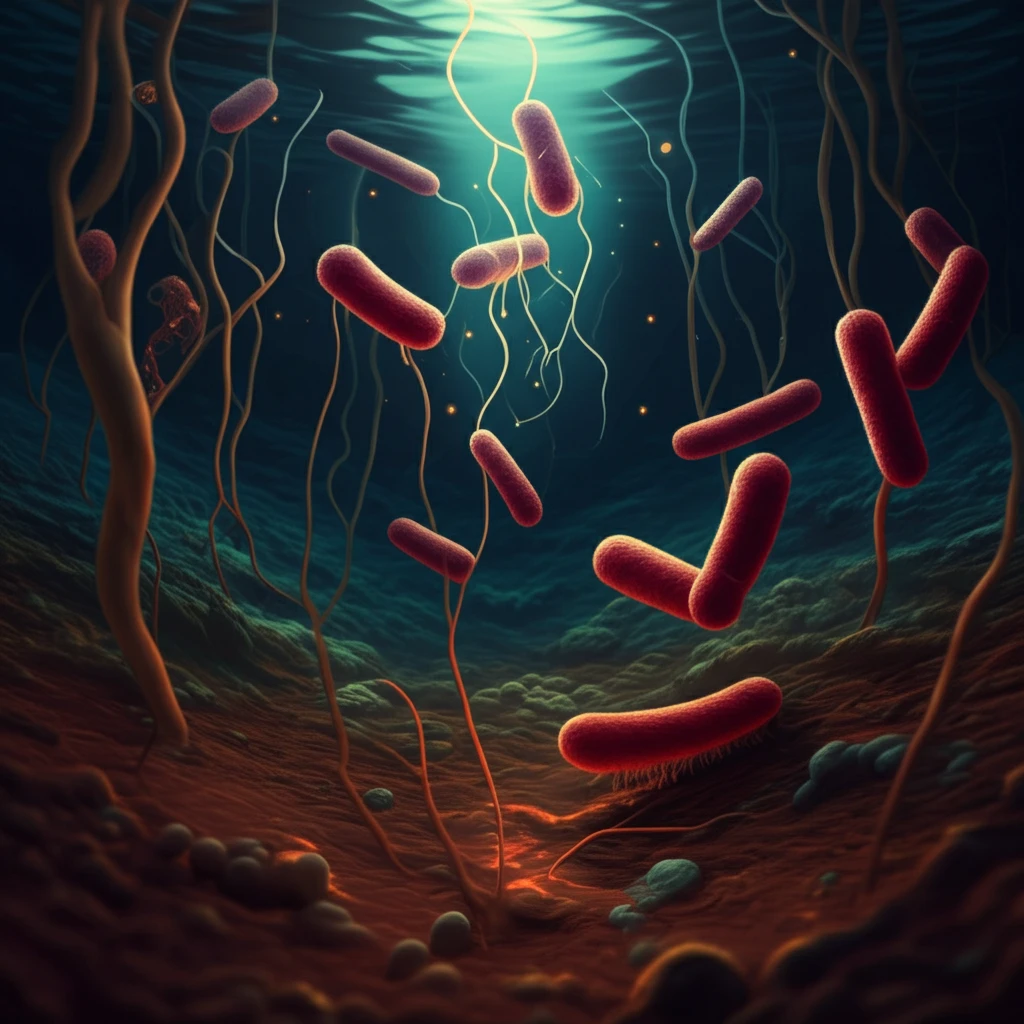
Unlocking Reservoir Secrets: How Bacteria Can Save Our Drinking Water

"Dive into the hidden world of sulfate-reducing bacteria and discover their crucial role in maintaining the health of our water reservoirs and ensuring safer drinking water for all."
Clean and accessible freshwater is the lifeblood of urban communities, and reservoirs play a vital role in providing this essential resource. However, these aquatic ecosystems face increasing threats from eutrophication and pollution, jeopardizing water quality and posing risks to public health. Sediments within these reservoirs act as both a sink and a source of nutrients and contaminants, making it crucial to understand the complex microbial processes occurring within them.
Among these processes, sulfate reduction stands out as a key player in the biogeochemical cycling of reservoirs. Sulfate-reducing bacteria (SRB) thrive in the oxygen-depleted sediments, breaking down organic matter and influencing the release of various substances into the water column. While their presence is well-documented in marine environments, their role in freshwater drinking water reservoirs remains less explored.
A new study focusing on the Zhou Cun drinking water reservoir in Eastern China is shedding light on the diversity, abundance, and activity of SRB in these vital ecosystems. By analyzing sediment samples from various sites within the reservoir, researchers are uncovering valuable insights into how these microorganisms impact water quality and what strategies can be employed to manage them effectively.
SRB at Work: From Mine Drainage to Reservoir Souring
Sulfate-reducing bacteria (SRB) are described as key functional microorganisms in the bioremediation of acid mine drainage, where they simultaneously remove sulfate, generate alkalinity, and precipitate metal sulfides via dissimilatory sulfate reduction. The same metabolism has a costly flip side in the oil industry: sources report that reservoir souring typically occurs during water injection for secondary recovery, as SRB generate increasing concentrations of hydrogen sulfide (H2S) in produced water. Researchers quantify SRB abundance in water samples by measuring the copy number of the dsrA gene, which codes for the alpha subunit of dissimilatory (bi)sulfite reductase, using real-time PCR. In aquaculture, changes in sediment oxygen demand, sulfate reduction rates, and SRB abundances were monitored in nine earthen shrimp ponds over a 17-week growing season.
Molecular Fingerprinting and the Carbon Catch
Characterizing SRB communities commonly relies on molecular tools: one study reconstructed the spatio-temporal dynamics of sulfate-reducing bacteria in the extreme environment of Rogoznica Lake using 16S rRNA analysis, while another used a barcoded 16S rRNA gene-pyrosequencing approach to assess bacterial diversity in a sludge culture and construct a phylogenetic tree for the SRB present. Simulation is also an established tool, with test methods designed to reproduce sulfate-reducing bacteria corrosion under laboratory conditions and nutrients developed to inhibit SRB in oilfield water. The accepted biological treatment approach, in which SRB remove sulfate by reducing it to hydrogen sulfide, has a key limitation: without external carbon sources it stalls, so a material that releases substantial dissolved organic carbon is needed, which is why potato peel was selected for its high carbon release in one study.
From Leeuwenhoek's Lens to the Deep Biosphere
Microbial history in this field begins with Antonie van Leeuwenhoek, credited as the first person to describe bacteria and other microbes under the microscope. A key early discovery about SRB metabolism came from experiments showing that hydrogen stimulated the reduction of radioactive sulfate by 2.5- to 2.8-fold, demonstrating potential hydrogen oxidation by sulfate-reducing bacteria. Foundational work also established that spore-forming thermophilic sulfate-reducing bacteria live in oil field waters from production platforms in the Norwegian sector of the North Sea, prompting discussion of their origin in the pore water of oil reservoirs. Later studies extended the picture by characterizing psychrophilic (cold-adapted) sulfate-reducing bacteria in Arctic marine sediments, showing these organisms thrive across a wide range of environments.
The Hidden World of Sulfate-Reducing Bacteria
The Zhou Cun reservoir, like many freshwater systems, faces the challenge of maintaining water quality amidst agricultural and urban runoff. The research team meticulously collected sediment samples across different sites in the reservoir during April and June 2012 to analyze the SRB communities. The team used a combination of methods, including most-probable-number (MPN) counts, PCR-DGGE (polymerase chain reaction-denaturing gradient gel electrophoresis), and gene sequencing to investigate SRB populations and their diversity. They also correlated SRB presence with Sediment quality.
- SRB abundance varied with sampling site and date, with the highest counts found at the deepest site in May.
- Dominant SRB species included Desulfobulbus sp., Desulfobacterium sp., and several uncultured strains.
- Organic matter, nitrogen, and phosphorus levels significantly correlated with SRB community diversity.
- The study provides insights into SRB’s role in freshwater reservoirs, contributing to improved water quality management.
Molecular Sleuthing in Sludge Beds and Oilfields
Recent work on SRB is increasingly molecular in character: one study provides molecular characterization of mesophilic and thermophilic sulfate-reducing microbial communities in expanded granular sludge bed (EGSB) reactors. Another investigates the composition and dynamics of sulfate-reducing bacteria during the waterflooding process of Daqing Oilfield, an important setting where SRB activity has practical consequences for production. A separate review consolidates research progress on methods for detecting SRB concentration, corrosion activity, and bacterial metabolism, underscoring the analytical demands of tracking these organisms in the field.
When the Same Bacteria Turn on the Water System
SRB are not always allies. Sources note that they are part of the natural ecosystem in many groundwater supplies, and while their presence does not always mean trouble, when conditions are right they can significantly reduce well performance and water quality. SRB thrive in anaerobic, oxygen-depleted zones such as stagnant pipe legs and tank bottoms, where they metabolize sulfates into highly corrosive hydrogen sulfide gas and drive severe microbiologically influenced corrosion (MIC). Corrosion studies have examined copper alloy B10 exposed to sulfate-reducing bacteria biofilms, and diversity surveys have even recovered SRB from permanently frozen Lake Fryxell in the McMurdo Dry Valleys of Antarctica, showing how widespread these microbes are.
Sulfur, Genomes, and Isotopes Compared
Comparative research on SRB spans chemistry, genomics, and isotope geochemistry. One study compares different sulfur compounds as attractants for SRB in oxic-anoxic gradients, quantifying chemotactic responses under defined growth conditions. Genome-level comparisons of Desulfotomaculum genomes have been presented in a Venn diagram analysis, with Desulfovibrio gigas highlighted as a model organism of sulfate-reducing bacteria whose energy metabolism and stress response have been extensively studied. Another line of work uses coupled sulfur and oxygen isotope analysis to gain comparative insight into bacterial sulfate reduction in natural environments, identifying SRB as one of the main sources of biogenic H2S that drives oil reservoir biosouring, with its operational risks, health hazards, and increased refining costs.
Future Directions: Harnessing SRB for Water Quality
The Zhou Cun reservoir study provides a crucial foundation for future research and management strategies. By understanding the complex interplay between SRB, sediment composition, and water quality, we can explore innovative approaches to improve reservoir health. This includes optimizing nutrient management practices to minimize organic matter accumulation, exploring bioremediation strategies using SRB to remove pollutants, and implementing water circulation techniques to prevent stratification and promote oxygenation. Through continued research and collaboration, we can unlock the full potential of these microbial communities to safeguard our precious water resources.
Terminal Players in Every Anaerobic Food Chain
Expert commentary positions sulfate-reducing bacteria as terminal members of any anaerobic food chain. They critically influence the biogeochemical cycling of carbon, nitrogen, sulfur, and metals in the natural environment, as well as the corrosion of civil infrastructure in the built environment. There is also a human-health dimension: molecular ecological analyses suggest that intestinal SRB growth and the resulting hydrogen sulfide production may damage the gastrointestinal epithelium and thereby contribute to chronic intestinal disorders.
Merging Methods and Tracking Mercury
The future of SRB research points toward integrated, multi-method approaches. In the stratified water column of Mariager Fjord, Denmark, sulfate-reducing bacterial populations were investigated by molecular and culture-dependent approaches in parallel, a template for combining techniques. A major frontier involves mercury: sulfate-reducing bacteria are reported as the principal producers of methylmercury, converting inorganic mercury that enters ecosystems through rainfall into methylmercury during metabolism, a process central to contamination concerns such as those facing the Florida Everglades.
A Toxic Byproduct and a Cleanup Tool in One
SRB embody a systemic trade-off. They are reported to generate neurotoxic methylmercury as a byproduct of their metabolism, through methylation of inorganic mercury present in their surroundings, and are described as the dominant source of this bioaccumulative form of mercury in aquatic systems. At the same time, they have emerged as promising bioremediation agents because they reduce sulfate to hydrogen sulfide, which reacts with heavy metals to form insoluble metal sulfides and enables their effective removal from wastewater. Engineering control remains immature: researchers note that the number of studies on pH regulation for H2S control is small and limited to lab-scale investigation, with high ammonia-pH systems reducing SRB abundance while increasing methanogens. Field-scale demonstrations, such as using native bacteria and Minnesota iron to eliminate sulfate and prevent mercury contamination and damage to wild rice, show the approach moving beyond the laboratory.
Microcosms That Rebalance Contaminated Water
In controlled lake water microcosms, researchers stimulated sulfate-reducing bacteria and tracked the outcome. SRB populations increased with time, and sulfide was generated by sulfate reduction. Over the course of the experiments, sulfate, iron, and arsenic concentrations approached zero while pH approached neutrality, offering a clear demonstration of SRB-driven remediation of contaminated water.