
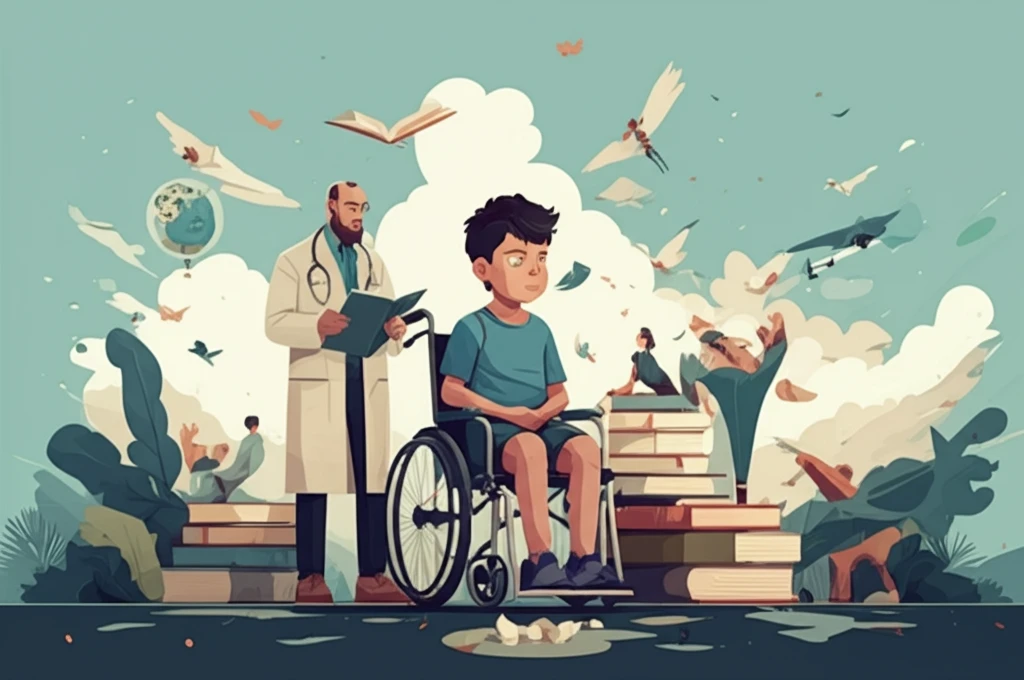
Unlocking Potential: Enhancing the Quality of Life for Children with Cerebral Palsy

"Practical strategies and insights to improve well-being and support for children with cerebral palsy, empowering families and caregivers."
Cerebral Palsy (CP) can significantly impact a child's everyday life, affecting their movement, posture, and overall quality of life (QOL). It is the most common cause of chronic disability in children, restricting their ability to participate fully in daily activities. However, with the right support and interventions, children with CP can lead fulfilling and meaningful lives.
Understanding the multifaceted nature of QOL is crucial. It encompasses physical health, psychological well-being, social relationships, and environmental factors. For children with CP, addressing these aspects can dramatically improve their overall contentment and participation in life.
This article delves into practical strategies and insights to enhance the quality of life for children with Cerebral Palsy, offering guidance for parents, caregivers, and healthcare professionals. We will explore various interventions and support systems that can make a significant difference.
Understanding Cerebral Palsy: Prevalence and Impact
Cerebral palsy affects approximately 1.5 to 3 per 1,000 live births worldwide, making it one of the most common childhood motor disabilities. A study using data from 20 population-based CP registries in Europe found that prevalence declined from 1.90 to 1.77 per 1,000 live births between 1980 and 2003, suggesting improvements in prenatal and neonatal care. While cerebral palsy is a lifelong condition, many children and adults with CP can live long, healthy lives with proper medical care and support services. Early identification and intervention remain critical for optimizing outcomes and quality of life for affected individuals.
Classification and Diagnostic Approaches
Cerebral palsy encompasses a variety of health problems affecting body movement, balance, and posture, caused by non-progressive damage to the developing brain. The condition is classified according to the topographic distribution of muscle spasticity into diplegic (bilateral involvement with legs more affected than arms), hemiplegic (unilateral involvement), and other forms. This classification system helps guide treatment approaches and prognosis, though it may not fully capture the complexity of individual cases. Current diagnostic methods rely on clinical assessment and history, which can sometimes delay identification of the condition.
The Evolution of Understanding Cerebral Palsy
The history of cerebral palsy includes numerous important milestones and motivated minds working tirelessly to improve the lives of those with special needs. Throughout history, breakthroughs in research and medicine have progressively advanced our understanding of the condition and its management. Diagnosis of cerebral palsy requires a complete history, physical examination, and ancillary investigations, with the earliest signs often being delays in developmental milestones and abnormal muscle tone. These foundational discoveries have paved the way for modern approaches to treatment and support for individuals with CP.
Key Factors Influencing Quality of Life in Children with Cerebral Palsy
Several factors play a critical role in determining the quality of life for children with CP. These include the severity of the condition, access to appropriate medical care and therapies, the availability of supportive social networks, and the child's emotional well-being. Addressing these areas can lead to substantial improvements in their overall QOL.
- Early Intervention: Early diagnosis and intervention are crucial for maximizing a child's potential. Therapies such as physical therapy, occupational therapy, and speech therapy can improve motor skills, communication, and overall development.
- Assistive Technology: Utilizing assistive devices and technologies can enhance independence and participation. This includes mobility aids, communication devices, and adaptive equipment for daily tasks.
- Inclusive Education: Creating inclusive educational environments where children with CP can learn alongside their peers fosters social integration and academic achievement.
- Family Support: Providing support and resources for families is essential. Support groups, counseling services, and respite care can help families cope with the challenges of raising a child with CP.
Advances in Cerebral Palsy Research
Recent research has focused on improving diagnosis and treatment outcomes for children with cerebral palsy. A national study by University of Adelaide researchers is paving the way for more precise diagnosis and treatment approaches for affected children. Research has also highlighted that adults with developmental disabilities or cerebral palsy face earlier fall injury risks, emphasizing the need for lifelong monitoring and prevention strategies. The field continues to evolve with new findings on assistive technology, advocacy, and evidence-based services.
Challenges and Comorbidities in Cerebral Palsy
Children with cerebral palsy commonly present with impairments in gross motor function and limitations in activities of daily living, which negatively impact independence and quality of life. The condition is associated with higher risks of comorbidities including seizures (35-45%), intellectual disability (40-60%), and visual impairments (20-60%). While muscle problems can range from mild stiffness or clumsiness to severe inability to walk or move certain muscles, most children with CP live to become adults. These comorbidities highlight the importance of comprehensive, multidisciplinary care approaches.
Differentiating Cerebral Palsy from Other Conditions
Cerebral palsy primarily affects muscle coordination and movement, distinguishing it from conditions like muscular dystrophy which mainly impacts muscle strength and function. Unlike Bell's palsy, which involves temporary facial muscle paralysis, cerebral palsy is a non-progressive neurological condition that can cause permanent movement disorders. The causes and risk factors for cerebral palsy differ significantly from those of muscular dystrophy, requiring distinct diagnostic and treatment approaches. Understanding these differences is crucial for accurate diagnosis and appropriate intervention strategies.
Moving Forward: Creating a Brighter Future
Enhancing the quality of life for children with Cerebral Palsy requires a collaborative effort from healthcare professionals, educators, families, and the community. By focusing on early intervention, assistive technology, inclusive education, family support, and pain management, we can unlock the potential of these children and help them lead fulfilling and meaningful lives. Creating a supportive and inclusive environment is key to improving their well-being and enabling them to thrive.
Expert Perspectives on Cerebral Palsy Management
Cerebral palsy occurs when a baby's brain does not develop normally during pregnancy or is damaged during or soon after birth, with causes including bleeding in the brain or reduced blood and oxygen supply. Medical experts emphasize the complexity of determining whether cerebral palsy was caused by medical negligence, requiring careful analysis of clinical evidence. The condition can also be understood through traditional medicine frameworks, where it may be categorized under movement disorders affecting the nervous system. These diverse perspectives contribute to a more comprehensive understanding of CP management.
Market Growth and Technological Innovation
The cerebral palsy market is projected to grow from USD 2.946 billion in 2025 to USD 4.036 billion by 2035, exhibiting a compound annual growth rate of 3.2%. Management products and services are expected to grow at a higher CAGR of 5.1% from 2025 to 2034, rising from $5.2 billion to $8.5 billion. Integration of artificial intelligence in early detection and treatment plans represents a significant trend, though current methods for diagnosing and treating patients remain complex and poorly targeted. These market dynamics reflect growing recognition of the need for improved interventions.
Family Impact and Systemic Support Needs
Cerebral palsy is classified into four broad categories—spastic, athetoid, ataxic, and mixed forms—with spastic CP affecting 70 to 80 percent of patients. Children with cerebral palsy require lifelong special education and rehabilitation support to participate fully in social life. The condition creates significant challenges for families, requiring understanding of both the medical and psychosocial aspects of caregiving. Systemic barriers often limit access to necessary services, highlighting the need for comprehensive support systems.
Innovations Improving Quality of Life
Virtual reality technology has shown promise in helping children with cerebral palsy improve their dynamic balance and overall motor function through engaging therapeutic interventions. Stem cell therapy represents another emerging treatment approach, with studies showing that even modest improvements in mobility or communication can significantly enhance a child's quality of life. A landmark study by the Cerebral Palsy Foundation found that 93% of respondents consider improved clinical care, therapy, and interventions to be their top priority. These innovations reflect a growing focus on practical, patient-centered approaches to CP management.