
Unlocking Orchid Secrets: How In Vitro Regeneration Can Save Endangered Species

"Discover the groundbreaking techniques scientists are using to propagate rare orchids and ensure their survival for future generations through in vitro regeneration."
Orchids, celebrated for their stunning beauty and diversity, face unprecedented threats from habitat destruction and over-collection. These pressures have pushed many species to the brink of extinction, highlighting the urgent need for effective conservation strategies. Traditional methods often fall short, making innovative approaches crucial for securing their future.
One promising solution lies in the realm of in vitro regeneration, a technique that allows scientists to propagate orchids in a controlled laboratory setting. This method bypasses the challenges of natural seed germination and provides a means to rapidly multiply plants from small tissue samples. The study of Cyrtopodium paranaense, a threatened orchid species, exemplifies the potential of this technology.
This article delves into the innovative methods employed to regenerate Cyrtopodium paranaense, shedding light on how adjusting growth regulators and utilizing meristematic regions can dramatically enhance orchid propagation. These advancements are not only crucial for conservation but also offer insights into the broader applications of biotechnology in preserving plant biodiversity.
Protocols Refined and Validated Across Species
Across many species, researchers are optimizing in vitro regeneration protocols by testing multiple input variables, and machine learning algorithms are now being used to validate the resulting data. Genetic fidelity checks, such as ISSR analysis of regenerated plants compared with their mother plants, have become a standard part of reporting these protocols. For Tigridia pavonia, there had been no prior reports of in vitro propagation, making the efficient direct-regeneration protocol from twin-scale explants a first. Many of these studies still rely on classical statistical tools, including analysis of variance and LSD or Duncan's Multiple Range tests, to separate treatment means.
A Proven Toolkit, With Bottlenecks Remaining
In vitro culture techniques have been proposed as an alternative to conventional propagation because they offer disease-free planting material and a platform for genetic improvement through advanced biotechnological approaches. Typical protocols screen plant growth regulators such as N6-benzyladenine (BA) and meta-Topolin (mT) across multiple concentrations to find the optimum for shoot regeneration from explants like scales. Machine learning approaches have also been applied to develop and evaluate successful regeneration protocols, as demonstrated for the endemic species Lilium akkusianum. Yet researchers note that major bottlenecks remain, including the requirement for reproducible, efficient, and better plant regeneration methods, particularly in difficult groups such as legumes.
From 'In Glass' Roots to Regeneration Science
The term in vitro, meaning 'in glass' from Latin, describes research carried out in the laboratory using test tubes or dishes, where tissues or cells from an organism are grown outside the body. Foundational work established that regeneration on media such as Murashige and Skoog (MS) medium can be directed by plant growth regulators, with studies on species like Crinum brachynema comparing aromatic cytokinins such as meta-Topolin against controls. A number of studies confirm the similarity between the processes occurring during callusogenesis and plant regeneration in vitro and the development of different types of meristems, linking regeneration to basic developmental biology. This understanding underpins modern protocols, from regenerating Anthurium andraeanum from root segments to producing whole plants from a wide range of explant types.
The Science of In Vitro Orchid Regeneration
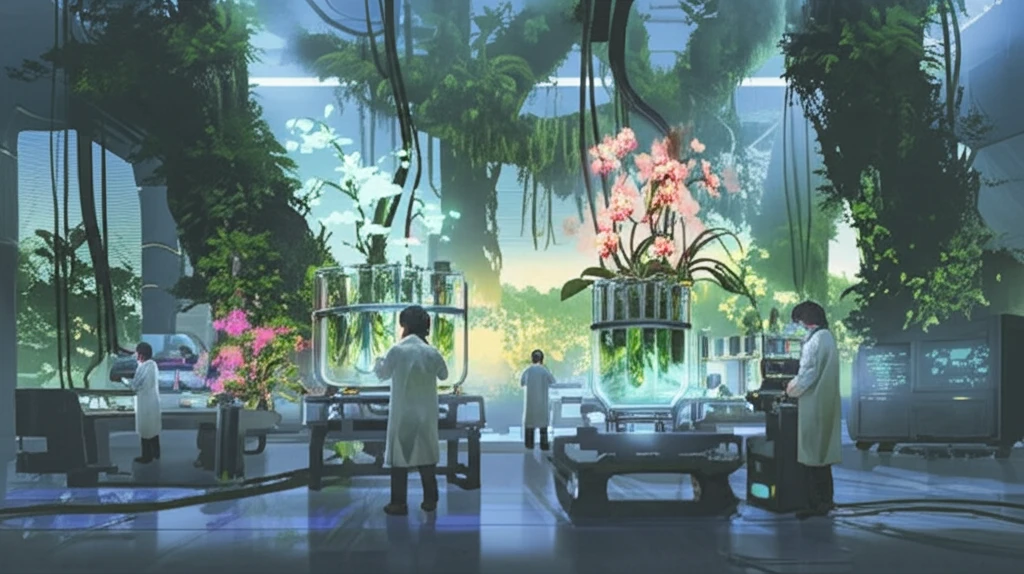
In vitro regeneration hinges on the precise manipulation of plant hormones and environmental conditions to stimulate growth. The process begins with selecting specific tissues, often from meristematic regions—areas of actively dividing cells found in root tips and leaf segments. These explants are then sterilized and placed in a nutrient-rich culture medium supplemented with plant growth regulators, such as naphthalene acetic acid (NAA) and benzylaminopurine (BAP).
- Selecting and sterilizing explants from meristematic regions.
- Culturing explants in a nutrient-rich medium with NAA and BAP.
- Optimizing hormone concentrations to induce PLB formation.
- Transferring PLBs to a growth medium to develop into plantlets.
New Species, New Explants, New Validations
Recent work continues to extend in vitro regeneration to new species and explant sources, including a high-frequency regeneration system for pomegranate established on MS medium supplemented with different concentrations and combinations of plant growth regulators, using cotyledons as explants. Researchers are also coupling regeneration with phytochemical evaluation, as seen in studies of pippali that assess the compounds produced by regenerated material. Micropropagation is being pushed toward commercial scales, with 2024 research examining the effects of plant growth regulators on commercial-scale propagation of black pepper. Some findings appear first as preprints, allowing the community to read and comment on results prior to peer review in a journal.
Limits on the Road to Industrial Scale
Despite its promise, the in vitro plant regeneration system has clear limitations that complicate sustainable industrial application. Researchers point to difficulties with continuous operation, product removal, and maintaining aseptic conditions over extended production runs. These constraints make it challenging to keep in vitro regenerated plants viable economically on a large scale. In response, machine learning algorithms are being explored to predict and validate outcomes such as callogenesis, in part to help manage the variability these systems introduce.
Hardening: The Overlooked Make-or-Break Stage
Compared with conventional vegetative propagation, tissue-culture-based approaches offer more controlled and standardized conditions for producing planting material. An efficient in vitro hardening technique has been demonstrated for tissue-culture-raised orchid seedlings, acclimatizing them on 1/10th-strength liquid MS basal medium subsequently replaced by tap water, with chips of charcoal, bricks, and decayed wood serving as an alternate substratum. This step is critical because plantlets produced in vitro must be transitioned successfully before they can survive in nursery or natural conditions. The hardening stage, often underreported in the literature, is where many regeneration programs either succeed or fail at scale.
Securing the Future of Orchids
In vitro regeneration offers a powerful tool for orchid conservation, providing a means to propagate endangered species and restore their populations. By optimizing growth regulators and harnessing the regenerative potential of meristematic regions, scientists can overcome the challenges of traditional propagation methods and ensure the survival of these iconic plants. As we continue to refine these techniques, we move closer to a future where the beauty and diversity of orchids are preserved for generations to come.
True-to-Type Confirmed by Molecular Markers
Genetic fidelity assessment has become a central part of validating regeneration protocols, with random amplified polymorphic DNA (RAPD) markers used to compare regenerated plants against their mother plants. In one study, Populus alba plantlets regenerated in vitro and exposed to varying nano-hydroxyapatite (nHAp) concentrations were analyzed with RAPD markers as part of an integrative metabolomic and genetic approach. In another case, no genetic polymorphisms were observed in in vitro regenerated plants compared with the mother plants, supporting the stability of the regeneration process. Together, these results suggest that well-designed regeneration systems can produce true-to-type plants, although fidelity must still be confirmed on a case-by-case basis.
Non-Chemical Conditioning and Regenerative Plasticity
Mechanical stress-mediated acclimatization of in vitro regenerated plantlets is flagged as worth investigating in future research, since it serves as a non-chemical and cost-effective approach to conditioning plants for transfer to the field. Histological and morpho-anatomical investigation of in vitro cultured plants, including leaf-blade studies in valuable fruit, ornamental, and essential-oil species, offers another avenue for understanding tissue quality. Cytokinin chemistry also continues to develop, with studies exploring the stimulatory effect of different doses of the aromatic cytokinin meta-Topolin on in vitro shoot induction and proliferation. In vitro systems are also valued as model platforms because they provide a good system for studying the mechanisms behind plant regenerative plasticity.
A Shared Toolkit for Crops and Conservation
Regeneration research extends well beyond endangered ornamentals to food and horticultural crops, where in vitro protocols are used to propagate doubled haploid lines such as those developed in African marigold (Tagetes erecta L.). Working with non-axillary explants requires careful optimization, and additives such as coconut water are often combined with various hormones to improve outcomes, as reported in carnation (Dianthus caryophyllus L.) regeneration studies. These efforts point to a shared toolkit of media, growth regulators, and additives applied across many species. Improving these protocols systemically could benefit conservation programs and agriculture at the same time.
Affordable Planting Material for Growers and Communities
Micropropagation has gained popularity over conventional vegetative propagation because its goal is to obtain a large number of genetically identical plantlets in a reduced time period and at a low cost. These advantages matter directly to growers and communities, who need affordable, reliable planting material for crops such as citrus, where in vitro regeneration has been demonstrated as a case study on pummelo. The approach also reaches staple crops, including quality protein maize, where plant regeneration from in vitro cultures was first reported in 1975 by Green and Phillips and where regenerative callus formation was shown to depend strongly on L-proline. Because regeneration is a shared technology across food production and conservation, its real-world impact is measured in both preserved species and improved livelihoods.