
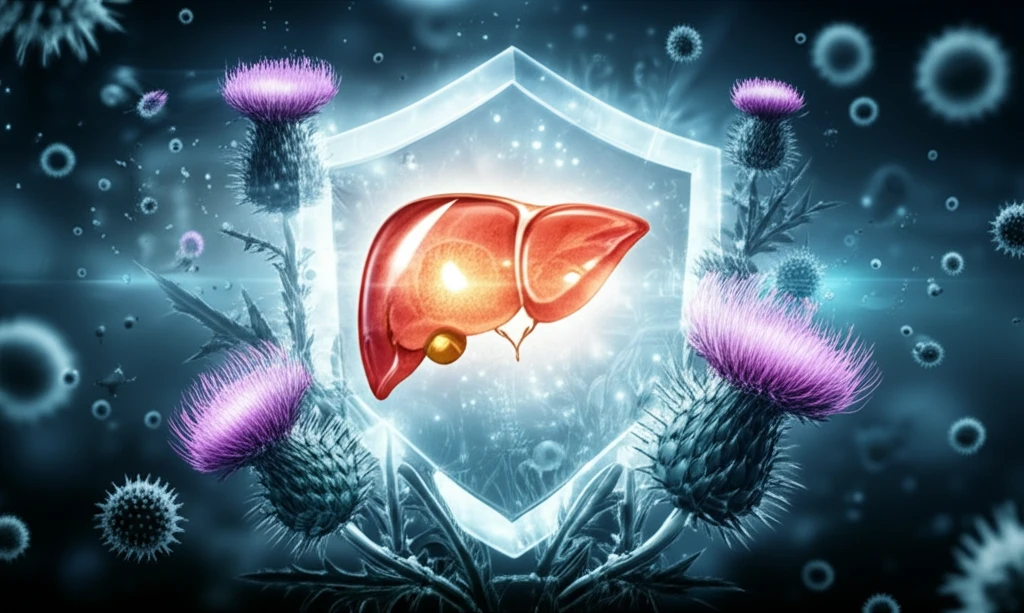
Unlocking Nature's Pharmacy: The Silymarin Secret for Liver Health

"Discover the power of milk thistle: An in-depth look at silymarin's potential and how it can transform your liver health and overall well-being."
In the realm of natural remedies, few plants hold as much promise as Silybum marianum, commonly known as milk thistle. For centuries, this unassuming herb has been revered for its medicinal properties, particularly its ability to protect and rejuvenate the liver. The secret behind milk thistle's therapeutic prowess lies in silymarin, a complex mixture of flavonolignans with potent antioxidant and anti-inflammatory effects.
Silymarin is not a single compound but rather a blend of several active constituents, including silybin, silydianin, and silychristin. These compounds work synergistically to shield the liver from damage caused by toxins, alcohol, and other harmful substances. Moreover, silymarin has been shown to promote liver cell regeneration and enhance the organ's ability to function optimally.
As interest in natural health solutions continues to surge, silymarin has emerged as a prominent player in the field of liver health. Its potential to address various liver conditions and promote overall well-being has captured the attention of researchers, healthcare professionals, and individuals seeking natural ways to support their health.
Silymarin's Emerging Therapeutic Profile
Silymarin, an extract derived from the milk thistle plant, has shown significant promise in research targeting multiple forms of cancer, including skin cancers. Beyond oncology, studies have demonstrated that silymarin may help prevent diabetes-induced hyperpermeability in human tissues, pointing to a broadening scope of therapeutic interest. While global epidemiological data on liver disease burden can be accessed through resources such as the World Bank's open data platform, specific statistics on silymarin's clinical impact remain limited in the available source material. The compound's multi-condition potential underscores the need for more targeted epidemiological studies linking silymarin interventions to measurable public health outcomes.
Formulation Challenges and Delivery Innovation
Silymarin is a standardized extract from milk thistle seeds containing a mixture of flavonolignans, primarily used as a natural remedy to support liver function and protect against toxins, drugs, and alcohol. However, traditional silymarin formulations suffer from poor solubility and limited bioavailability, classifying it as a BCS Class IV compound that neither dissolves readily nor passes easily through biological membranes. Researchers are now exploring nanocarrier-based delivery systems as a promising solution to enhance silymarin's targeted delivery to hepatic tissue and the central nervous system. Silymarin participates in multiple molecular and cellular pathways, but unlocking its full therapeutic potential depends on overcoming these fundamental pharmacokinetic barriers.
Ancient Roots of Milk Thistle Medicine
Silymarin's medicinal history stretches back over two millennia, with its earliest documented use attributed to Theophrastus of Eresus in the fourth century BCE. The compound reappears in the historical record in 65 CE in Pedanius Dioscorides' De Materia Medica, where milk thistle was proposed for the treatment of serpent venom bites and given the name 'silybon.' These ancient observations laid the groundwork for centuries of empirical use across European folk medicine traditions. The long trajectory from antiquity to modern pharmacological research highlights silymarin's enduring reputation as a healing agent.
Decoding Silymarin: How It Works and Why It Matters
Silymarin's protective effects on the liver stem from its multifaceted mechanisms of action. One of its primary roles is to act as an antioxidant, neutralizing harmful free radicals that can damage liver cells. By scavenging these free radicals, silymarin helps to reduce oxidative stress and inflammation, key contributors to liver disease.
- Antioxidant Power: Neutralizes free radicals, reducing oxidative stress and cellular damage.
- Anti-inflammatory Action: Reduces liver inflammation, preventing chronic conditions.
- Cell Regeneration: Promotes the growth of new, healthy liver cells.
- Toxin Shield: Blocks harmful substances from entering liver cells.
Expanding the Evidence Base
Recent research has broadened understanding of silymarin's composition, revealing it as a complex mixture of seven flavonolignans, one flavonoid comprising approximately 83% of its profile, plus additional polyphenols and fatty compounds. Studies in veterinary medicine have investigated silymarin's hepatoprotective and renoprotective effects, finding that its antioxidant, anti-inflammatory, and antiviral properties can mitigate adverse impacts from oral toxin administration over 28-day periods. Advanced formulations combining phospholipid carriers with silymarin have shown the ability to enhance silybin absorption by up to 15 times compared to silymarin alone. This growing body of literature positions silymarin as a versatile compound with expanding applications beyond traditional liver support.
The Bioavailability Problem
The central criticism of silymarin as a therapeutic agent is its very low bioavailability, a limitation that has been cited in reviews reporting a lack of clinical efficacy in some contexts. Researchers have identified multiple possibilities for improving bioavailability through enhancements in solubility, permeability, metabolism, and excretion pathways. The gap between promising in vitro results and inconsistent clinical outcomes remains a significant barrier to silymarin's broader acceptance in evidence-based medicine. Addressing this pharmacokinetic challenge is essential if silymarin is to fulfill its potential as a clinically validated hepatoprotective agent.
Clinical Outcomes and Competing Approaches
A clinical trial examining silymarin in alcoholic patients with confirmed liver cirrhosis found that administering 150 mg three times daily for two years showed no significant influence on survival or clinical course compared to a sham group. This finding contrasts with preclinical data suggesting silymarin can reduce hepatic damage, highlighting a discrepancy between laboratory promise and clinical reality. Both silymarin and vitamin E have demonstrated effectiveness in preventing and combating liver disease caused by alcohol, pharmaceutical use, obesity, and infection, though their mechanisms of action differ. Newer delivery formats, including liposomal silymarin formulations, are being evaluated for superior absorption compared to regular silymarin supplements.
Harnessing the Power of Silymarin: A Natural Approach to Liver Health
As we navigate an increasingly toxic world, supporting our liver health has become more critical than ever. Silymarin, with its potent antioxidant, anti-inflammatory, and regenerative properties, offers a promising natural approach to safeguarding and enhancing liver function. Whether you're looking to protect your liver from daily stressors or address existing liver concerns, silymarin may be a valuable addition to your wellness toolkit. By embracing the power of this remarkable herb, you can take proactive steps to nurture your liver and unlock a path to vibrant health.
Pharmacokinetics in Disease Context
Clinical pharmacology research has shown that silymarin's pharmacokinetics are altered in patients with hepatitis C virus infection and nonalcoholic fatty liver disease, with these changes correlating with plasma caspase-3/7 activity levels. This finding suggests that disease state significantly influences how silymarin is processed in the body, which has implications for dosing strategies and expected outcomes. Meta-analyses of randomized controlled trials have assessed the effects and tolerance of silymarin in chronic hepatitis C patients, providing a more rigorous evidence base for clinical decision-making. These data underscore the importance of tailoring silymarin interventions to individual patient profiles and disease stages.
Structural Complexity as a Research Frontier
Silymarin's structural diversity and multi-domain activity profile position it as a powerful yet nuanced tool for research into oxidative stress, cancer, metabolic disorders, and antiviral applications. The compound is not a single molecule but a complex mixture predominantly composed of the flavonolignan silybin, alongside isosilybin, silychristin, and silydianin, each contributing distinct pharmacological properties. Market analysts anticipate that an aging population more prone to liver-related health issues will drive increased demand for silymarin-containing supplements in the coming years. The translational research pipeline continues to expand as scientists work to unlock the full clinical potential of each component within the silymarin complex.
Beyond Silybin: The Full Flavonolignan Spectrum
Emerging pharmacological research is making a case for looking beyond silybin to examine the therapeutic potential of other silymarin flavonolignans that have received comparatively less attention. Silydianin, one such component, has demonstrated antioxidant properties in preclinical studies, though the strongest evidence for its benefits remains indirect, derived primarily from trials of whole silymarin formulations rather than isolated compounds. These broader effects are less well studied at the clinical level, but they underline why silydianin-containing extracts are sometimes promoted for whole-body antioxidant support. A more comprehensive perspective on all silymarin constituents, rather than focusing solely on silybin, may reveal untapped therapeutic value.
Clinical Applications and Toxin Protection
Research into silymarin's real-world applications has yielded compelling findings, particularly in the area of toxin protection. Studies on mushroom poisoning have shown that silymarin interrupts the ability of toxins to bind to liver cells and prevents recirculation of poisons through the bloodstream, demonstrating a clear protective mechanism. Case studies and clinical trials have also explored double-strength silymarin formulations for enhanced liver support, suggesting that concentration and delivery method may influence clinical outcomes. These findings point toward practical applications where silymarin could serve as a frontline intervention in acute liver toxicity scenarios.