
Unlocking Hope: The Latest Breakthroughs in Gastric Cancer Treatment

"A comprehensive guide to HER2 testing and targeted therapies, offering insights for patients and families."
Gastric cancer, also known as stomach cancer, remains a significant global health challenge, affecting millions of people worldwide. The disease often presents a formidable battle, but recent advancements in medical research and treatment strategies offer renewed hope. Among these, the understanding and targeting of the human epidermal growth factor receptor 2 (HER2) protein have revolutionized treatment approaches, especially for advanced stages of the disease.
This article delves into the critical role of HER2 testing in gastric cancer, exploring the latest developments and their implications for patients. We will examine the complexities of HER2 testing, the different methods used, and how these tests help doctors make informed decisions about the best course of treatment. Our focus will be on empowering patients and their families with the knowledge to navigate this challenging journey with greater clarity and confidence.
Through clear explanations and actionable insights, we aim to demystify the science behind these treatments and offer a sense of hope, support, and understanding. This guide provides a comprehensive overview, making complex medical information accessible, providing clear strategies, and supporting informed conversations with healthcare providers.
Measuring Gastric Cancer’s Burden
The SEER Cancer Stat Facts resource provides stomach-cancer statistics by sex, race, calendar year, age, stage, and histology. CDC cancer data are used to track rates and trends, support research, measure prevention and control progress, address disparities, and improve outcomes. National treatment-trend research can also draw on the 2020 NCDB gastric PUF, which contains hospital-registry data from more than 1,500 Commission on Cancer-accredited facilities in the United States and Puerto Rico.
An Individualized Standard of Care
Gastric-cancer care generally depends on disease stage, tumor characteristics, and the patient’s overall condition. Accepted management may involve local treatment, systemic therapy, or combinations of both, but no single approach suits every patient. Outcomes can be limited by late presentation, treatment toxicity, disease heterogeneity, and resistance, so treatment decisions require ongoing clinical assessment.
From Surgery to Precision Treatment
Gastric-cancer treatment has developed from predominantly surgery-centered care toward multimodal strategies that combine local and systemic treatment. Advances in tumor classification, chemotherapy, targeted therapy, and immunotherapy have expanded the options available to some patients. The history of the field also shows that progress is gradual, with improvements depending on clinical research and better matching of treatments to disease biology.
Understanding HER2 and Its Role in Gastric Cancer
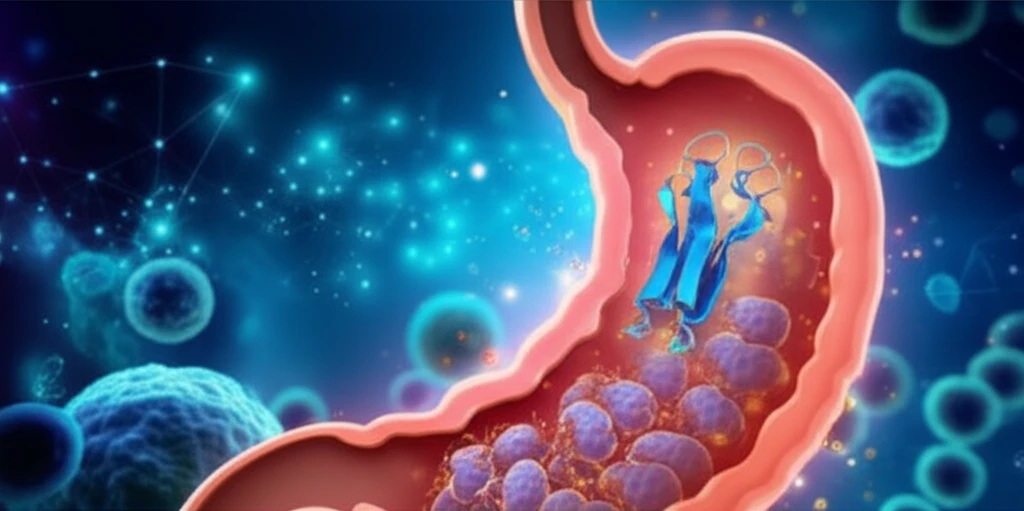
HER2 is a protein found on the surface of cells, including those in the stomach. It plays a role in cell growth and division. In some cases of gastric cancer, the HER2 gene can become amplified, leading to an overexpression of the HER2 protein. This overexpression can cause the cancer cells to grow and spread more aggressively. Approximately 13.9% of gastric cancers show HER2 positivity.
- What is HER2? A protein that promotes cell growth and division.
- How is it related to gastric cancer? Overexpression of HER2 can lead to more aggressive cancer growth.
- How is HER2 targeted? Trastuzumab and similar drugs are used to block HER2 activity.
A Fast-Moving Research Landscape
Recent gastric-cancer research increasingly focuses on understanding tumor biology and matching therapies to individual disease features. Reviews of the field commonly examine advances in immunotherapy, targeted therapy, diagnosis, staging, and treatment selection. Because the evidence continues to evolve, promising findings still require confirmation through well-designed clinical studies and longer-term follow-up.
Persistent Barriers to Progress
Gastric cancer remains a major unmet clinical problem: one review reported more than 1 million new cases worldwide in 2018, ranking it fourth among cancers in men and seventh among cancers in women. Reviews and treatment discussions identify late diagnosis, treatment resistance, side effects, and poor outcomes as continuing obstacles despite advances in targeted therapy, immunotherapy, and precision medicine. In advanced disease, treatment selection is also shaped by HER2 status, with HER2-positive tumors receiving HER2-targeted therapy with chemotherapy, while HER2-negative disease follows different treatment pathways.
Comparing Treatment Strategies
Comparisons among gastric-cancer treatments must account for disease stage, tumor biology, patient fitness, and the goals of care. A therapy that is appropriate for localized disease may not be suitable for metastatic disease, and benefits must be weighed against toxicity and feasibility. Consequently, broad claims that one treatment is universally superior should be treated cautiously unless supported by directly comparable clinical evidence.
Moving Forward with Hope and Knowledge
The journey through gastric cancer treatment can be daunting, but armed with knowledge, patients and their families can face it with greater confidence. Continued research, improved diagnostic tools like HER2 testing, and the development of targeted therapies offer renewed hope for a brighter future. By staying informed and actively participating in their care, patients can take a proactive role in their health, leading to better outcomes and an enhanced quality of life.
Progress With Uneven Outcomes
The available evidence points to meaningful therapeutic progress, but long-term survival remains low, particularly in Western countries. For localized gastric cancer, JAMA reports surgical resection and a 5-year relative survival rate of 75% with treatment; more advanced disease may require gastrectomy, perioperative chemotherapy with 5-fluorouracil, oxaliplatin, and docetaxel, plus immunotherapy such as durvalumab. International guidelines differ because countries have different treatment expertise, research results, evidence bases, and medical circumstances.
Toward Biomarker-Guided Care
Future gastric-cancer treatment is likely to build on individualized therapy, immunotherapy, targeted therapy, and biomarker-based treatment selection. Recent reviews describe a rapidly evolving landscape, particularly in metastatic disease, where biomarker integration has become increasingly important. Ongoing work is also addressing patients who are ineligible for surgery and those whose disease remains difficult to control, although poor long-term outcomes remain a major challenge.
Access, Tolerability, and Practical Care
Gastric-cancer management depends not only on clinical evidence but also on the treatment resources and expertise available in a given setting. Platinum-fluoropyrimidine doublet chemotherapy remains a widely used first-line backbone for advanced disease because it offers a balance between efficacy and tolerability. Practical challenges include selecting appropriate therapies, managing adverse effects, and adapting care to individual disease characteristics.
Care Beyond the Treatment Plan
For people living with gastric cancer, treatment decisions involve more than theoretical efficacy; they also involve tolerability, daily functioning, access to specialist care, and the uncertainty of an evolving disease. Late diagnosis and treatment resistance can narrow options and place substantial demands on patients and caregivers. Patient-centered care therefore requires clear communication, coordinated support, and treatment choices that reflect both medical evidence and individual circumstances.