
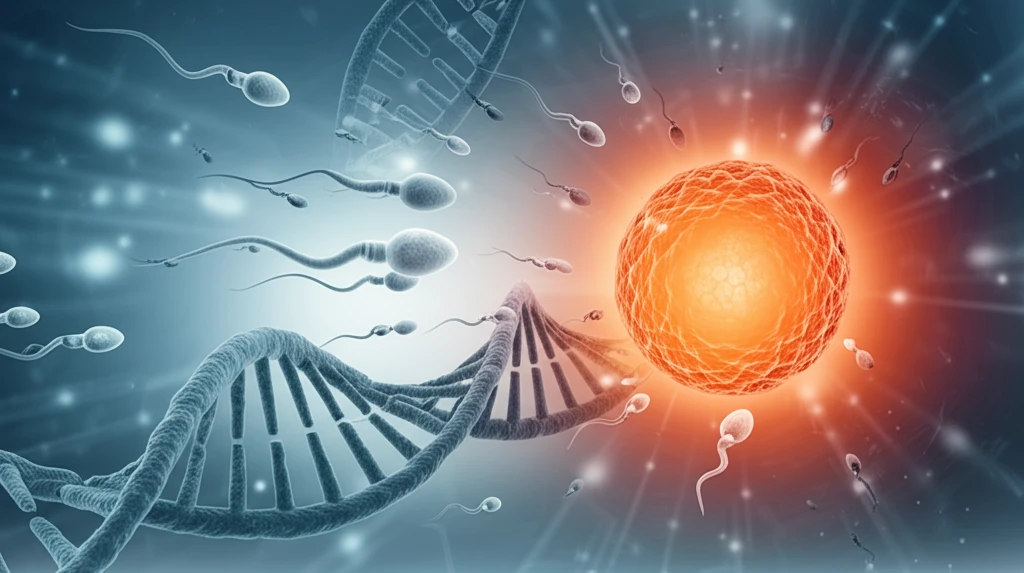
Unlocking Fertility: How to Activate Sperm for Conception

"A deep dive into the groundbreaking techniques for in vitro activation of sperm, offering hope for overcoming infertility challenges."
In the intricate dance of life, the journey to conception can sometimes encounter roadblocks. For many couples, infertility presents a significant challenge, sparking a quest for innovative solutions. One promising avenue lies in understanding and activating sperm, the vital carriers of genetic information. Recent scientific advancements have shed light on how to coax sperm into their most fertile state, offering new hope for those struggling to conceive.
Sperm activation, also known as spermiogenesis, is the process by which spermatids transform into mature spermatozoa, ready to fertilize an egg. This transformation involves a series of complex biochemical and morphological changes, including the development of a tail for motility and the restructuring of the sperm's head to facilitate penetration of the egg. When this process is impaired, it can lead to infertility. Researchers are now exploring methods to stimulate spermiogenesis in vitro, essentially jump-starting the sperm's engine outside the body.
The nematode Caenorhabditis elegans offers a fascinating model for studying sperm activation. These tiny worms have two sexes, males and hermaphrodites. The sperm cells created by each gender offers insights into reproductive science. By studying C. elegans, scientist are studying causes and future potential treatments for the human form of infertility.
The Male Gamete's Role in Conception
Sperm is the male reproductive cell, or gamete, in anisogamous forms of sexual reproduction, contributing approximately half of the nuclear genetic information to the diploid offspring. Because sperm quality and function are central to successful fertilization, fertility challenges in men are a significant factor in couples seeking help. Infertility services address these challenges through diagnosis and treatments such as IUI and IVF.
From Lifestyle Changes to Assisted Reproduction
Standard infertility care typically moves through diagnosis and then options such as intrauterine insemination (IUI), in vitro fertilization (IVF), and lifestyle changes. These accepted methods are also shaped by practical constraints, since clinics explain costs and waiting times to prospective patients. While effective, such medical approaches often begin after couples have already tried to conceive on their own for some time.
A Century of Understanding Sperm Motility
Research into sperm has long centered on how the male gamete is activated for fertilization, beginning with the recognition of sperm as the half of the genetic contribution in anisogamous reproduction. Scientists originally believed the sperm protein CatSper was switched on by pH levels in the female reproductive tract, a foundational assumption for understanding motility. This early model of activation set the stage for later discoveries about how sperm movement is controlled.
In Vitro Activation: A Step-by-Step Guide
The in vitro activation of C. elegans sperm involves a meticulous process of isolation and stimulation. The key steps include:
- Identification and Isolation: Male worms are identified by their distinct tail morphology—rounded with mating structures, unlike the pointed tails of hermaphrodites.
- Dissection: The worms' tails are cut under a microscope to release the spermatids stored inside. This delicate procedure requires precision and specialized tools.
- Activation: The released spermatids are then incubated in a special sperm medium containing activating compounds like Pronase E. This triggers spermiogenesis, transforming the spermatids into mature, motile spermatozoa.
Heat as the Hidden Switch for Sperm Activation
All mammals have a special protein in sperm called CatSper, which helps control the movement needed for fertilization. New research has found that a temperature-controlled switch activates this protein: with CatSper activated, the sperm's behavior shifts from the relatively smooth motions used for navigation to the hyperactive movements needed to enter the egg for fertilization. This finding overturns the earlier assumption that pH alone triggered activation.
Revisiting the pH Theory of Activation
The leading alternative explanation held that CatSper was activated by pH levels in the female reproductive tract, and this view guided much of the field's research direction. The new temperature-based findings challenge that framework, suggesting the heat-sensitive mechanism is central to switching sperm into hyperactive movement. Such reversals highlight that the precise biochemical conditions for sperm activation remain incompletely understood.
Molecular Research Versus Complementary Therapies
Laboratory research focuses on molecular switches like CatSper and enzymes that activate sperm mobility, with implications for new contraceptives or treatment for male infertility. In contrast, complementary approaches such as acupuncture are reported to enhance sperm quality, motility, and morphology by reducing inflammation and increasing circulation. These two paths reflect a broader split between mechanistic medical science and holistic supportive care in fertility treatment.
Future Directions and Hope
The ability to activate sperm in vitro holds immense potential for addressing male infertility. By identifying and targeting the underlying causes of spermiogenesis defects, researchers can develop new therapeutic strategies to improve sperm quality and increase the chances of successful conception. From analyzing sperm morphology to conducting physiological measurements, this technique opens doors to a deeper understanding of sperm function and its role in fertility.
Connecting Physical and Emotional Fertility
Practitioners working on fertility emphasize that women's health involves the emotional connections behind physical experiences, a perspective voiced by experts like Katherine Rohland in her Unlocking Fertility podcast. Meanwhile, laboratory scientists point to concrete mechanisms, such as the temperature-controlled switch activating CatSper, as key to fertility. Together, these voices suggest that successful conception support blends emotional care with molecular insight.
New Drugs and a Clearer Switch
The discovery that an enzyme activates sperm mobility opens the door to new contraceptives or treatments for male infertility. Understanding the temperature-controlled CatSper switch may likewise inform products that enhance or block sperm activation on demand. These advances promise more targeted fertility therapies than current broad approaches like IUI and IVF.
Access, Cost, and the Care Pathway
Even as science advances, couples face practical barriers in accessing infertility treatment, since clinics must explain costs and waiting times up front. Options such as IUI, IVF, and lifestyle changes vary in affordability and availability depending on where patients seek care. This means the latest research only helps people who can actually reach and pay for treatment.
Lifestyle and Emotional Well-Being on the Journey
Beyond medical procedures, healthy lifestyle habits are part of supporting fertility and overall wellness. Patients are encouraged to pair clinical treatment with lifestyle changes, while specialists highlight the emotional connections behind physical health. For many couples, the path to conception is as much about daily routines and emotional resilience as it is about biology.