
Unlocking Cancer's Secrets: How Telomere Research Is Changing the Game

"Dive into the groundbreaking world of telomere maintenance mechanisms and their potential to revolutionize cancer therapy. Learn how targeting these mechanisms could lead to innovative treatments and improved patient outcomes."
In the quest to conquer cancer, scientists are constantly seeking new targets and innovative therapies. A promising area of research lies in understanding and targeting the mechanisms that allow cancer cells to replicate endlessly. These mechanisms, known as telomere maintenance mechanisms (TMMs), are crucial for cancer's survival and could hold the key to more effective treatments.
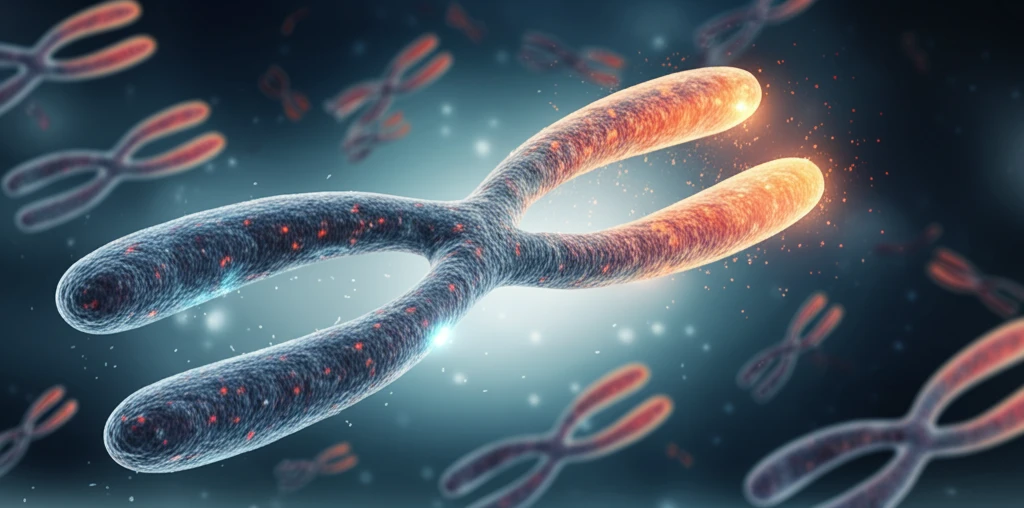
Telomeres, the protective caps at the end of our chromosomes, play a vital role in maintaining genomic integrity. In normal cells, telomeres shorten with each division, eventually triggering senescence or cell death. However, cancer cells often bypass this process by activating TMMs, enabling them to divide indefinitely. Two primary TMMs have been identified in human cancer: telomerase activation and the alternative lengthening of telomeres (ALT).
While both telomerase and ALT allow cancer cells to maintain their telomeres, their contributions to tumor growth, survival, and patient prognosis can differ significantly. This understanding opens up exciting possibilities for tailoring cancer treatments to specific TMMs, potentially leading to more personalized and effective therapies.
A Growing but Contested Research Landscape
Telomere research has expanded dramatically, with a bibliometric review covering 2005 to 2025 documenting a global research landscape spanning infectious diseases, aging, and cancer. Chronic infections such as HIV and tuberculosis have been shown to exacerbate telomere attrition through sustained immune activation and oxidative stress. Despite this growth, the field faces scrutiny: even institutions like the NIMH have promoted telomere length as a key research target, prompting concerns about hype and premature claims in both scientific and pseudoscientific literature. The challenge of translating telomere findings into clinically meaningful outcomes remains an ongoing issue across the research community.
Measuring Telomere Length: Methods, Gaps, and Breakthroughs
Several methods exist for measuring telomere length, each with different strengths, limitations, and appropriate uses, making it critical for clinicians and researchers to understand these differences when evaluating results. There is broad consensus that further methods development and standardization is needed, particularly for telomere measurements conducted in the context of epidemiological studies. A significant advance came from the Salk Institute's Teloseq technology, which allows researchers to sequence and analyze entire telomeres along with adjacent subtelomeric DNA at unprecedented resolution. This new capability addresses long-standing limitations of earlier measurement approaches that could not capture the full complexity of telomere structure.
Decades of Discovery, from Side Project to Nobel Prize
Telomere research began somewhat as a side project for pioneers like Elizabeth Blackburn, who had been studying DNA recombination before turning her attention to chromosome end-capping structures. The field has since accumulated a rich history of milestones, with researchers recognizing that repetitive DNA sequences and proteins capping chromosome ends may affect aging and disease susceptibility. However, the field has not been without controversy: Harry Rubin of UC Berkeley argued that researchers studying telomeres in relation to cancer sometimes produce suspect data, reflecting early skepticism about the field's rigor. These historical tensions between discovery and scrutiny have shaped how telomere science is conducted and communicated today.
The Role of Telomeres in Cancer
Telomeres are specialized DNA-protein structures found at the ends of eukaryotic chromosomes. They’re essential for maintaining the stability of our genetic material and ensuring proper cell division. Think of them like the plastic tips on shoelaces, preventing the ends from fraying. Each time a normal cell divides, its telomeres get a bit shorter. Eventually, they become too short, signaling the cell to stop dividing or undergo programmed cell death.
- Preventing limitless replication: By disrupting TMMs, we can limit the ability of cancer cells to divide indefinitely.
- Reactivating cell senescence: Blocking TMMs can force cancer cells back into senescence or programmed cell death.
- Improving treatment response: Combining TMM-targeted therapies with conventional treatments may enhance their effectiveness.
Surging Volume, 2024 Advances, and Biological Age
Telomere research is advancing rapidly, with more than 20,000 scientific articles now listed on PubMed, reflecting the scale of investment in this field. In 2024, a number of research publications demonstrated the important roles of telomeres and telomerase in aging biology, marking a productive year for the discipline. Research has consistently shown that as people age, their telomeres get shorter, and shorter telomeres are associated with a shorter lifespan, leading to their use as a measure of biological age. This body of work continues to reinforce the link between telomere dynamics and the broader aging process.
A Murky Lead After Four Decades
Even after Elizabeth Blackburn's Nobel Prize-winning research, which began in the 1970s, it remains unclear whether telomeres can be safely manipulated to slow or reverse aging. Some researchers promote telomere shortening as a key marker of aging and advocate natural interventions to increase telomere length, positioning it as a strategy to prevent disease. However, a decade after the Nobel recognition, the scientific consensus remains that telomeres are still a murky lead when it comes to longevity interventions. The gap between the promise of telomere biology and proven, safe clinical applications continues to be a significant source of frustration in the field.
Telomeres as Protector and Destroyer
Telomere attrition, characterized by the shortening of telomeres with each cell division, paradoxically serves as both a protective mechanism against uncontrolled cell growth and a contributor to tissue degeneration and age-related disease. This dual role makes telomere biology one of the most intensively studied frontiers in aging research. Since the Nobel Prize-winning discovery that telomerase can maintain telomere length, scientists have sought compounds capable of modulating this enzyme in human cells, with varying degrees of success. Emerging research also reveals that cancer cells rewire their telomere maintenance pathways, opening new questions about how telomerase's newly discovered roles may influence treatment strategies.
The Future of Telomere-Targeted Cancer Therapies
While the field of telomere-targeted cancer therapies is still evolving, the potential is enormous. By continuing to unravel the complexities of TMMs and develop innovative strategies to disrupt them, we can pave the way for more effective and personalized cancer treatments, ultimately improving patient outcomes and bringing hope to those affected by this devastating disease.
Telomere Length as a Predictor of Health Trajectory
Research consistently shows that shorter telomeres in blood cells correlate with increased risk for age-related diseases, extending across multiple health domains. The predictive power of human telomere length has become a central focus for understanding how cellular aging translates to clinical outcomes. This body of evidence, much of it pioneered by Elizabeth Blackburn, positions telomere length as a potential biomarker for assessing disease risk. However, the relationship between telomere length and health outcomes remains complex, with telomere shortening being one factor among many in the aging process.
Promising Horizons in Telomere Interventions
As understanding of telomere biology continues to grow, so does the potential for groundbreaking interventions in the field of aging and age-related diseases. Several exciting areas of ongoing research are exploring how telomere dynamics might be harnessed for therapeutic benefit. The Germany telomere detection market, segmented by product type, application, and end-user, reflects growing commercial interest in translating research into practical diagnostic tools. These developments suggest that telomere science is moving from purely academic inquiry toward real-world applications, though significant challenges remain in ensuring safety and efficacy.
Hidden Genomic Complexity Beyond Standard References
A near-telomere-to-telomere diploid assembly generated by the Broad Institute revealed that 16% of somatic variants occur in sequences absent from the standard GRCh38 reference genome. Satellite repeats within these regions were identified as hotspots for UV-induced mutations, highlighting how much of the genome relevant to telomere biology has been overlooked by traditional sequencing approaches. This finding underscores a systemic challenge in telomere research: the tools and reference maps used by the community may not capture the full picture of genomic variation. As telomere-to-telomere mapping becomes more accessible, it has the potential to reshape our understanding of somatic mutation and disease.
From Lab Bench to Bedside and Beyond Earth
A landmark Harvard study has identified potential drug treatments for dyskeratosis congenita and other telomere diseases in which cells age prematurely, capping decades of research into therapeutic applications. This represents one of the most tangible outcomes of telomere science, offering hope to patients with rare genetic conditions caused by telomere dysfunction. Separately, NASA's Twins Study compared molecular profiles of identical twin astronauts, establishing a methodology for integrating research across multiple teams studying the effects of spaceflight on human biology. Both achievements demonstrate how telomere research is moving beyond theoretical science into direct human impact, whether through developing treatments for disease or understanding how extreme environments affect the body.