
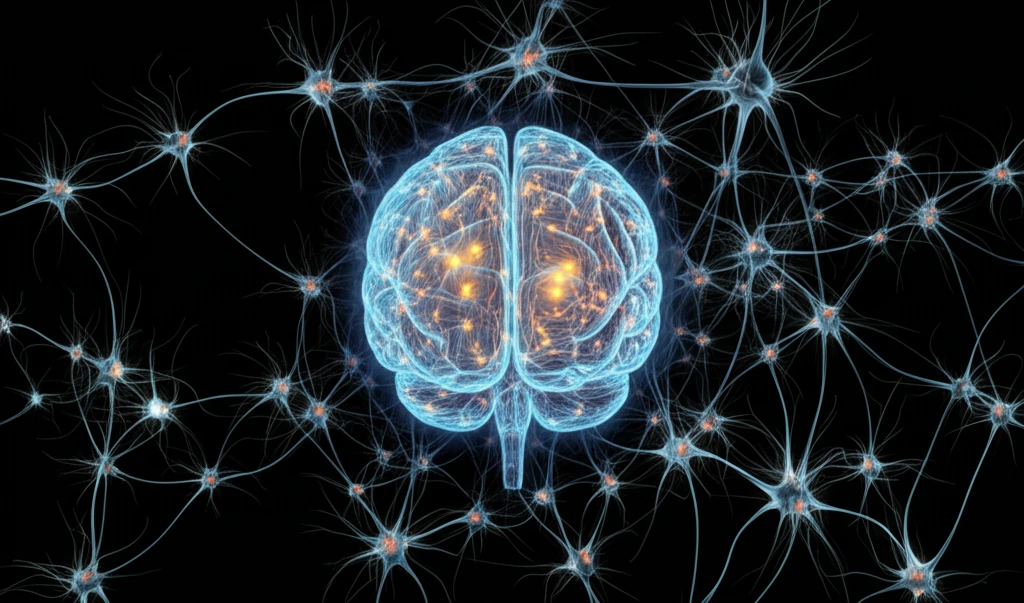
Unlocking Brain Development: The Role of Connexins in Early Life

"New research sheds light on how these essential proteins shape our neural pathways, influencing everything from sensory perception to cognitive skills."
The human brain, a marvel of biological engineering, undergoes its most critical development stages in early life. These formative years lay the foundation for everything from sensory perception to complex cognitive functions. Central to this intricate process is the formation and refinement of neural connections, and recent research is uncovering the crucial role of connexins—specialized proteins that form gap junctions—in orchestrating these developments.
Connexins facilitate direct cell-to-cell communication, allowing the rapid exchange of ions and small molecules. This intercellular communication is particularly vital in the developing brain, where it helps synchronize neuronal activity and coordinate the structural organization of the neocortex. Understanding how connexins function during this period is not just an academic pursuit; it offers potential pathways for interventions aimed at mitigating developmental disorders and enhancing cognitive outcomes.
A new study published in the Neurochemical Journal delves into the expression profiles of two key connexins, connexin-30 (Cx30) and connexin-32 (Cx32), in the somatosensory and visual cortices of rats during early postnatal ontogeny. By comparing the dynamics of mRNA levels for these connexins, the researchers provide insights into the regional differences in brain maturation and the specific roles these proteins play.
Brain Structure Changes in Early Life
Research has established that experience can shape brain structure, as shown by studies of bilingualism's effects on grey and white matter in regions implicated in language learning and control. However, limited evidence exists on how such influences affect brain development from early childhood. A longitudinal neuroimaging study of 298 healthy participants aged 14 to 26 years examined developmental changes in depression-related brain networks, revealing sexually divergent patterns of brain maturation during adolescence.
Established Frameworks and Their Constraints
Piaget's theory of cognitive development has long provided a foundational framework for understanding how children's thinking evolves through sequential stages. However, contemporary research increasingly recognizes that brain development involves complex interactions beyond cognitive stages alone. Studies of gut-brain coupling highlight the difficulty of determining cause and effect in developmental processes, noting that longitudinal studies following people over time are needed to understand how physiological changes relate to mental health outcomes.
From Gross Motor to Micro-Milestones
Understanding of brain development has evolved from focusing solely on gross motor milestones like crawling and sitting to incorporating micro-milestones that reflect finer neurological changes. These subtle developmental indicators are increasingly recognized as important metrics in infant neuroscience, providing earlier windows into brain maturation. Research confirms that both genetics and environment shape developmental trajectories, with the interplay between nature and nurture determining how children's brains grow and adapt.
Connexins: The Unsung Heroes of Brain Development
The neocortex, the brain's outer layer responsible for higher-order functions, doesn't mature uniformly. Different areas, such as the somatosensory and visual cortices, develop at varying rates, impacting the timing of functional abilities. Gap junctions, formed by connexin proteins, are crucial for this maturation process. These junctions allow neighboring cells to directly exchange signals, synchronizing their activity and facilitating the formation of neural networks.
- Cx30 mRNA levels progressively increased in the somatosensory neocortex from postnatal day 5 to day 20.
- In the visual cortex, Cx30 mRNA levels began to increase only after postnatal day 10.
- Cx32 expression started to increase after postnatal day 10 in the somatosensory cortex and after day 13 in the visual cortex.
- These results suggest that connexin expression is more intense in the somatosensory cortex during early ontogeny, reflecting the faster maturation of this area compared to the visual cortex.
Early Adversity and Sensitive Periods
Current research on brain development spans multiple dimensions, from the effects of early-life adversity to advances in biohybrid brain research. Studies indicate that early-life adversity affects more than half of the world's children and represents a significant risk factor for cognitive and mental health problems later in life. Experiencing stress during sensitive periods of brain development has been shown to have a major impact on how individuals cope with subsequent stressors throughout their lives.
Methodological Criticism in Brain Assessment
Not all approaches to understanding brain function and development have been accepted without criticism. Dr. Amen's model, which uses SPECT brain scans to differentiate between ADHD types based on claims from over 200,000 scanned brains, has faced significant criticism from the scientific community regarding its methodology and assertions. Similarly, positive psychology techniques have been critiqued for their limitations, particularly in contexts where well-developed social support systems for mental health are lacking.
Traditional vs. Alternative Developmental Markers
Approaches to tracking brain development in infants have expanded beyond traditional milestone checklists to include alternative developmental markers. While conventional milestones such as sitting, crawling, and first words remain important indicators, parents and pediatricians increasingly consider a broader range of developmental markers. This comparative perspective recognizes that brain development unfolds along multiple pathways and that no single set of milestones captures the full picture of an individual child's neurological progress.
Implications and Future Directions
Understanding the precise roles of connexins in brain development opens new avenues for therapeutic interventions. By targeting connexin expression or function, it may be possible to enhance neural connectivity, improve sensory processing, and mitigate the effects of developmental disorders. Future research should focus on elucidating the specific mechanisms by which connexins influence neuronal activity and network formation, as well as exploring the potential for pharmacological or genetic interventions to modulate connexin function. As we continue to unravel the complexities of early brain development, connexins emerge as key players in shaping the neural landscape and influencing our cognitive potential.
Ongoing Maturation and Educational Implications
Experts note that brain developmental changes continue into the mid-20s, though there remains significant uncertainty about the precise trajectory. Working memory appears to plateau in its development during the mid-teens, which has implications for classroom learning and educational approaches. The COVID-19 pandemic, while disruptive, has also presented opportunities to build brain skills related to academics, coping, adaptive skills, and abstract thinking in children.
Unique Trajectories of Human Brain Development
The journal Brain and Development continues to publish research advancing our understanding of neurological maturation. Recent studies have identified a uniquely modern human pattern of endocranial development, suggesting that human brain development follows distinctive trajectories not seen in other species. These findings open new frontiers for understanding what makes human brain development unique and how it may be influenced by both evolutionary and environmental factors.
Trauma, Stress, and the Developing Prefrontal Cortex
Traumatic experiences during pregnancy and the first four years of life can significantly affect brain development, with effects persisting into adulthood and impacting emotional, mental, and physical wellbeing. Stress encountered during adolescence can alter neural maturation and contribute to increased rates of anxiety and depression. The prefrontal cortex, which regulates impulse control and decision-making, is not fully developed until the mid-20s, meaning expectations for adult-level organizational skills and judgment in teens may be unrealistic.
Neuroimaging, AI, and Equity in Brain Research
Advances in AI and machine learning are being applied to decode neural networks, with real-world applications including brain-computer interfaces that enable paralyzed patients to communicate through electro-corticography. Brain imaging research has revealed the disparate impact of poverty and toxic stress on Black children, as documented in the Adolescent Brain Cognitive Development study of roughly 12,000 American children. Chronic parental arguments also affect children's brain development, leading to behavioral issues, stress responses, physical symptoms, and emotional dysregulation.