
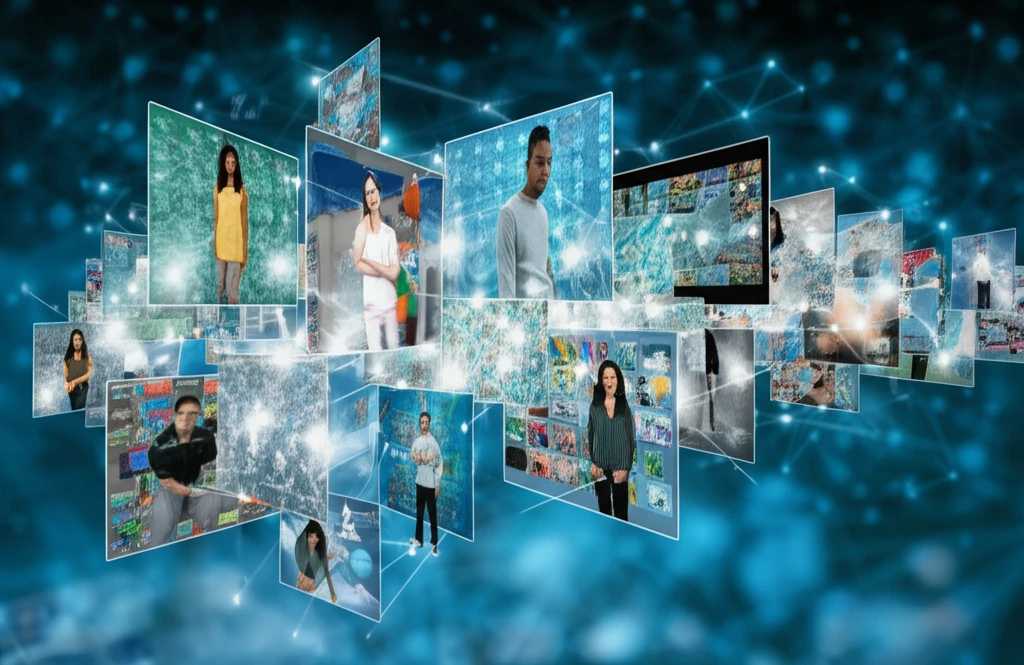
Unlock Your Potential: How MOOCs are Revolutionizing Education

"Explore the world of Massive Open Online Courses (MOOCs) and discover how they're transforming learning for everyone, regardless of location or background."
The landscape of education is undergoing a dramatic shift, and at the forefront of this revolution are Massive Open Online Courses, better known as MOOCs. These online courses have emerged as a powerful force, challenging traditional classroom models and democratizing access to knowledge for learners around the globe. But what exactly are MOOCs, and how are they impacting the way we learn?
MOOCs represent a paradigm shift in education. Unlike traditional courses bound by physical classrooms and limited enrollment, MOOCs offer open access to a vast array of subjects, attracting participants from diverse backgrounds and locations. This accessibility has the potential to level the playing field, providing opportunities for individuals who may not have access to conventional educational institutions.
This article explores the rise of MOOCs, delving into their impact on learner motivation, pedagogical approaches, and the future of education. We'll examine the benefits and challenges of this innovative learning model, offering insights into how individuals can leverage MOOCs to unlock their full potential.
MOOCs and Educational Access
MOOCs are expanding access to learning by making courses available online to people who may not be able to attend traditional institutions. Their impact can include greater flexibility, broader educational choice, and opportunities for self-directed study. However, outcomes may vary depending on learners' resources, motivation, and ability to complete online coursework.
How MOOCs Typically Work
MOOCs generally combine video lessons, written content, discussion forums, and exercises that help learners check what they have learned. Platforms such as Coursera and edX offer courses, certificates, and degrees from institutions and organizations including Stanford, Harvard, Google, Amazon, Meta, Anthropic, and DeepLearning.AI. China's 中国大学MOOC, developed by 爱课程网 and 网易云课堂, provides Chinese university courses, including offerings from numerous 985 universities, and may award certification after completion. These models provide flexible access to structured learning, although the listed sources do not establish how effectively every learner completes courses or applies the material.
China's Early MOOC Development
好大学在线, also called CNMOOC, is described as a leading Chinese MOOC platform owned by Shanghai Jiao Tong University. The platform formed strategic cooperation with Baidu and JinZhi Education to develop online education in the internet era. Its stated ambition was to give university students access to courses from leading universities, allow learners to earn credits, and make high-quality educational resources more widely available.
Why are MOOCs So Appealing?
Several factors contribute to the growing popularity of MOOCs. First and foremost, they offer unparalleled flexibility. Learners can access course materials and complete assignments at their own pace, fitting their studies into their busy schedules. This is particularly appealing to working professionals, parents, and individuals with other commitments.
- Global Reach: Connect with learners from all corners of the world, fostering a collaborative and diverse learning environment.
- Affordable Education: Many MOOCs are free or offer affordable options for certifications, making quality education accessible to a wider audience.
- Career Advancement: Acquire new skills and knowledge that can enhance your career prospects and open doors to new opportunities.
- Personal Enrichment: Explore your passions, expand your horizons, and learn for the sheer joy of discovery.
An Evolving Learning Model
Recent discussion of MOOCs generally presents them as a developing form of online education rather than a single fixed teaching method. Their evolution includes combinations of lectures, readings, exercises, discussion, assessment, certificates, and degree pathways. The evidence provided here does not support a specific research finding or numerical estimate, so the broader effects of these developments remain appropriately dependent on course design and learner context.
Limits of Online Participation
MOOCs can broaden access, but online availability alone does not guarantee participation or successful learning. Learners may differ in their time, technology, preparation, and support, and open courses can require substantial self-direction. The sources provided do not establish a particular failure rate or identify one universal cause of unsuccessful completion.
Different MOOC Pathways
MOOC platforms differ in the learning pathways they emphasize, including standalone courses, professional certificates, specializations, degrees, and credit-bearing university study. Some platforms highlight partnerships with universities, while others also feature technology companies and workforce-oriented credentials. Without comparative outcome data in the supplied sources, these differences can describe available options but cannot establish that one pathway is more effective than another.
The Future of Learning is Here
MOOCs are not just a passing fad; they represent a fundamental shift in the way we learn. As technology continues to evolve, MOOCs will likely become even more sophisticated and personalized, offering learners customized learning experiences tailored to their individual needs and goals. Embracing this innovative learning model can empower you to take control of your education and unlock your full potential in an ever-changing world.
Access Requires Design
MOOCs demonstrate how online delivery can connect learners with structured educational resources beyond the boundaries of a single campus. Their value depends not only on open access but also on the quality of instruction, opportunities for practice, assessment, and the support available to learners. A balanced assessment therefore treats MOOCs as a powerful educational option whose results depend on implementation and context.
Expanding Online Learning
The future of MOOCs may involve broader combinations of courses, professional credentials, degrees, and credit-bearing study. Platforms may continue refining ways to connect video, written materials, discussion, exercises, and assessment within flexible learning paths. The supplied sources do not justify a specific forecast, technology projection, or market figure, so the direction and scale of future change remain uncertain.
Open Access at Scale
A massive open online course is an internet-based course designed for large numbers of people and open access through the Web. Traditional MOOC materials can include filmed lectures, readings, and problem sets, while courses may also support instructional design, assessment, and learner engagement. This scale creates opportunities to distribute education widely, but it also makes course design and learner support important systemic considerations.
Learners at the Center
The real-world impact of MOOCs ultimately depends on how learners use the opportunities they provide. Online courses can support people seeking new knowledge, academic credit, professional skills, or formal credentials, but learners still need time, engagement, and suitable support. Because the supplied sources contain no outcome statistics for this subsection, the human effects should be understood as potentially significant but variable.