
Unlock Your Potential: How Career Exploration Boosts Success in College and Beyond

"Discover the power of career exploration modules in enhancing career planning, self-efficacy, and maturity for community college students and how it sets the stage for long-term career success."
Are you feeling lost about your future career path? You're not alone. Many students, whether in secondary schools or higher education, struggle with career planning. This uncertainty can lead to problems like interview failures and difficulty making confident decisions about your future. But what if there was a way to gain clarity and confidence in your career journey?
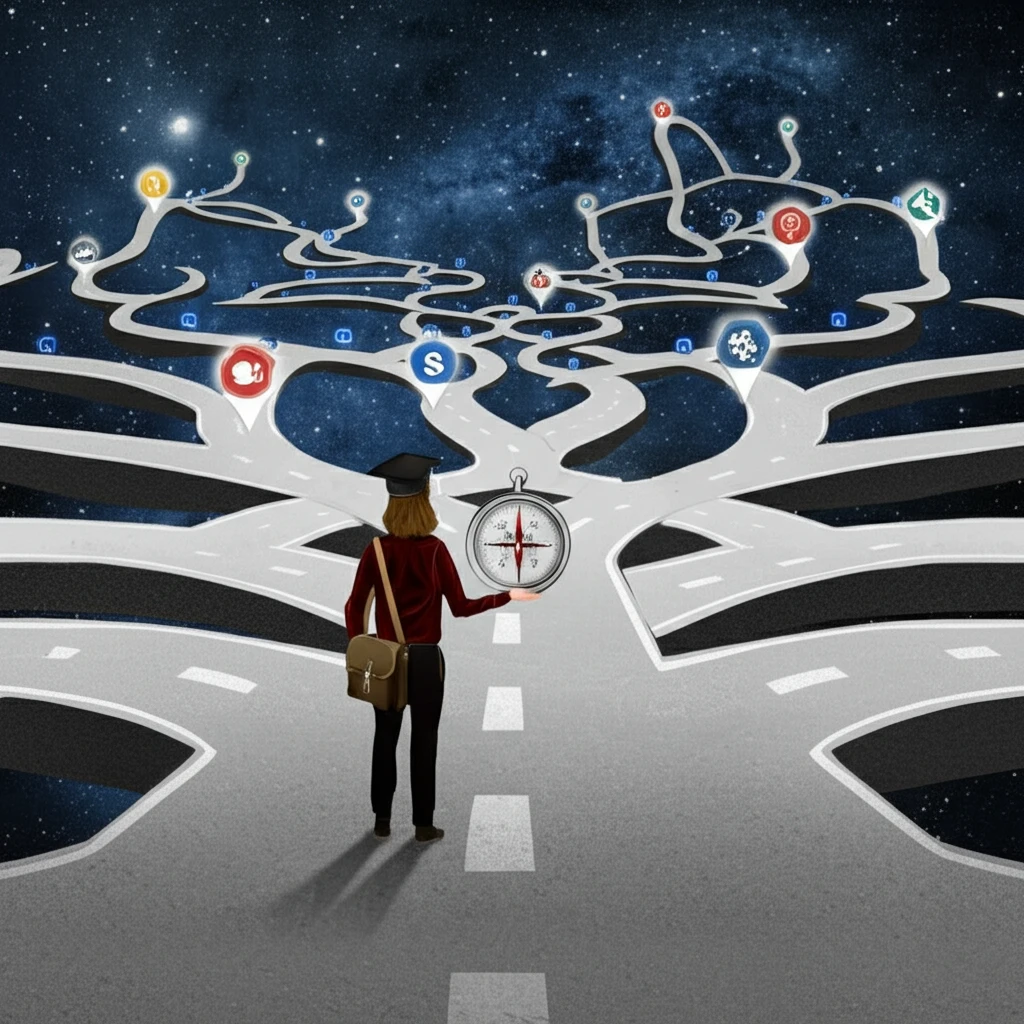
The good news is, there is! Career exploration modules are designed to help students like you navigate the complex world of career options. These modules provide a structured approach to understanding your strengths, interests, and values, and how they align with different career paths. They're like a personal GPS for your professional life, guiding you towards a fulfilling and successful future.
This article delves into the transformative effects of career exploration modules, particularly for community college students. We'll explore how these modules enhance career planning abilities, boost career self-efficacy (that feeling of confidence in your ability to succeed), and foster overall career maturity. Get ready to discover how these interventions can unlock your potential and set you on the path to a brighter future.
Career Exploration by the Numbers
The U.S. Bureau of Labor Statistics provides students and teachers with employment, wage, and job-outlook data to support career exploration from junior high through college and beyond. A 2021 meta-analysis published in the Journal of Vocational Behavior concluded that career exploration plays a crucial role in students' career preparation, yet the field still lacks a comprehensive empirical integration of its antecedents and outcomes. BLS career-planning resources also highlight emerging pathways—such as healthcare, science, and engineering roles that don't require a four-year degree—illustrating how exploration can reveal viable options beyond traditional degree tracks.
How Career Exploration Is Studied—and Where It Falls Short
A major 2019 review of the career exploration literature identified the need to integrate a dynamic life-span perspective and to pinpoint the key mechanisms that explain how exploration produces outcomes. Longitudinal research using social cognitive career theory has examined how self-efficacy and outcome expectations predict career planning and exploration among high school students, but results are often tested cross-sectionally rather than over extended periods. Harvard's NCRERN notes that while current college and career pathway interventions show promise, they also have significant limitations, including gaps in evidence about which specific components drive results.
Career Exploration as a Lifelong Journey
Career development is widely understood as a lifelong process, and institutions such as UCLA's Career Center emphasize that early career planning and exploration help maximize students' career journeys. The ASVAB Career Exploration Program, originally developed for military aptitude assessment, has evolved into a widely used tool that helps individuals identify careers aligned with their interests and strengths. Merrimack College's CareerEdge defines career exploration as the continuous process of learning about occupations and assessing their fit with one's unique skills, interests, and values through self-assessment.
The Impact of Career Exploration: More Than Just a Module
A recent study investigated the impact of a Career Exploration Module on community college students' career planning abilities, self-efficacy, and maturity. The study, employing a quasi-experimental design, involved 122 semester four students from two community colleges. These students participated in a structured program designed to enhance their understanding of career options and develop essential skills.
- Self-Assessment: Identifying your strengths, weaknesses, interests, and values.
- Career Research: Exploring different career paths, industries, and job roles.
- Skill Development: Building essential skills like resume writing, interviewing, and networking.
- Goal Setting: Defining your career goals and creating a plan to achieve them.
- Real-World Experience: Opportunities to connect with professionals and gain insights into different industries.
What New Research Reveals About Exploration and Well-Being
A 2026 study in Frontiers in Psychology expanded career construction theory by introducing career adaptability and perceived control as variables, clarifying the psychological mechanisms that link career exploration to well-being. Research published in the Journal of Adolescence has also shown that career exploration and self-reflection foster both adolescent career adaptability and subjective well-being, suggesting tangible mental-health benefits. Additionally, a 2024 Taylor & Francis study described how comprehensive career exploration and strategic planning, embedded in theory-driven activities, can be effectively supported through learner-centred approaches in mixed settings.
Gaps, Barriers, and What Traditional Models Get Wrong
The career exploration literature still contains significant research gaps that hinder the development of a robust agenda for future work, according to a review hosted by the K20 Center. Traditional career-planning models have been criticized for failing to address employee-focused growth, treating career development as a one-size-fits-all linear process rather than a personalized, evolving path. These shortcomings suggest that even well-established frameworks may not adequately capture the complexity of real-world career decision-making.
Career Development vs. Career Exploration: A Distinction That Matters
Career development and career exploration are related but distinct concepts: exploration involves researching and learning about different options, industries, and roles, while development encompasses the broader, ongoing management of one's professional trajectory. The National Association of Colleges and Employers draws a further distinction between transactional and transformational career-readiness approaches, arguing that university career centers must move beyond transactional services to foster deeper, purposeful career planning. Understanding these differences helps students and educators target interventions more effectively rather than conflating exploration with full-scope career management.
Unlock Your Potential: The Future of Career Development
The findings of this study underscore the importance of providing structured career interventions to students. By using career exploration modules, educational institutions can empower students to make informed decisions about their future, boost their confidence, and achieve greater success in their chosen fields. The Career Exploration Module has proven to be a valuable tool in helping community college students improve their career skills and prepare for a successful future. Implementing similar programs can bridge the gap between education and employment, ensuring that students are well-equipped to thrive in the ever-evolving job market. So, take charge of your career journey, explore your options, and unlock your full potential!
Bringing It All Together
Across the research landscape, career exploration is consistently positioned as a foundational practice that shapes academic engagement, career readiness, and personal well-being. Experts broadly agree that exploration works best when it is continuous, self-reflective, and embedded within supportive educational environments rather than treated as an isolated event. While methodological debates persist about which frameworks and interventions are most effective, the core consensus is that structured exploration—paired with adaptability—gives students a meaningful advantage in navigating an uncertain labor market.
Where Career Exploration Is Headed
The Bureau of Labor Statistics' Career Outlook continues to publish data-driven guidance on education levels, projected job openings through 2034, and emerging career clusters to help individuals plan strategically. The College Board's BigFuture platform encourages students to begin exploring career clusters early, pursue relevant coursework, and build skills aligned with their goals before graduating high school. NACE's 2026 Environmental Scan synthesizes proprietary survey data, national labor-market trends, and federal policy analysis to help career professionals anticipate change and plan proactively.
The Bigger Picture
Career exploration does not exist in a vacuum; it is shaped by systemic factors including educational access, labor-market inequities, and the degree to which schools integrate career readiness into core curricula. Students from under-resourced backgrounds often face additional barriers to meaningful exploration, such as limited access to mentors, internships, and assessment tools. Addressing these structural challenges requires coordinated effort across education policy, employer engagement, and community support systems to ensure exploration opportunities are equitably available.
Making Career Exploration Real for Students
A 2025 study in PMC argues that career planning and exploration are too often treated as "out of class" work, forcing students to navigate unfamiliar processes outside their already demanding schedules. Research on narrative-based career exploration platforms has shown that game-like, problem-solving approaches reflecting real-world challenges significantly boost student engagement and perceived usefulness. An evidence brief from Project Evident further confirms that high-quality career exploration in middle and high school—particularly when it includes hands-on experiences—produces measurable positive outcomes for diverse student populations.