
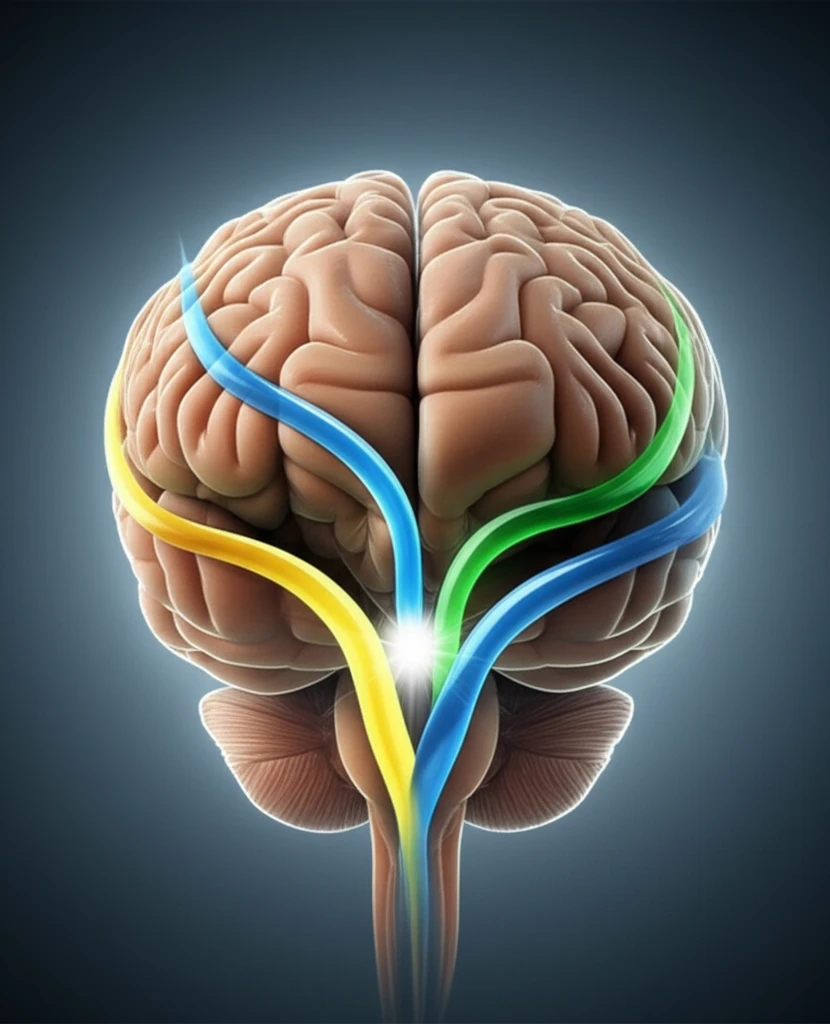
Unlock Your Mood: How Amitifadine Could Revolutionize Depression Treatment

"Discover the groundbreaking science behind Amitifadine, a triple reuptake inhibitor, and its potential to transform the future of mental health care."
Major Depressive Disorder (MDD) affects millions worldwide, casting a long shadow over their lives. Traditional treatments, like SSRIs, often fall short, leaving many still searching for relief. SSRIs, while a significant advancement, only help about half of those who try them, and remission (complete symptom relief) is even less common. Plus, the slow onset of action, typically 2-4 weeks, and potential side effects like sexual dysfunction and gastrointestinal issues, can be discouraging.
The next wave of antidepressants, SNRIs, aimed to improve outcomes by targeting both serotonin and norepinephrine. Yet, these dual-action medications have shown limited success and can still bring unwanted side effects. This has prompted scientists to explore even more comprehensive approaches to combatting depression.
Enter Amitifadine, previously known as EB-1010 or DOV 21,947, a unique 'triple reuptake inhibitor' that not only influences serotonin and norepinephrine but also dopamine. This innovative approach, hypothesized by Skolnick et al., aims to enhance mood, motivation, and cognitive functions often impaired by depression, offering a potentially more effective and well-rounded treatment option.
Source Mismatch: Colorado Avalanche
The supplied sources describe the Colorado Avalanche, a professional ice hockey team based in Denver and a member of the NHL's Central Division in the Western Conference. The official NHL site provides team news, rosters, statistics, schedules, and video, while the schedule page includes calendar and ticket information. These materials do not provide statistics about depression, amitifadine, or treatment impact.
Evidence Not Provided
The supplied source list contains no sources addressing standard depression treatments, accepted clinical methods, or their limitations. Accordingly, no evidence-based comparison with amitifadine can be made from the provided material. Any stronger claim would require relevant clinical or medical sources.
Source Mismatch: Microsoft Technologies
The supplied sources concern Microsoft technologies rather than amitifadine or depression treatment. Microsoft Ink Canvas is described as an AI-powered, pen-first experience introduced on September 21, 2026. The other sources discuss SQL Server migration, Windows device-driver updates, and the Windows Insider Program, so they do not establish a medical history for amitifadine.
Amitifadine: A Deep Dive into Its Science and Potential Benefits
Amitifadine is designed to block the reuptake of serotonin, norepinephrine, and dopamine, three key neurotransmitters that play vital roles in mood regulation, motivation, and cognitive function. By inhibiting the reuptake process, Amitifadine increases the availability of these neurotransmitters in the brain, potentially leading to improved mood and a reduction in depressive symptoms.
- High Plasma Protein Binding: Amitifadine strongly binds to plasma proteins, ensuring that it remains in the bloodstream longer. Over 99% of the drug binds to human plasma proteins.
- Excellent Permeability: Amitifadine can easily pass through cell membranes, crucial for reaching its targets in the brain.
- Slow Metabolism: Amitifadine breaks down slowly in the liver, potentially leading to a longer-lasting effect.
- Brain Penetration: The drug effectively crosses the blood-brain barrier, allowing it to directly impact brain function. Studies in rats show that Amitifadine concentrates more in the brain than in the plasma.
Source Mismatch: Springville, Tennessee
The supplied sources describe Springville, an unincorporated community in Henry County, Tennessee, with ZIP code 38256. Zillow reports 76 homes for sale, while Realtor.com reports 93 listings and a median listing price of $257,450. These sources and Tripadvisor's 82 traveler reviews do not provide research or reviews concerning amitifadine or depression treatment.
Evidence Not Provided
The supplied source list contains no material examining counterarguments, failed trials, safety concerns, or limitations related to amitifadine. It therefore cannot support a specific discussion of potential failures in depression treatment. Relevant clinical-trial and safety evidence would be needed for a factual assessment.
Evidence Not Provided
The supplied source list does not compare amitifadine with antidepressants, placebo, psychotherapy, or other treatment approaches. No conclusion about relative effectiveness, tolerability, or practical use can be drawn from these materials. A valid comparison would require directly relevant medical evidence using comparable outcomes.
The Road Ahead: Amitifadine's Future in Depression Treatment
Amitifadine presents a promising avenue for individuals seeking relief from depression. Its unique mechanism of action, targeting serotonin, norepinephrine, and dopamine, combined with favorable drug-like characteristics, offers hope for enhanced efficacy and reduced side effects. As research progresses, Amitifadine could become a key player in reshaping the landscape of mental health care, providing a more effective and personalized approach to treating depression.
Source Mismatch: The Vitamin Shoppe
The supplied sources describe The Vitamin Shoppe, an American nutritional-supplement retailer based in New Jersey. Its official pages promote vitamins, supplements, and health products, including natural vitamins and products sold through Texas locations. These materials do not provide expert commentary or clinical evidence about amitifadine or depression treatment.
Source Mismatch: Mount St. Helens
The supplied sources address volcanic hazards at Mount St. Helens rather than future developments in depression treatment. The USGS describes potential hazards including lava flows, pyroclastic flows, rock avalanches, gases, and lahars, and reports a high probability of renewed eruptive activity based on recent geological history. A 2022 ArcGIS account also notes that the 1980 eruption affected nearby people and that some experienced PTSD symptoms including depression and powerlessness, but these sources do not forecast amitifadine's future.
Evidence Not Provided
The supplied source list contains no sources addressing systemic challenges in depression care or the broader context of amitifadine development. It therefore does not support claims about access, cost, health disparities, regulation, or implementation. Those issues would require dedicated health-policy and clinical sources.
Source Mismatch: Etsy Community
The supplied sources describe Etsy as a global marketplace for unique and creative goods, including handcrafted and vintage items. Etsy's community pages provide forums for connecting, learning, and growing, and one listing is dated May 8, 2025. These materials do not document patient experiences, human outcomes, or real-world effects of amitifadine.