
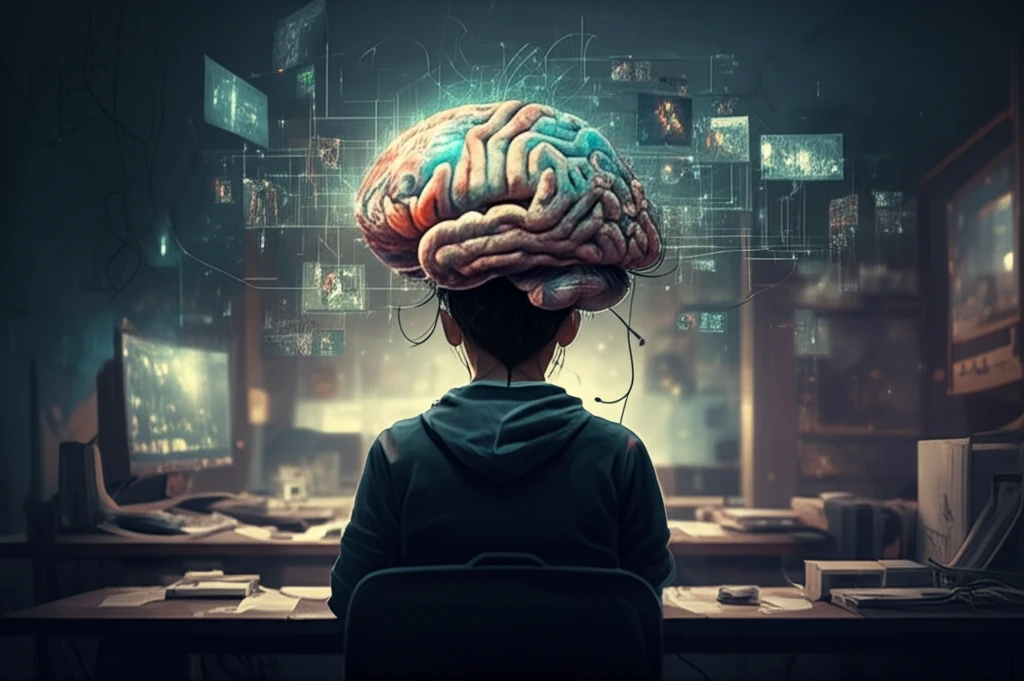
Unlock Your Learning Potential: How Prior Knowledge Shapes Online Video Success

"Dive into the science of video learning and discover how leveraging what you already know can transform your online education experience."
In today’s fast-paced world, online video lectures have become an indispensable tool for education and professional development. Platforms like Coursera, Khan Academy, and YouTube offer a vast library of knowledge at your fingertips, allowing you to learn at your own pace and on your own schedule. But have you ever wondered why some people seem to absorb information from these videos effortlessly, while others struggle to keep up?
The answer, according to recent research, lies in something called "prior knowledge." Your existing understanding of a subject plays a crucial role in how effectively you can learn from video lectures. A groundbreaking study published in the International Journal of Human-Computer Interaction sheds light on the profound impact of prior knowledge on your attitudes, behavior, and learning performance when watching online videos. Let’s unlock these findings together.
This article delves into the key findings of this research, offering actionable insights and practical strategies to enhance your video learning experience. Whether you’re a student, a professional, or simply a lifelong learner, understanding how prior knowledge influences your learning can help you unlock your full potential and achieve your goals.
Why Prior Knowledge Matters
Prior knowledge can shape how learners interpret, organize, and connect new information in online videos. Its effects are likely to vary with the learner, the subject, and the design of the instruction. As a result, video success should be understood as more than a function of presentation quality alone.
Activating What Learners Know
A common instructional approach is to activate relevant knowledge before introducing new material. This may involve brief prompts, previews, questions, or connections to familiar examples. However, these methods may not work uniformly because learners differ in what they already know and in how accurately they understand it.
From Prior Knowledge to Learning Processes
Research on prior knowledge has increasingly examined not only whether it matters, but also the circumstances under which it affects learning. A 2025 literature review organized this question around 16 learning processes that both influence and are influenced by learning success. This marks a shift toward a more detailed account of how existing knowledge shapes learning rather than treating prior knowledge as a single, uniform advantage.
The Prior Knowledge Advantage: Why What You Already Know Matters
Prior knowledge, simply put, is the foundation of information you already have stored in your long-term memory. It's the network of concepts, facts, and experiences that you can draw upon to make sense of new information. Think of it as the mental scaffolding that supports your understanding. When you encounter new material in a video lecture, your brain automatically tries to connect it to what you already know. The stronger your existing knowledge base, the easier it is to make these connections and absorb new information.
- Improved Comprehension: Prior knowledge helps you understand new concepts more quickly and easily.
- Enhanced Retention: Connecting new information to what you already know makes it more memorable.
- Increased Engagement: When you understand what's being taught, you're more likely to stay interested and motivated.
- Better Problem-Solving: A strong knowledge base allows you to apply what you've learned to solve real-world problems.
A More Detailed Video-Learning Evidence Base
Recent research is examining how video-design features interact with learners rather than evaluating video as a single instructional format. One 2026 study focuses specifically on how prior knowledge interacts with pre-questions and feedback in instructional videos. Separately, a review analyzed 257 articles on video-based learning published from 2016 to 2021 using PRISMA guidelines, with attention to video characteristics that support learning. Together, these sources point toward a research agenda that connects learner characteristics with specific design choices.
Why One Method May Not Fit All
Prior knowledge should not automatically be treated as an advantage in every learning situation. Existing understanding may be incomplete, poorly organized, or mismatched with the material being presented. Consequently, strategies that help one learner may have limited or even counterproductive effects for another.
Comparing Learner Starting Points
The value of an online video can differ substantially depending on what viewers bring to it. Learners with relevant background knowledge may need less explanation of basic concepts, while beginners may need more structure and support. A fair comparison therefore considers both the video design and the learner's starting point rather than ranking formats in isolation.
Empowering Yourself Through Personalized Learning
The insights from this study highlight the importance of personalized learning strategies. Recognizing your current knowledge level and adapting your approach accordingly can significantly enhance your learning outcomes. By focusing on building a strong foundation and utilizing effective viewing techniques, you can transform your online video learning experience and achieve your full potential. So, embrace the power of prior knowledge and embark on a journey of continuous growth and discovery!
Design Around the Learner
The available evidence supports treating prior knowledge as a central design consideration for online video learning. Effective instruction should connect new explanations to what learners know while avoiding assumptions that their existing knowledge is complete or accurate. The most defensible general principle is to align prompts, explanations, and support with learners' differing starting points.
Toward Interactive and Adaptive Video
Future training videos are likely to move beyond simple play, pause, forward, and rewind controls. Interactive video can allow viewers to drag for a 360-degree view, scroll, and engage with content in other ways. Research is also examining how pre-questions and feedback interact with prior knowledge, suggesting that future video systems may need to adapt instructional support to the learner.
Learning Conditions Matter
Online video learning takes place within broader educational and technological systems. Differences in access, preparation, instructional quality, and learner support can affect whether prior knowledge becomes an asset or a barrier. These conditions make it difficult to attribute outcomes to video design alone.
From Viewing to Transfer
The human value of video learning lies in whether viewers can transfer what they learn to unfamiliar, real-world tasks. VideoWorld 2 reports the first investigation of transferable knowledge for complex, long-horizon tasks learned directly from raw real-world videos. Its findings indicate that separating action dynamics from visual appearance modeling is critical for effective knowledge acquisition.