
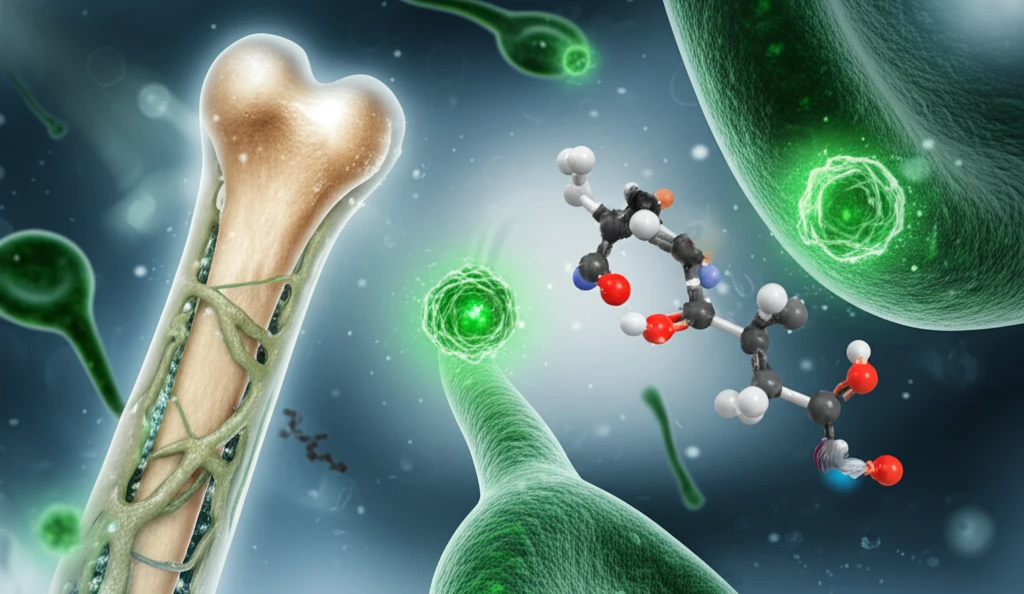
Unlock Your Bone's Potential: How Resveratrol and Stem Cells Could Revolutionize Bone Regeneration

"Discover the groundbreaking research showing how resveratrol enhances mesenchymal stem cell therapy for bone defects, offering new hope for regenerative medicine."
Mesenchymal stem cells (MSCs) hold immense promise for regenerative medicine, particularly in treating skeletal diseases. These cells have the remarkable ability to differentiate into bone, cartilage, and adipose tissue, making them ideal candidates for therapies aimed at repairing and regenerating damaged tissues. However, a significant challenge lies in maintaining their therapeutic potential during the ex vivo expansion necessary for clinical applications.
MSCs tend to age rapidly when cultured outside the body, losing their stem cell characteristics and therapeutic efficacy before reaching the required cell numbers for effective treatment. This limitation has spurred researchers to explore methods to preserve the vitality and regenerative capacity of MSCs during long-term cultivation.
Resveratrol (RSV), a natural polyphenol found in grapes and red wine, has garnered attention for its antioxidant, anti-aging, and bone-protective properties. Recent studies suggest that RSV may enhance the bone-forming capabilities of cells, but in-depth investigations into its effects on MSCs in vivo have been limited. A new study has unveiled promising results regarding RSV's ability to enhance MSC-driven bone regeneration, offering a potential breakthrough in regenerative medicine.
Growing Evidence for MSC-Based Bone Regeneration
Clinical studies demonstrate strong outcomes for mesenchymal stem cell therapy in bone repair. In one cohort, 138 patients treated with mesenchymal stem cells in scaffolds achieved bone healing in all cases, with results exceeding standard care. Systematic reviews further confirm that systemic application of MSCs promotes bone regeneration compared with control groups, establishing these cells as a significant force in regenerative medicine.
Current Challenges in MSC-Based Bone Therapy
Despite their promise, mesenchymal stem cell therapies face persistent hurdles that limit clinical translation. Studies report low survival rates of transplanted cells, poor integration with host tissue, and non-specific distribution following transplantation. Additional barriers include variability in MSC sources, ethical considerations, and regulatory restrictions, which complicate standardization of treatments across clinical settings.
The Evolution of Mesenchymal Stem Cell Science
The concept of bone marrow mesenchymal stem cells traces back to foundational work by Wolf and Trentin on hematopoietic environments. The use of mesenchymal stem cells in regenerative medicine is a scientific success story that began approximately 40 years ago. A key milestone came in 1958 when French oncologist Georges Mathé performed the first therapy using stem cells—a bone marrow transplant on five radiation-exposed workers.
How Does Resveratrol Boost Bone Regeneration?
The recent study investigated the impact of resveratrol on MSCs during long-term culture and their subsequent ability to regenerate bone tissue. Researchers cultured MSCs for six weeks, a period sufficient for the cells to reach the effective cell dose (ECD) required for therapeutic applications. One group of MSCs was cultured with resveratrol (RSV-MSCs), while the other group was cultured without it (control MSCs).
- Enhanced Proliferation: RSV-MSCs exhibited higher proliferation rates compared to control MSCs, reaching the effective cell dose faster.
- Maintained Differentiation Potential: RSV-MSCs retained their ability to differentiate into bone-forming cells (osteoblasts), while control MSCs showed a decline in this capacity.
- SIRT1-SOX2 Axis Activation: Resveratrol activated the SIRT1-SOX2 signaling pathway, which plays a crucial role in maintaining MSC stemness and regenerative potential.
Recent Advances in MSC Delivery and Sources
Recent research continues to expand understanding of MSC mechanisms and delivery approaches for bone regenerative medicine. Clinical data from scaffold-based treatments reinforces the therapeutic potential of mesenchymal stem cells, with 138 patients achieving bone healing outcomes that surpassed standard care. Emerging studies also identify dental pulp stem cells as a promising MSC source for bone regeneration due to their multipotency and abundance.
Obstacles Limiting Clinical Success
Despite considerable potential, mesenchymal stem cells encounter significant barriers to widespread clinical adoption. One of the main challenges is the variability in bone marrow aspirate concentrate composition among patients, which directly affects the consistency and predictability of treatment results. These limitations underscore the need for improved standardization and understanding of MSC behavior in diverse patient populations.
Bone Marrow vs Adipose-Derived Stem Cells
Both bone marrow-derived and adipose-derived stem cells can differentiate into bone, cartilage, and fat cells, making them viable options for regenerative therapies. However, studies comparing their effectiveness for bone regeneration show mixed results, with neither source definitively proven superior. Clinicians must weigh factors such as harvesting difficulty, cell yield, and patient-specific considerations when selecting an appropriate stem cell source.
What Does This Mean for the Future of Bone Regeneration?
This study provides compelling evidence that resveratrol can enhance MSC-driven bone regeneration by activating the SIRT1-SOX2 signaling pathway. This approach offers a promising strategy for improving the effectiveness of MSC therapy for treating bone defects and other skeletal diseases. By preserving the vitality and regenerative capacity of MSCs during ex vivo culture, resveratrol can help ensure that these cells reach their full therapeutic potential.
Evaluating MSCs in Clinical Bone Regeneration
Current reviews evaluate the therapeutic mechanisms of mesenchymal stem cells in craniofacial and orthopedic bone regeneration. Experts assess both the current clinical role of MSCs and the pathways through which they exert regenerative effects. These evaluations help define where MSC therapy fits within existing treatment paradigms and highlight areas requiring further investigation.
Market Growth and Therapeutic Potential
The global mesenchymal stem cells market is projected to grow significantly, reaching USD 15.42 billion by 2035 from USD 5.48 billion in 2026, at a compound annual growth rate of 12.89%. This expansion reflects increasing investment in stem cell research and clinical applications. Human mesenchymal stem cells continue to gain traction in treating chronic diseases, with current trends pointing toward broader therapeutic adoption.
Integrating Stem Cell Therapy into Healthcare Systems
Widespread adoption of mesenchymal stem cell therapies requires navigating complex regulatory frameworks, establishing manufacturing standards, and ensuring equitable patient access. Healthcare systems must balance the promise of regenerative medicine with practical considerations of cost, scalability, and long-term outcome monitoring. As research advances, collaboration between scientists, clinicians, and policymakers will be essential to translate laboratory successes into routine clinical practice.
Patient Outcomes and Clinical Evidence
Regenerative medicine has demonstrated tangible benefits in treating conditions such as genetic hematologic disease, advancing beyond theoretical potential into clinical reality. Real-world evidence from studies of mesenchymal stem cell therapy, including assessment of 329 participants with knee osteoarthritis, provides insight into treatment effectiveness across diverse patient populations. These outcomes highlight the importance of patient-centered research in validating stem cell therapies for widespread use.