
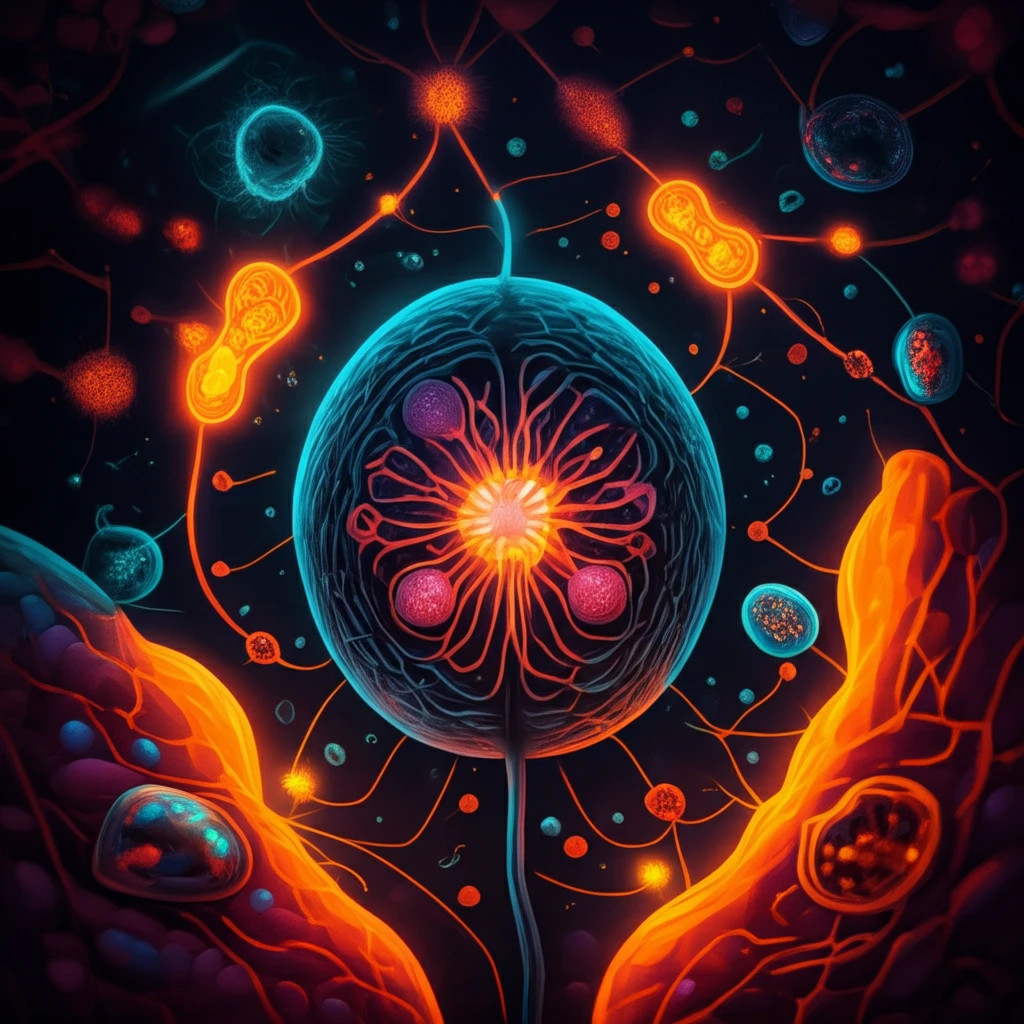
Unlock Your Body's Potential: A Simple Guide to Understanding Bioenergetics

"Demystifying the science of how your cells create energy, and how it impacts everything from your mood to your metabolism"
Biology, once seen as the ungainly sibling to the exactness of mathematics and the predictability of physics, has emerged as a dominant force in science. Its role in safeguarding human health and shaping our understanding of life's origins has propelled it to the forefront of cultural and technological innovation. However, with these advancements come complex questions about the future, particularly regarding ethical considerations.
At the heart of it all lies bioenergetics—the study of how living systems acquire and utilize energy. This field bridges chemistry and biology, revealing the elegant mechanisms that allow our cells to function. But how does this microscopic world of molecular interactions translate into our everyday lives? In simple terms, bioenergetics governs everything from our energy levels to our overall health.
Understanding these processes provides insight into optimizing our well-being. By examining the core principles of bioenergetics, we can uncover ways to enhance our vitality, manage our health, and perhaps even influence the future of biotechnology.
Measuring Energy at Cellular and Population Scale
Bioenergetics is the branch of biochemistry that focuses on how cells transform energy, typically by producing, storing, or consuming adenosine triphosphate (ATP), which puts it at the center of research on metabolism, performance, and disease. Its impact is increasingly quantified directly: a 30-day observational pilot study tracked wearable photobiomodulation use against changes in mitochondrial bioenergetics and perceived outcomes, reporting a summary of bioenergetic statistics for both study cohorts. These laboratory-scale numbers sit alongside open statistical infrastructures such as the World Bank's World Development Indicators and Eurostat's statistics portal, which offer free, internationally comparable development data that help contextualize health and energy findings. Together, the sources show that bioenergetics is now assessed through both controlled cohort data and accessible global statistics.
Standardized Assays and Known Gaps
In research settings, bioenergetics is typically measured with standardized XF analyses, including the mitochondrial stress test, glycolytic stress test, and palmitate oxidation test, which one study used to establish age-related differences in the bioenergetic profiles of healthy cardiomyocytes across newborn, weaning, adult, and aged time points. Yet the accepted methods have recognized limitations: one modeling paper notes that nutrient limitation cannot currently be incorporated into a bioenergetics approach for predicting ingestion rates, which may lead to biased estimates of elemental fluxes. On the clinical side, a separate tradition exists—bioenergetic analysis used as a psychotherapeutic method—though proponents acknowledge that bioenergetic therapy has not yet gained a reputation as an established alternative medical treatment. The result is a field with strong standardized measurement tools but open questions about model completeness and clinical standing.
From Cannon Boring to a Formalized History
The field's origins are commonly traced to Count Rumford's 1798 cannon-boring studies on work versus heat, followed by the elucidation of energy reaction types such as spontaneous, exergonic, and endergonic reactions, alongside ATP's role in energy coupling and the history of enzyme research. The discipline's history was later formally organized: the American Academy's Committee on the History of Biochemistry and Molecular Biology held conferences on the History of Bioenergetics in 1970 and 1973, publishing proceedings that included a special November 1974 issue of the journal Molecular and Cellular Biochemistry. Ongoing scholarship keeps that record current, as seen in the 2019 book by John N. Prebble, "Searching for a mechanism: A history of cell bioenergetics," published by Oxford University Press. Together these milestones show how the field moved from early thermal experiments to a documented, professionalized body of knowledge.
The Power Within: Decoding Cellular Energy
Imagine your body as a bustling metropolis, each cell a tiny power plant working tirelessly to keep things running. Bioenergetics explores the intricate pathways that enable these cells to extract, transform, and utilize energy. At the foundation of this process is the concept of metabolism, the sum of all chemical reactions that occur within a cell or organism.
- Proteins: The workhorses of the cell, proteins catalyze reactions and build structures.
- Lipids: Forming cell membranes and storing energy.
- Carbohydrates: Providing immediate energy and structural support.
- Nucleic Acids: DNA and RNA, which carry genetic information and direct protein synthesis.
Stress, Platelets, and Publishing Momentum
Recent work identifies mitochondrial bioenergetics reprogramming as an essential response of cells to stress, and because platelets are an accessible source of mitochondria, researchers are now examining platelet mitochondrial function in urothelial carcinoma (UC) patients—an area that had not previously been studied. The publishing pipeline reflects continued demand, with outlets such as Biochimica et Biophysica Acta - Bioenergetics tracked for their impact factor and peer-review characteristics as markers of research interest. Meanwhile, popular explainers describe a "bioenergetics toolkit" and research frontiers, framing cellular energy as the power plants of the body. Practitioner events further disseminate these developments, offering demonstrations of bioenergetic technologies including resonance therapy and frequency healing.
Criticism, Physical Contact, and Biological Limits
Criticism is recognized as a driver of the scientific process, and bioenergetics receives its share: the bioenergetic approach associated with Alexander Lowen's body-mind method has been criticized, in part because its techniques require physical connection between practitioner and client. Broader accounting frameworks in adjacent fields, such as ecological footprinting, similarly publish explicit lists of limitations and common questions, underscoring that self-scrutiny is part of how such approaches mature. At the biochemical level, bioenergetic strategies also have constraints—for example, in fermentation a cell uses pyruvate as a sacrificial sink for electrons, bypassing the need for an external oxidizing agent to regenerate NAD. These methodological and mechanistic critiques together show where the approach faces genuine challenges.
Benchmarking Cells, Species, and Energetic Components
Comparative bioenergetics measures how energy metabolism differs across cell types, species, and even individual energetic parameters, an approach applied from oncology to wildlife biology. In animal cells, for instance, the mitochondrial membrane potential contributes roughly -150 mV to the steady-state proton motive force compared with about -50 mV from the pH gradient, illustrating how researchers decompose energy budgets into components. In cancer biology, myeloma-derived mesenchymal stem cells show distinct mitochondrial bioenergetics that appear integral to their robustness and drug resistance, prompting proposals to repurpose Venetoclax as an anti-SRC treatment alongside conventional anti-myeloma drugs. Comparable methods extend to nutrition, where studies contrast the bioenergetics, digestion, and feeding of northern versus tropical ungulates.
Unlocking Your Potential: Simple Steps for Enhanced Energy
Understanding bioenergetics provides a foundation for making informed choices about your health. By focusing on a balanced diet, regular exercise, and stress management, you can optimize your cellular energy production and enhance your overall well-being. These choices support the intricate dance of metabolic processes that keep us thriving. By taking care of your body at a fundamental level, you are promoting a healthier, more vibrant life.
Who the Experts Are and What They Practice
Journalists and researchers looking for authoritative commentary can draw on curated expert networks that currently list about seven specialists in bioenergetics, built specifically for connecting subject-matter experts with media sources. One prominent figure, Dr. Nima Farshid, holds a PhD in quantum physics and works with bioenergetic technologies including Bio-Well, BioPulsar Reflexograph, and BioTekna, translating complex data into practical insights. He reports having trained thousands of practitioners worldwide in biofield analysis and integrative wellness approaches. Widespread study aids, such as bioenergetics revision notes for students and exam aspirants, reflect how broadly the subject has spread beyond the laboratory.
Personalized Nutrition and the Wellness Paradigm Shift
Emerging research in bioenergetics—the study of energy flow in living systems—is described as shaping a new paradigm of wellness by focusing on how energy influences health at both cellular and systemic levels. Forecasters point to future trends in nutritional bioenergetics centered on personalized nutrition and the growing role of technology in dietetics. Popular frameworks extend this vision, with some sources promoting seven "bioenergetic principles" that elite performers allegedly use to optimize cellular function, energy systems, and cognitive performance. While these projections vary in rigor, they converge on the same direction: bioenergetics moving from basic biochemistry toward individualized, technology-assisted health practice.
From Brain Disorders to Everyday Practice
At its broadest, bioenergetics studies how living organisms acquire, store, and utilize energy, with implications that reach well beyond the laboratory. For example, schizophrenia is increasingly framed as a disorder of broken brain bioenergetics, with mounting evidence revealing complex interactions between systemic energy metabolism, immune function, and brain physiology. Clinical research applies similar logic to oncology, where hypotheses such as hydrated proton complex (EZC-rich water) supplementation for tumors are being evaluated against structured criteria like SMART and FINER. Meanwhile, practitioners aim to lower barriers to access, with plans for digital tools intended to make bioenergetic therapy a daily personal practice rather than a technique reserved for trained specialists.
Everyday Energy, Personality Types, and the Placebo Question
For many people, bioenergetics represents the missing link between body, mind, and energy levels, with advocates reporting that small lifestyle changes can noticeably affect daily energy and mood. In therapeutic practice, bioenergetic therapy is organized around five personality types and healing modalities aimed at releasing old patterns and constrictive energetic defenses. Not all energy-based practices hold up to scrutiny, however: crystal therapies lack substantial research support, even though some forms of energy healing or bioenergetics do appear to perform beyond placebo. That contrast captures the real-world divide between approaches with measurable evidence and those relying largely on tradition.