
Unlock Your Body's Hidden Defenses: How Cognitive Science Can Revolutionize Cancer Immunotherapy

"Discover the surprising link between how we perceive images and how our immune system fights cancer, offering new hope for treatment breakthroughs."
In the complex world of cancer research, scientists and clinicians constantly seek new ways to understand and combat this disease. The sheer volume of research findings in fields like cancer immunobiology demands practical models that can organize and simplify the information. Often, frameworks from seemingly unrelated disciplines can offer fresh insights and clarity.
One such framework comes from cognitive science: the 'figure-ground' (FG) perspective. This concept, which explains how we visually distinguish an object (the figure) from its surroundings (the background), is now being applied to cancer immunology. The goal is to create a simple tool that can aid in understanding tumor development and designing more effective immunotherapies.
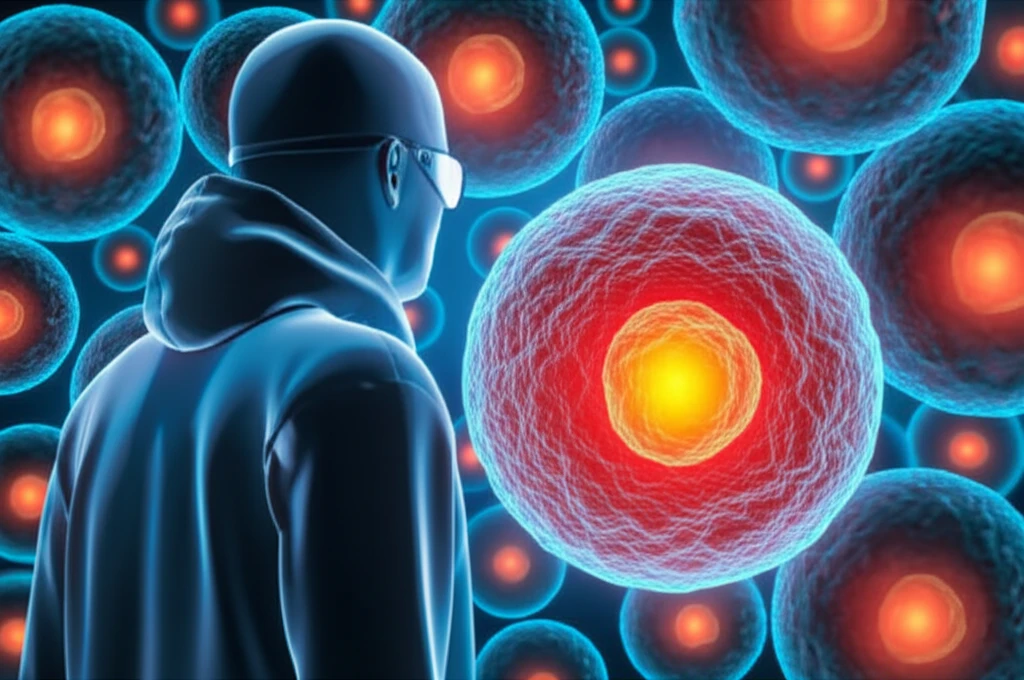
Imagine the immune system as a 'viewer,' a tumor as the 'figure,' and the normal cells around it as the 'background.' By understanding how these elements interact, we can develop strategies to make the tumor more visible to the immune system, ultimately leading to better cancer treatments.
The Figure-Ground Framework: Seeing Cancer in a New Light
The figure-ground framework originates from cognitive science, describing how our visual system organizes what we see. The 'figure' is the object of focus, standing out against the 'ground,' which is the surrounding environment. This distinction is not just about what's there, but also how we perceive it. Our brains use mental representations, or pre-existing knowledge of what things should look like, to help differentiate the figure from the ground.
- The Viewer: The immune system, constantly scanning for threats.
- The Figure: The tumor, the object that needs to be identified and eliminated.
- The Background: Normal cells and tissues surrounding the tumor.
Vagal Activity and Immune Regulation
An exploratory study examined the association between CTRA and vagal activity in 16 breast cancer patients awaiting surgery. Vagal activity was indicated by SDNN, a measure of heart-rate variability. Another review proposes that immune responses, like nervous-system responses, can operate simultaneously at different and partly autonomous levels, with priorities shaped by the most immediate challenge to tissue or organ homeostasis.
Resistance and Treatment Limits
Cancer immunotherapy can produce durable antitumor immune responses, but significant limitations remain. Existing immunotherapy resistance may prevent an antitumor response or allow tumor-induced immunosuppression to persist, making the mechanisms of primary and acquired resistance to checkpoint inhibitors a major research challenge. Reviews also identify immune-related adverse events as an important limitation alongside resistance.
A Promising Outlook for Cancer Treatment
The application of the figure-ground framework provides a valuable tool for understanding and improving cancer immunotherapy. By identifying the key players and their interactions, we can develop more effective strategies to help the immune system recognize and eliminate tumors. This innovative perspective not only enhances communication between scientists and clinicians but also provides a strong rationale for combining different immunotherapeutic approaches to achieve synergistic effects in the fight against cancer.
The Next Wave of Immunotherapy
Immune checkpoint inhibitors, adoptive cell therapies, cancer vaccines, and cytokine-based immunomodulation have shown significant promise in improving survival rates. The future field also includes immune-boosting drugs and monoclonal antibodies directed at specific cancer-related proteins, within a broader movement toward precision oncology. Treatment resistance, variable patient responses, and immune-related adverse events remain major hurdles.
Barriers Beyond the Tumor
A 2025 review identifies immune-related side effects, high costs, and immunosuppressive tumor microenvironments as persistent challenges for cancer immunotherapy. It emphasizes combination strategies and precision medicine as approaches for overcoming these barriers and improving personalized treatment. The Cancer Research Institute's 2026 Cancer Immunotherapy Insights + Impact Report tracks progress, trends, and emerging science shaping the field.
Personalized Care in Practice
A cognitive figure-ground framework has been proposed to clarify complex networks in cancer immunobiology and immunotherapy. The framework is intended to improve communication between cancer scientists and clinicians, help explain experimental and clinical results, and provide further rationale for combination immunotherapies. A 2024 case report notes that, in malignant pleural mesothelioma, the immune environment and response markers such as CPS may have greater influence than tumor histological type when introducing first-line immunotherapy.