
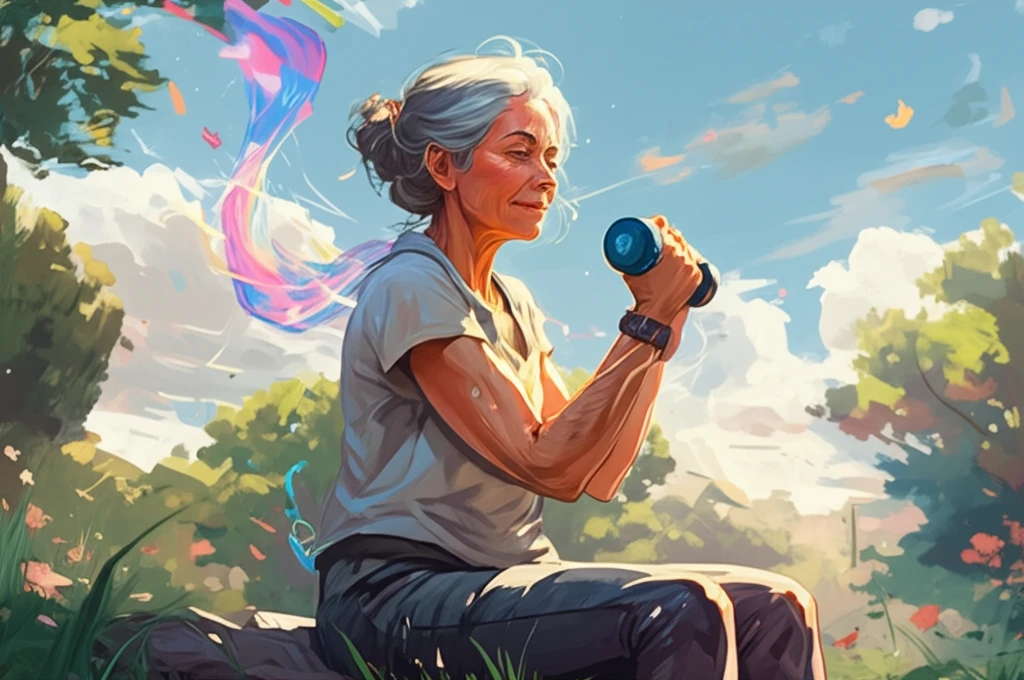
Unlock Your Ageless Vitality: The Fitness-Quality of Life Connection for Seniors

"Discover how simple strength exercises can dramatically improve your mental and physical well-being as you age, empowering you to live a fuller, healthier life."
We're living longer, and while that's a triumph, it also brings new challenges. As we age, maintaining our health and independence becomes a top priority. It's not just about adding years to our lives, but adding life to our years. This means focusing on both our physical and mental well-being so that we enjoy every moment, regardless of age.
Quality of life and preventing functional decline are now key public health goals. Understanding what contributes to a better quality of life allows for the creation of effective policies that genuinely support the well-being of our aging population. This begins with taking a proactive approach to health.
According to the World Health Organization (WHO), health in older adults is defined by their ability to perform daily activities and participate in social life. Physical activity is a cornerstone of healthy aging, helping us stay active and engaged. While the connection between physical activity and quality of life is well-recognized, the specific role of physical fitness hasn’t been as clearly defined – until now.
A Widespread and Growing Focus
The fitness industry reports substantial reach among professionals serving older adults, with NASM stating it is trusted by more than 1.9 million pros and has been science-backed since 1987. Quality of life itself is defined by the World Health Organization as an individual's perception of their position in life within the context of their culture and value systems. For seniors, this makes fitness a direct lever on perceived well-being rather than a purely cosmetic pursuit.
Tailored Routines and Their Limits
Accepted approaches center on tailored exercise routines and individualized adaptations designed to maintain mobility and strength in older adults. Senior fitness guidance repeatedly emphasizes a commitment to staying active as the cornerstone of success. However, these recommendations still require personalization, as a one-size-fits-all plan cannot account for each senior's health status and baseline abilities.
From 1987 to a Trusted Standard
The modern fitness certification movement gained momentum with organizations such as NASM, which has positioned itself as accredited and science-backed since 1987. This longevity helped establish credentialed fitness instruction as a trusted standard for professionals working with clients of all ages, including seniors. The field has evolved from generic gym programming toward more individualized, evidence-informed training approaches.
The Power of Strength: How Fitness Impacts Your Well-being
A new study has investigated how different aspects of physical fitness affect the perceived quality of life in older adults. The goal was to pinpoint the specific fitness components that contribute most to a senior's overall sense of health and happiness. Researchers in Chile assessed 116 community-dwelling older adults, evaluating their physical fitness using standard tests like the Senior Fitness Test (SFT) and hand grip strength (HGS). They then measured their health-related quality of life (HRQOL) across eight key areas, including physical function, role limitations due to physical health, bodily pain, general health, vitality, social function, role limitations due to emotional problems, and mental health.
- Arm Curl Test (ACT): A measure of upper body strength and endurance.
- Hand Grip Strength (HGS): An indicator of overall muscle strength.
- Senior Fitness Test (SFT): A battery of tests assessing functional fitness in older adults.
- SF-12v2 Questionnaire: A tool used to measure health-related quality of life.
The Rise of Enjoyable, Social Movement
Beyond traditional strength and mobility work, dancing has been highlighted for its combined health and social benefits for seniors. Sources note that activities like dance pair physical fitness with social connection, addressing isolation as well as inactivity. Such findings push senior fitness toward activities seniors actually enjoy and will sustain.
Where Generic Programs Fall Short
A common failure point is the generic fitness plan that ignores individual differences. Guidance aimed at seniors stresses individualized adaptations precisely because standardized programs can either over- or under-challenge participants. Without tailoring, seniors risk discouragement, injury, or abandoning activity altogether.
Comparing Paths to Ageless Vitality
Approaches to senior wellness range from structured physical self-care routines and recreational activities like dancing to holistic self-care guides. One resource frames the goal as unlocking ageless energy through prioritizing well-being, noting that staying physically active is paramount to maintaining energy and mobility. Another emphasizes that age is just a number and that health and fitness form a lifelong journey. Together these sources agree that consistent, chosen activity matters more than any single prescribed program.
Your Path to a More Vibrant Life Starts Now
This research sends a clear message: strength matters. By prioritizing exercises that build and maintain upper body and grip strength, older adults can take control of their vitality, mental health, and overall quality of life. The hand grip and arm curl tests are easy to administer. The low cost and easily administration support this addition to primary care programs and EFAM.
Science-Backed Guidance Wins
Expert commentary converges on credentialed, science-backed instruction, with NASM positioning itself as the authority in accredited fitness certification, trusted by over 1.9 million professionals since 1987. Pairing that professional rigor with the WHO's perception-based definition of quality of life supports viewing senior fitness as both a health and a well-being intervention.
Wellness Beyond the Gym
The future of ageless vitality appears to extend beyond traditional exercise settings into integrated healthy-lifestyle environments. Some health club networks now offer healthy co-working locations and apartment living designed around a healthy way of life. This signals a shift from isolated fitness sessions to full-lifestyle designs that support seniors' vitality around the clock.
Quality of Life as a Personal, Cultural Measure
The World Health Organization defines quality of life as an individual's perception of their position in life within the context of their culture and value systems, in relation to their goals and expectations. This framing presents a systemic challenge: no single fitness program can guarantee improved well-being, because perception varies across cultures and individuals. Senior fitness must therefore be delivered with attention to personal and community context, not just physical outcomes.
Real Lives, Lifelong Journeys
The human element comes through in stories of elderly women who have balanced careers, families, and personal growth while continuing to prioritize their well-being. These resources remind readers that health and fitness are a lifelong journey and that age is just a number. Pairing such journeys with social activities like dancing amplifies both the physical and emotional rewards for real seniors.