
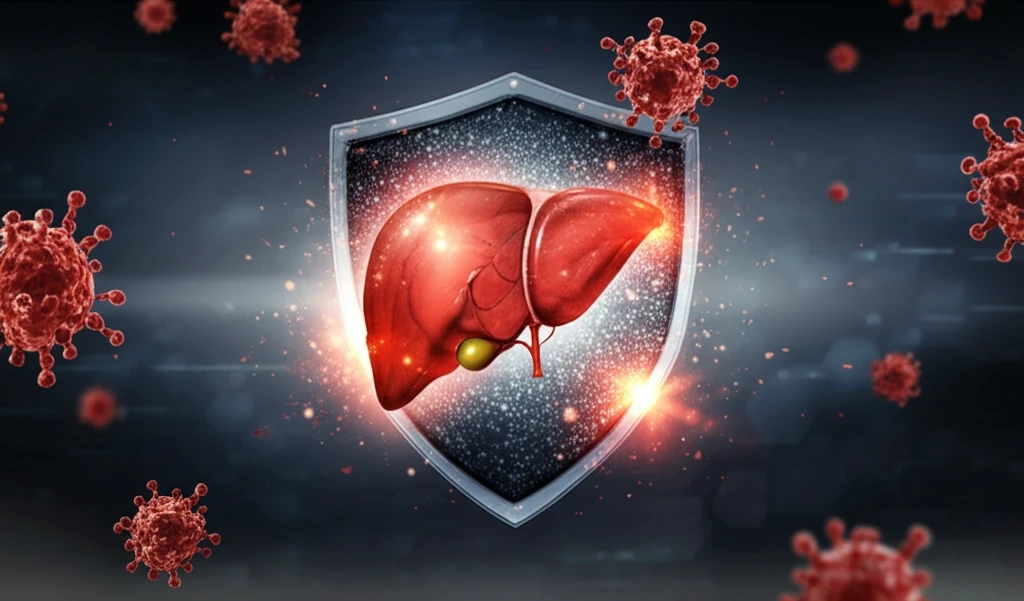
Unlock the Power of Astaxanthin: Your Guide to Liver Protection

"Discover how this potent antioxidant can safeguard your liver and overall health."
In today's health-conscious world, protecting our vital organs is paramount. The liver, responsible for numerous metabolic functions, is increasingly susceptible to damage from factors like poor diet, environmental toxins, and metabolic disorders. Non-alcoholic fatty liver disease (NAFLD), a condition characterized by fat accumulation in the liver, has become a significant concern, linked to cardiovascular and cancerous diseases. Protecting against liver damage is more important than ever.
One promising avenue for liver protection lies in the realm of natural supplements. Astaxanthin, a vibrant red pigment found in algae and seafood, has emerged as a potential protector against liver damage, primarily due to its potent antioxidant properties. This article delves into the science behind astaxanthin, exploring its mechanisms of action and the evidence supporting its role in promoting liver health.
Astaxanthin (3,3'-dihydroxy-β,β-carotene-4,4'dione, C40H52O4), a xanthophyll carotenoid, is not just another antioxidant; it's a powerhouse. Found in various microorganisms and marine animals, astaxanthin stands out due to its unique molecular structure, which allows it to quench free radicals and protect cells from oxidative stress with remarkable efficiency. Its potential benefits extend beyond simple antioxidant activity, offering a multi-faceted approach to liver protection.
A Growing Market for a Potent Carotenoid
Astaxanthin is a carotenoid belonging to the xanthophyll group, a reddish pigment found in algae that imparts the red or pink coloration seen in salmon, lobster, trout, and shrimp. Demand for the compound is expanding: the global natural astaxanthin market was valued at US$1,142.3 million in 2025 and is estimated to grow at a compound annual growth rate (CAGR) of 12.2% from 2025 to 2033. Market data also shows the industry reached a value of 980 million USD in 2020, reflecting steady expansion in the years since. As consumer interest in antioxidant and liver-protective supplements rises, this trajectory positions astaxanthin as an increasingly prominent ingredient in the health and wellness space.
Standardizing Measurement and Delivery
Accurate measurement is a foundation of astaxanthin research, and high-performance liquid chromatography (HPLC) is a standard analytical approach - for example, one production study used an astaxanthin standard from Sigma-Aldrich (purity ≥ 97%) and built a standard curve at concentrations of 20, 40, 60, 80, and 100 mg/L. To simplify and standardize astaxanthin measurement with high precision, an enzymolysis-based quantification method was developed to hydrolyze astaxanthin esters and determine free astaxanthin in all its diastereomeric forms. Complementary work includes a method for efficiently preparing an astaxanthin standard product to support reproducible analysis. Beyond measurement, researchers have applied response surface methodology (RSM) to systematically explore the interactions between various formulation parameters, marking a significant advancement in optimizing astaxanthin-loaded nanostructured lipid carriers. Together these methods underpin quality control, standardization, and effective delivery of astaxanthin.
From Marine Pigment to Modern Supplement
Astaxanthin is widely and naturally found in marine organisms, including microalgae, crustaceans, salmon, and trout, and it is the substance that gives these animals their distinct color. Long known informally as "Vitamin X" and classified as a xanthophyll carotenoid, it is the pigment that gives salmon, shrimp, trout, and other seafood their pink coloration, and it occurs naturally in wild-caught salmon and green algae. The compound is consumed as a micronutrient through foods or dietary supplements, with the damage caused daily by reactive oxygen species (ROS) occurring constantly throughout the entire body rather than in any single location. From these marine origins, astaxanthin has made its way into natural supplement form and broad commercial use.
The Liver's Importance and the Promise of Astaxanthin
The liver is vital in maintaining overall health, acting as the body's primary detoxification center and playing a crucial role in lipid and glucose metabolism. When the liver is compromised, it can lead to a cascade of health problems, including insulin resistance, inflammation, and an increased risk of chronic diseases. Modern lifestyles, characterized by processed foods and sedentary habits, often contribute to liver damage. Recognizing the importance of liver health is the first step toward preventative care.
- Combating Oxidative Stress: Astaxanthin's unique molecular structure allows it to neutralize free radicals effectively, protecting liver cells from damage.
- Reducing Lipid Accumulation: Studies indicate that astaxanthin can help regulate lipid metabolism, reducing the buildup of fat in the liver.
- Improving Insulin Sensitivity: By modulating key metabolic pathways, astaxanthin may improve insulin sensitivity, reducing the risk of insulin resistance and related liver problems.
- Supporting Liver Regeneration: Research suggests that astaxanthin may promote liver cell regeneration, aiding in the repair of damaged tissue.
Production Advances and Novel Delivery Systems
Recent research spans production science and advanced delivery formats. One study describes how stimulating astaxanthin biosynthesis in wild-type Xanthophyllomyces dendrorhous allows transcriptional reprogramming of genetic responses involved in oxidative stress and mitochondrial defense. A separate review examines recent developments in astaxanthin nanoemulsions and nanoparticles for chronic disease management, a line of work expected to be useful for future research. Production-oriented work has also reviewed natural astaxanthin manufacturing using Paracoccus carotinifaciens in a circular bioeconomy context, comparing physical, chemical, and biological cell disruption methods for disruption efficiency and astaxanthin extractability, with the aim of covering scalable advancements. Science news aggregators continue to track these developments as the field moves toward commercially viable production.
Evidence Gaps and Production Hurdles
Astaxanthin research is not without counterpoints and caveats. While one review reports that scientists have discovered astaxanthin may combat cancer - including liver, colorectal, lung, and prostate malignancies - through six different mechanisms, this reflects research findings rather than established clinical consensus. Similarly, a study on diabetic nephropathy in rats with streptozotocin-induced diabetes was designed to investigate astaxanthin's protective effects, but evidence from animal models cannot be treated as settled proof of human benefit. On the production side, reviews of sustainable astaxanthin manufacturing candidly address failures, including the upper limit of astaxanthin production and problems in constructing optimal microbial cell factories, with strategies such as ARTP mutagenesis explored to overcome them. The gap between promising laboratory and animal results, on one hand, and scalable production and human evidence, on the other, remains a central limitation.
Powders, Capsules, and Natural Versus Synthetic
Comparing product formats, the powder format has clear buying benefits for companies that need to change recipes easily and process large amounts of powder quickly, whereas capsule and oil formats present different trade-offs. Against alternative antioxidants such as beta-carotene or lutein, natural astaxanthin stands out for its strong antioxidant properties and proven results in studies. On the natural-versus-synthetic question, natural astaxanthin powder boasts predominant bioavailability compared to its engineered counterpart, a difference generally attributed to the presence of supporting particles in the natural extract. Independent comparison guides and product tests continue to evaluate astaxanthin products on these criteria to help buyers decide.
The Future of Astaxanthin and Liver Health
While current research paints a promising picture of astaxanthin's potential as a liver protector, more human studies are crucial. These studies should focus on determining the optimal dosage, duration of treatment, and long-term effects of astaxanthin supplementation on liver function in various populations. As we continue to explore the benefits of astaxanthin, we can unlock new strategies for protecting our liver and promoting overall health and well-being.
Experts Urge Careful Dosing and Clear Guidance
Expert guidance on astaxanthin emphasizes dosage, bioavailability, and safety as vital information rather than simply taking more, with dedicated discussions covering doses, timing, and other practical considerations. Emerging research continues to build a case around potential new health benefits, and some nutrition experts now call natural astaxanthin "The Ultimate Anti-Aging Nutrient" and "The Athlete's Secret Weapon." Dermatologists and doctors similarly recommend astaxanthin because it neutralizes UV-induced free radicals, preserves collagen and elastin, reduces inflammation, and enhances hydration to support skin repair and combat premature aging. Together, these expert voices frame astaxanthin as a versatile antioxidant whose value depends on how it is dosed and used.
Regional Markets and Long-Term Forecasts
Market research points to continued expansion of astaxanthin demand across regions and applications. Europe's astaxanthin market, for instance, was reported to be worth USD 752 million, with growth trends, drivers, and future outlook tracked through 2030. Global industry reports forecast the astaxanthin market landscape through 2035, covering market size, share, growth, trends, and value, while historical analysis spans the period from 2018 up to 2022. Growth is also expected in newer product categories, such as the natural astaxanthin beverage market, particularly in Asia Pacific.
Small Trials, Big Market Hype
A key systemic challenge is the gap between promising science and robust evidence. On brain health, for example, researchers conclude that astaxanthin shows positive impacts on improving cognitive function, facilitating neuroprotection, and slowing neurodegeneration in specific contexts - but the honest caveat is that most human trials are small, and researchers consistently call for larger, longer trials. Meanwhile, the commercial market is segmented by product type (natural and synthetic) and by application (aquaculture, nutraceuticals, food and beverages, and others), with regional forecasts extending through 2034. Supplement trend analyses identify key growth drivers, regional dynamics, applications, and challenges that will shape how the ingredient reaches consumers. The contrast between enthusiastic marketing and the modest scale of clinical evidence is a recurring tension across the field.
Real-World Use, Side Effects, and Provenance
For everyday consumers, astaxanthin is best understood through practical questions of effects, side effects, dosage, and intake, with studies and guidance available to help people use it sensibly. Much commercial astaxanthin traces back to a single famous source: AstaReal astaxanthin from the microalga Haematococcus pluvialis is described as one of nature's most powerful antioxidants. The pigment itself belongs to the xanthophyll family and is characterized as a powerful, naturally occurring antioxidant. Because the supplement, like any other, may cause side effects in some individuals, the guidance is clear that a doctor's advice must come first before trying it.