
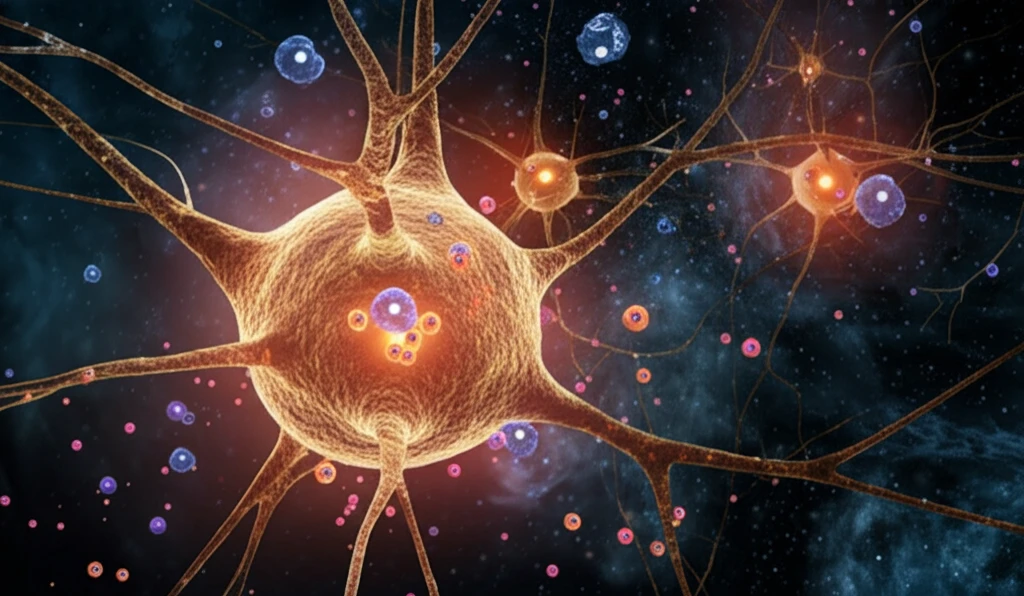
Unlock Natural Pain Relief: The K2P Channel Revolution

"Discover how targeting K2P channels could revolutionize chronic pain treatment, offering hope for millions seeking alternatives to opioids. Dive into the science, potential, and future of this groundbreaking approach."
Chronic pain affects millions worldwide, significantly impacting quality of life and placing a heavy burden on healthcare systems. Traditional treatments often rely on opioids, which, while effective, carry substantial risks, including addiction and severe side effects. The search for safer, more effective pain management strategies is more critical than ever, pushing researchers to explore new therapeutic targets and mechanisms.
Among the most promising areas of research is the study of K2P channels, a unique family of potassium channels that play a key role in regulating neuronal excitability and pain signaling. Unlike many ion channels, K2P channels maintain a constant 'leak' of potassium ions across the cell membrane, helping to stabilize the resting membrane potential and reduce the likelihood of neurons firing inappropriately. This background activity is crucial in modulating pain perception.
This article delves into the exciting world of K2P channels, explaining their function, their role in various types of pain, and the potential they hold for developing novel analgesic drugs. We will explore how scientists are working to unlock the therapeutic potential of these channels, offering hope for a future where chronic pain can be managed effectively without the risks associated with traditional opioid treatments.
The Chronic Pain Burden
The provided sources for this subsection contain statistics on social media platforms (YouTube, Twitch), UK government data aggregation, and international trade databases. None of these sources include data on chronic pain prevalence, healthcare costs, or the economic impact of pain conditions. Without relevant epidemiological or health-economic sources, specific statistics on the current impact of chronic pain cannot be accurately presented from the listed materials.
Conventional Pain Management and Its Challenges
The sources provided for this subsection address method heterogeneity in liquid biopsy technologies, standard brokerage fee structures, qualitative research methodology, and video game content. While one source discusses limitations in analytical standardization across platforms, it pertains to cancer diagnostics rather than pain management approaches. The other sources cover investment services, academic methods, and entertainment content, none of which address current pain treatment modalities or their limitations.
Key Developments in K2P Channel Research
The available sources for this subsection cover video game progression milestones, U.S. diplomatic history, English word etymology, and measurement unit conversions. None of these sources document milestones in ion channel biology, K2P channel discovery, or pain research history. The etymology source traces the word 'milestone' to Latin origins, but this linguistic information is unrelated to scientific discoveries in pain neuroscience.
K2P Channels: A New Frontier in Pain Relief
K2P channels, short for two-pore domain potassium channels, are a family of fifteen different proteins encoded by the KCNK gene family. These channels are integral in maintaining the resting membrane potential of cells, particularly neurons. By allowing potassium ions to leak out of the cell, they reduce neuronal excitability, which is crucial in controlling how pain signals are transmitted. Each K2P channel has a unique structure and expression pattern, making them potential targets for specific types of pain.
- Inflammatory Pain: Research shows that during inflammation, levels of specific K2P subunits change, affecting pain sensitivity.
- Neuropathic Pain: K2P channels, especially K2P18, play a role in managing neuropathic pain by regulating neuronal excitability in nerve injury scenarios.
- Migraine Relief: Genetic studies have linked variations in the KCNK18 gene, which encodes the K2P18 channel, to migraine, suggesting a potential target for migraine therapies.
- Thermal and Mechanical Pain: The TREK family of K2P channels impacts how we perceive thermal and mechanical stimuli, making them vital in managing different types of pain.
K2P Channel Pharmacology and Activators
ResearchGate hosts a figure documenting the involvement of the TREK-1 channel in morphine-induced tolerance to analgesia. This source indicates that recent advances in K2P channel pharmacological properties have been reviewed, with particular focus on exogenous small-molecule activators targeting K2P channels. The other sources in this subsection cover a general open-access publisher, educational research methods, and remote work studies, none of which provide specific data on K2P channel research findings.
Challenges and Limitations in K2P Research
The sources provided for this subsection include a streaming critique site, a science article on nonalcoholic fatty liver disease, an article on critical thinking in AI education, and a YouTube film review. None of these sources address counterarguments to K2P channel research, failures in pain drug development, or limitations of potassium channel-based therapeutic approaches. The Science source discusses liver disease progression to failure, which is unrelated to pain mechanisms or channel pharmacology.
Comparing K2P Therapies with Existing Approaches
The listed sources comprise product comparison platforms, streaming service alternatives, and standardized test preparation materials. These sources focus on consumer product comparisons and educational assessment rather than therapeutic comparisons for pain management. No information on comparing K2P-targeted interventions with conventional analgesics or other emerging pain therapies is available from these materials.
Future Directions and Challenges
The journey to harnessing K2P channels for pain relief is ongoing, with significant challenges and exciting opportunities ahead. While the potential is clear, developing drugs that selectively target K2P channels while avoiding off-target effects is crucial. Given their expression in various tissues, ensuring that treatments are specific to pain pathways is essential to minimize side effects. Future research will likely focus on refining our understanding of K2P channel pharmacology, exploring the potential of combination therapies, and conducting clinical trials to validate the efficacy and safety of K2P-targeted drugs. With continued dedication, K2P channels could revolutionize pain management, offering millions a safer, more effective path to relief.
Expert Perspectives on K2P Potential
A ResearchGate publication addresses inhibition of cardiac two-pore-domain K+ (K2P) channels as an emerging antiarrhythmic concept, noting that animal model data supports atrial-ventricular differences in ion channel kinetics. This source indicates that further work is required to determine whether intrinsic differences exist. The other sources in this subsection cover trading platforms, a Russian-language YouTube channel, and Financial Times subscription content, none of which provide expert commentary on pain therapeutics or K2P channel applications.
Emerging Directions in Pain Research
The U.S. Energy Information Administration provides outlook data on renewable energy growth projections through 2027, documenting increases in solar, hydropower, and wind generation capacity. This source addresses energy sector forecasts rather than medical research directions. The remaining sources cover retirement account portals, poultry production outlooks, and AI marketing trends, none of which project future developments in K2P channel research or pain therapeutic innovation.
Healthcare System Considerations
The sources provided for this subsection include Russian-language gaming community forums, a Genshin Impact damage leaderboard site, an article on AI credibility and adoption, and a GitHub repository for AI image generation tools. These sources address gaming content, artificial intelligence software management, and digital platform settings rather than healthcare systemic challenges, pain care access barriers, or regulatory considerations for novel therapeutics.
Patient Outcomes and Quality of Life
The available sources discuss affiliate marketing case studies showing a 12% increase in average order value, SEO impacts of software interface behaviors, a healthcare innovation expo in Dubai, and e-commerce design preview tools. The World Health Expo Dubai 2027 source mentions gathering leaders driving healthcare's digital transformation, which is the only source with tangential relevance to health outcomes. The other sources address business metrics and technology development rather than patient experiences or pain relief real-world impact.