
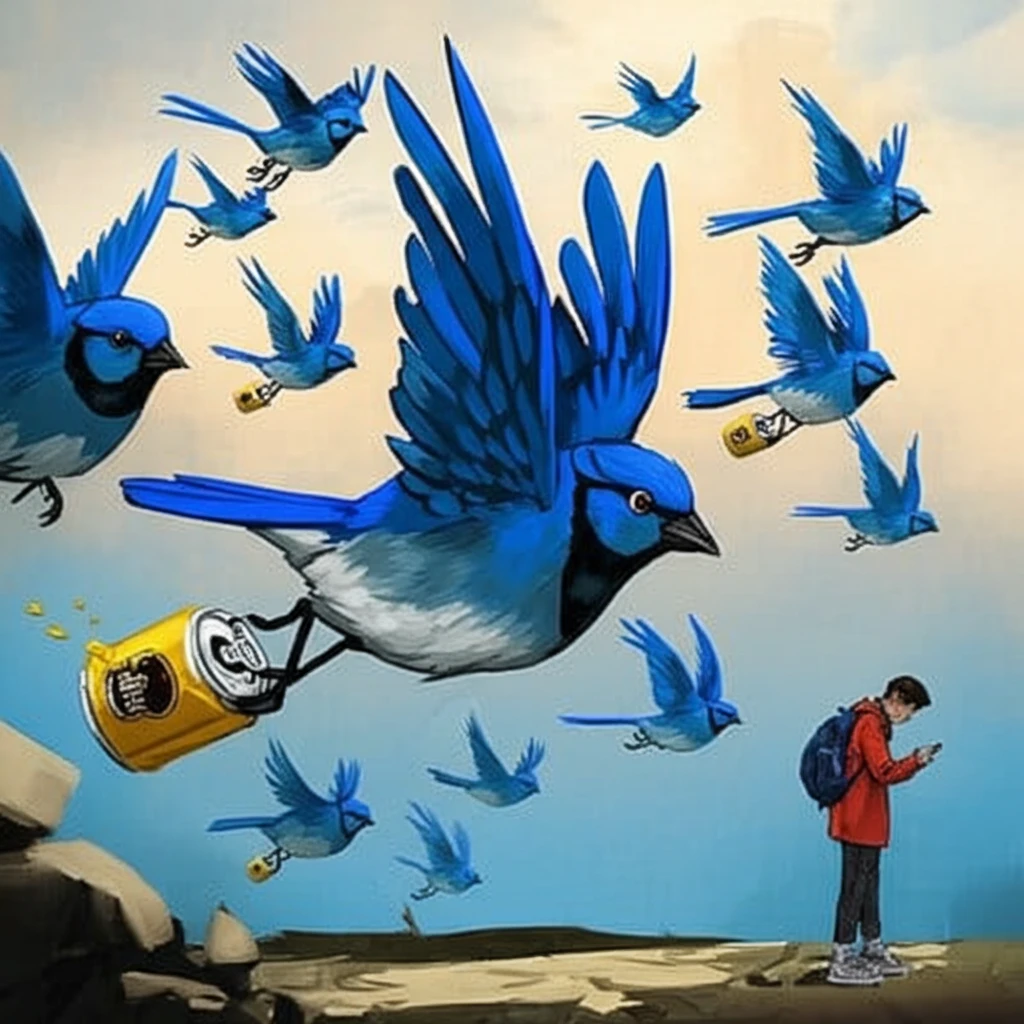
Unfiltered Influence: How Alcohol Ads on Social Media Target Young Adults

"A Deep Dive into Twitter Reveals Alarming Trends in Alcohol Advertising and Its Impact on Vulnerable Youth"
In today's digital age, the allure of social media is undeniable, especially for young adults. Platforms like Twitter, Instagram, and Facebook have become integral to daily life, shaping how we connect, communicate, and consume information. But what happens when these spaces become breeding grounds for targeted advertising, particularly for products with potentially harmful effects, such as alcohol?
Recent research has shed light on the pervasive nature of alcohol advertising on social media, revealing how brands are strategically leveraging these platforms to reach and influence young audiences. One study, published in the American Journal of Health Education, delves into the advertising practices of leading alcohol brands on Twitter, uncovering concerning trends that demand our attention.
This article unpacks the findings of this study, exploring the tactics employed by alcohol advertisers, the potential risks to young adults, and the implications for public health. We'll examine how these advertising strategies circumvent traditional regulations, exploit vulnerabilities, and contribute to a culture where alcohol consumption is normalized and even glorified.
Alcohol's Deadly Toll and Digital Reach
Alcohol advertising spans a wide variety of media and is one of the most heavily regulated forms of marketing globally, alongside nicotine advertising. In South Africa, data from the National Injury Mortality Surveillance System in 2008 revealed that 34% of fatally injured individuals had blood alcohol concentrations at or above 0.05g/100 ml, underscoring alcohol's role in preventable deaths. On social media platforms, alcohol advertisements follow seasonal patterns, with December being the most common month for new placements and Christmas and New Year serving as major advertising themes. The scale of alcohol's digital footprint continues to grow as brands invest increasingly in online channels to reach consumers.
Self-Regulation and Policy Boundaries
In the United States, alcohol advertising is regulated under the Federal Alcohol Administration Act by the Tobacco Tax and Trade Bureau within the Department of the Treasury. Google Ads enforces its own restrictions, such as limiting brand or informational alcohol advertising exclusively to beer in certain countries like Poland, where advertisers must apply for approval. Research examining Beam's shift to stricter advertising standards used a matched-control methodology to assess youth exposure changes, comparing compliant ads against a counterfactual condition. Studies on alcohol advertising effects on youth drinking have acknowledged significant methodological limitations, including challenges in scoring countries on the restrictiveness of their marketing policies using WHO Global Survey data.
From Moonshine to Digital Restrictions
Alcohol's cultural footprint has deep historical roots, from the tradition of moonshine production — named for distilling high-proof liquor under cover of night to avoid detection — to the elaborate print campaigns that defined gin advertising in earlier eras. As alcohol advertising evolved across centuries, regulatory responses followed, culminating in a complex web of restrictions that now govern digital marketing channels. By 2020, alcohol advertisers faced an intricate patchwork of digital marketing rules, requiring brands to navigate platform-specific policies and regional compliance standards that did not exist in the era of traditional print and broadcast media.
The Twitter Tapestry: Decoding Alcohol Advertising
The study, led by researchers Adam E. Barry, Danny Valdez, Alisa A. Padon, and Alex M. Russell, employed a novel approach to analyze the Twitter activity of 13 prominent alcohol brands. Using Latent Dirichlet Allocation (LDA), a sophisticated topic modeling technique, the researchers sifted through years of tweets, from 2010 to 2017, to identify recurring themes and patterns in the brands' messaging.
- Targeted Messaging: Each brand carefully tailors its message to resonate with its specific target audience.
- Lifestyle Integration: Alcohol is presented as an integral part of desirable lifestyles, such as rock and roll, partying, and sports fandom.
- Emotional Appeal: Advertising often taps into emotions such as excitement, fun, and belonging.
- Normalization: By associating alcohol with everyday activities and social events, advertising normalizes its consumption.
Growing Evidence of Advertising's Influence
Research continues to demonstrate that exposure to alcohol advertising is linked to increased drinking, though individual susceptibility varies. Studies have found that attention paid to alcohol adverts is a key driver of consumption, meaning not all viewers respond equally to the same marketing stimuli. Alcohol manufacturers significantly expanded their advertising footprint between 1971 and 2011, increasing spending by more than 400% in the United States alone, which has helped normalize drinking as an acceptable, fun, and relaxing pastime. Researchers have proposed new guidelines for evaluating how well the alcohol industry self-regulates its advertising content, suggesting that existing codes may be insufficient.
When Advertising Bans Don't Deliver
Critics of alcohol advertising face a persistent counterargument: in Sweden, Denmark, and Finland, where near-total bans on alcohol advertising have been in place, recorded alcohol consumption has remained stable or even increased over the period from 1980 to 1995. The long-standing separation between advertising and editorial content in media is described as rapidly crumbling, making it increasingly difficult for consumers — especially young people — to distinguish ads from news or entertainment. Despite widespread support for advertising reform among public health advocates, the alcohol industry has used its political influence and preemptive strategies such as public-service campaigns and voluntary codes to avert government-imposed limits.
Regulatory Gaps and the NoLo Loophole
A growing regulatory challenge lies in advertisements for alcohol-free and low-alcohol drinks (NoLos) that use brand-matched versions of their alcoholic counterparts, which are typically exempt from advertising restrictions. UK rules now require NoLo ads to include a prominent statement of their specific ABV, which must fall within the 0.0–0.5% range, with special guidance for time-limited ad placements. Meanwhile, specialized advertising platforms like Gourmet Ads continue to operate alcohol campaigns specifically targeting consumers in the market for spirits, liqueurs, and distilled products, suggesting that niche digital channels remain active avenues for alcohol promotion.
Protecting Our Youth: A Call to Action
The research paints a concerning picture of alcohol advertising on social media and underscores the need for stronger regulations and greater awareness. Public health practitioners, policymakers, and educators must work together to protect young adults from the harmful effects of these marketing tactics. This includes advocating for stricter advertising standards, promoting media literacy, and empowering young people to make informed choices about alcohol consumption. By taking proactive steps, we can create a healthier and safer environment for our youth, where they are not constantly bombarded with messages that promote risky behaviors.
Expert Views on Compliance and Reform
Media literacy techniques can help young people view alcohol marketing with a critical eye, as alcohol advertising now appears nearly everywhere — on television, in buses, on streets, and across the internet. Research comparing perceptions of marketing experts and alcohol treatment or public health professionals found divergent views on whether televised alcohol advertisements comply with regulatory guidelines, with each group evaluating the same ads differently. Despite broad support for advertising reform, the alcohol industry has leveraged its considerable political influence and preemptive public relations strategies — including voluntary advertising codes — to avert binding government restrictions.
Self-Regulation Pacts and Policy Evolution
As regulators in Europe increasingly threaten tighter restrictions on alcohol marketing, advertisers have proactively launched a Responsible Marketing Pact aimed at strengthening self-regulation across the industry. Under this pact, marketers are required to describe how consumer information is collected and used to deliver advertising in the future, signaling a shift toward greater transparency. Alcohol marketing restrictions continue to evolve with a focus on protecting vulnerable populations, especially youth, while encouraging responsible advertising practices. The tension between creative, imaginative campaigns — like those from brands such as Guinness, Absolut, and Heineken — and the push for tighter oversight will likely define the next phase of alcohol advertising regulation.
Systemic Barriers to Meaningful Change
Addressing the influence of alcohol advertising on young adults requires confronting broader systemic challenges that extend beyond individual campaigns or regulatory codes. The fragmentation of digital advertising platforms means that enforcement varies widely across channels, creating gaps that alcohol brands can exploit to reach younger audiences. Effective reform demands coordinated action across public health policy, platform governance, and corporate accountability — a level of systemic coordination that has proven elusive in practice. Without sustained pressure from researchers, policymakers, and civil society, the current patchwork of voluntary standards is unlikely to deliver the protective outcomes that public health advocates seek.
How Ads Shape Behavior and Attitudes
A study published in the Journal of Interpersonal Violence tested the effects of real alcohol advertisements featuring highly objectified women on approximately 1,200 college students, finding that such ads can influence both men and women toward sexually aggressive attitudes. Separately, research on consumers in Ghana's Bantama Sub-Metro area demonstrated that alcohol beverage advertisements serve as a significant predictor of purchasing behavior among university students. These findings highlight that alcohol advertising does not merely promote a product — it actively shapes social attitudes and consumption patterns among young adults in measurable ways.